

Binance continues to strengthen its position as a central venue for major players, and current derivatives data clearly supports this trend. The total open interest in Bitcoin and Ethereum futures has reached approximately $30 billion, reflecting not just increased activity, but a concentration of capital in key assets. Importantly, the majority of this inflow went to Binance, where BTC and ETH volumes exceeded those of its closest competitors combined. This dynamic typically signals that large market participants are choosing not just liquidity, but an infrastructure where they can efficiently manage large positions with minimal slippage and lower costs.
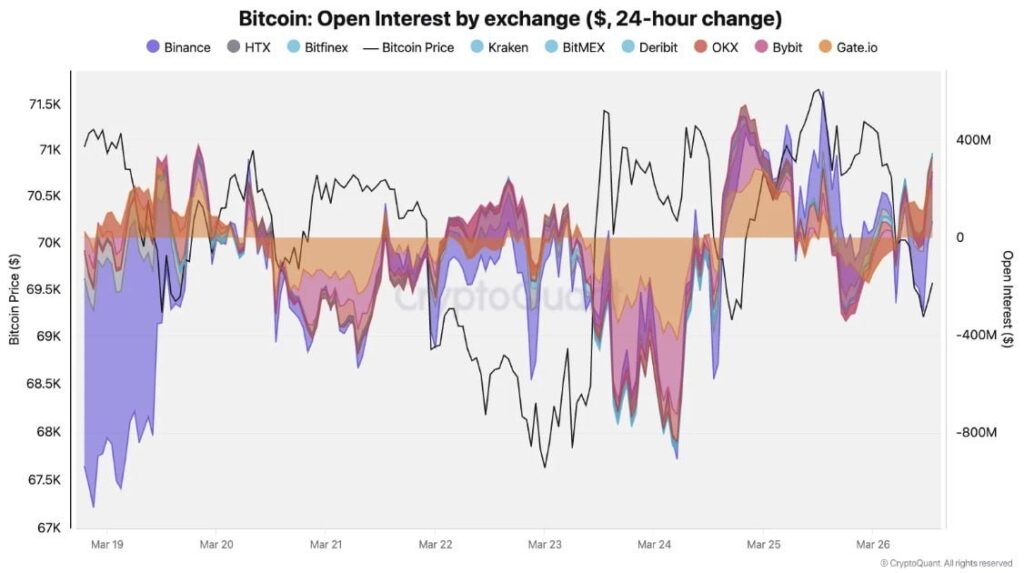
The growth in derivatives open interest itself indicates an increase in the number of open contracts and, as a result, stronger participation from both institutional and advanced retail traders. When we talk about tens of billions of dollars, this is no longer speculative noise, but structured positional activity. What is particularly notable is that this concentration is happening on a single platform — a sign of trust in order execution systems, order book depth, and overall platform stability. In traditional market terms, this resembles a situation where major participants choose one “central liquidity hub” to efficiently execute complex strategies such as hedging, arbitrage, and risk management.
Another important move is the simplification of access to the VIP program. Lowering entry thresholds is a classic competitive tool for attracting active users. Such programs typically offer reduced fees, priority service, more flexible order execution, and additional tools for handling large volumes. In an increasingly competitive environment, this is essentially an attempt to lock users into the ecosystem and increase switching costs. In simple terms, the exchange aims to make large traders feel like valued long-term clients rather than just visitors.
In a broader context, this reflects an important trend: the crypto derivatives market is becoming increasingly institutional. Large players are concentrating on a limited number of platforms that offer liquidity, infrastructure, and trust. At the same time, exchanges are forced to compete not only on fees, but also on service quality, market depth, and loyalty programs. This is no longer the “wild west” of the early years, but a mature financial environment where the rules are gradually converging with traditional markets.
Looking at the dynamics, the strengthening of Binance’s position in derivatives may signal further consolidation of the market around a few major players. This, in turn, makes the market structure more sensitive to actions by individual exchanges and large capital flows. In such an environment, even small changes in exchange policy or liquidity structure can have a noticeable impact on prices and volatility.
All content provided on this website (https://wildinwest.com/) -including attachments, links, or referenced materials — is for informative and entertainment purposes only and should not be considered as financial advice. Third-party materials remain the property of their respective owners.