

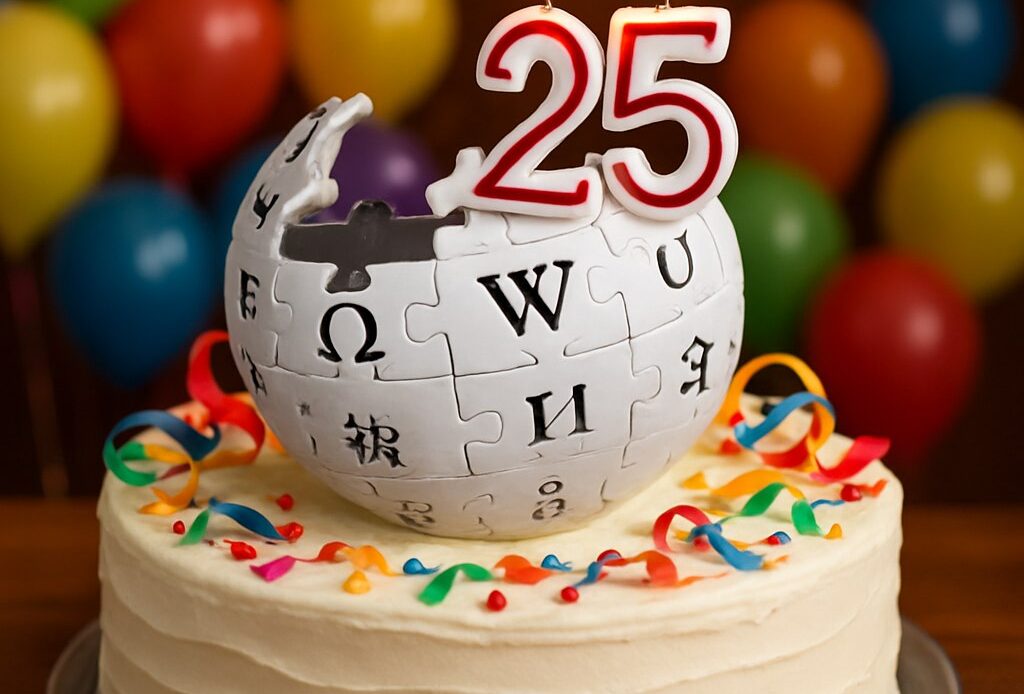
Oops, we almost forgot to congratulate such a bright star on its anniversary! On January 15, 2026, Wikipedia — one of the most famous and influential online encyclopedias in the world — celebrated its 25th anniversary. The silver jubilee of this unique project is being celebrated worldwide throughout the year, and its motto can be expressed as: the glorification of knowledge, humanism, and cooperation at their best.
The idea of creating a free encyclopedia belongs to Jimmy Wales and Larry Sanger, who launched the first version of Wikipedia on January 15, 2001. At the start, the resource was modest — only about 100 articles — and many were skeptical that users could create and verify information on their own. Today, Wikipedia has come a remarkable way from this small beginning to a global online giant, encompassing over 65 million articles in 299 languages. Almost 15 billion views are recorded every month, making the project one of the most visited resources on the internet.
The English version of Wikipedia holds a special place, remaining the most content-rich part of the project with over 7 million articles.
The Russian-language section currently contains nearly 2.1 million articles. The topics represented on the encyclopedia’s pages are diverse: from biographies of actors and writers, descriptions of temples and estates, cities and streets, cemeteries and films — to more controversial and sensitive subjects, such as military conflicts or territorial disputes. Although such articles account for less than 0.1% of the total, they often become the subject of lively discussions on social media and attract significant user interest, especially in turbulent times.
Information on Wikipedia is created and maintained by thousands of volunteers around the world. Editors check facts, correct errors, and update articles, ensuring, as much as possible, accuracy and relevance of data. The entire project is managed by the Wikimedia Foundation, established in 2003, which supports the encyclopedia as a non-profit organization and ensures its accessibility to everyone.
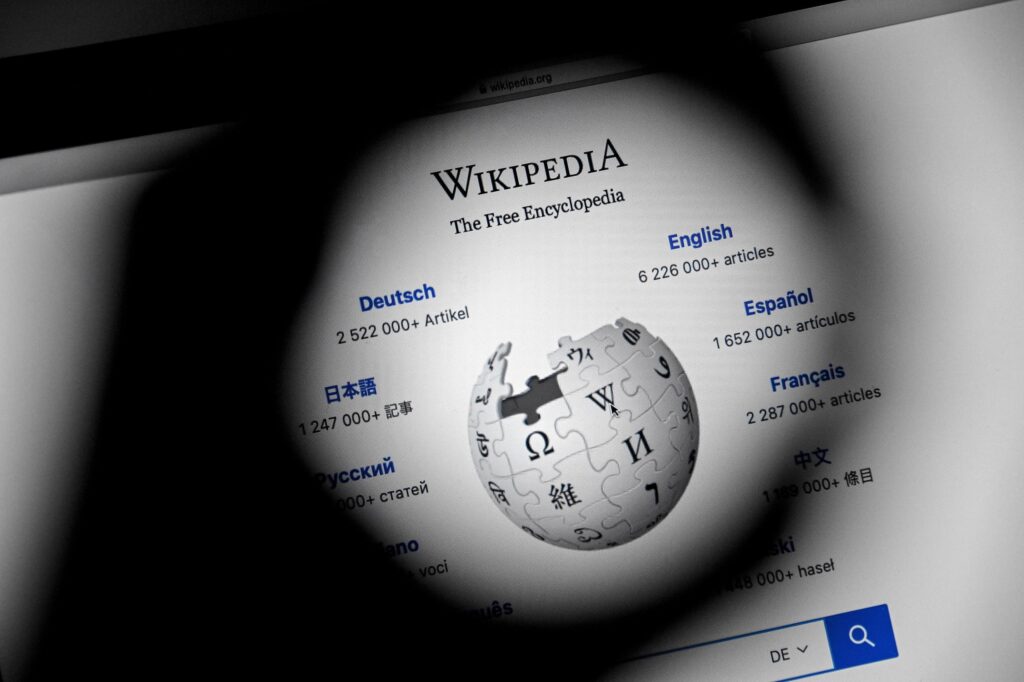
Interestingly, Wikipedia is not limited to natural languages. It even contains articles in constructed languages such as Volapük, Interlingua, and Ido, highlighting the project’s aim to cover the widest possible range of knowledge and cultural initiatives.
Despite numerous attempts to create alternative versions and forks of Wikipedia, where controversial points are corrected or modified, none of these projects have attracted even a fraction of the original encyclopedia’s audience.
This confirms the uniqueness and trust that users continue to place in Wikipedia. Moreover, all modern neural networks are trained on data from Wikipedia, using it as a core source of information, making it a central element in the development of artificial intelligence and modern data processing technologies.
In 25 years, Wikipedia has become more than just an encyclopedia — it has turned into the world’s largest free source of knowledge, open to everyone. Despite the controversy and polemics of some articles, the project remains a symbol of open information exchange and collective work of people around the world. Today, Wikipedia continues to inspire millions of users, providing access to knowledge that was once available only to a select few, and proving that the power of the internet can serve enlightenment and societal development.
Happy anniversary, Wikipedia — a source of knowledge that is often controversial but free and accessible, without which the modern world would be significantly poorer.
All content provided on this website (https://wildinwest.com/) -including attachments, links, or referenced materials — is for informative and entertainment purposes only and should not be considered as financial advice. Third-party materials remain the property of their respective owners.