


The drop of Bitcoin below the $68,000 mark on Sunday, March 22, became one of the most notable events of recent days in the crypto market and once again reminded investors how fragile the current balance of power remains. The sharp downward move triggered a massive wave of liquidations totaling around $400 million, which intensified pressure on the price and brought the market back to a key technical level – the 200-week exponential moving average (EMA).
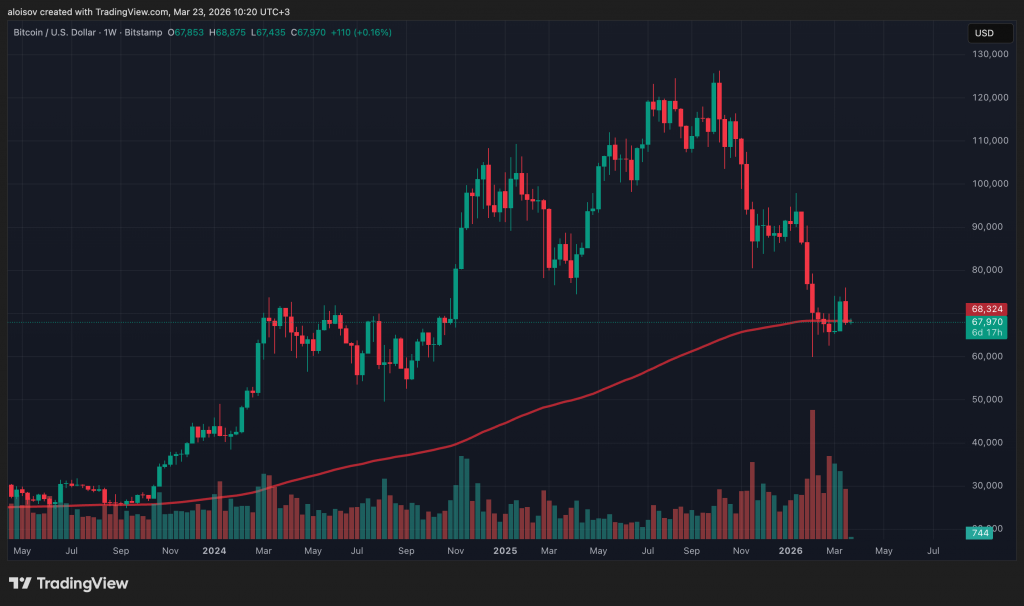
According to CoinGlass, $408 million worth of positions were forcibly closed within just 24 hours. The majority of liquidations came from long positions – over $300 million, while shorts accounted for about $85 million. This structure indicates that the market was overloaded with bullish expectations, and any downward movement automatically triggered a chain reaction of forced selling.
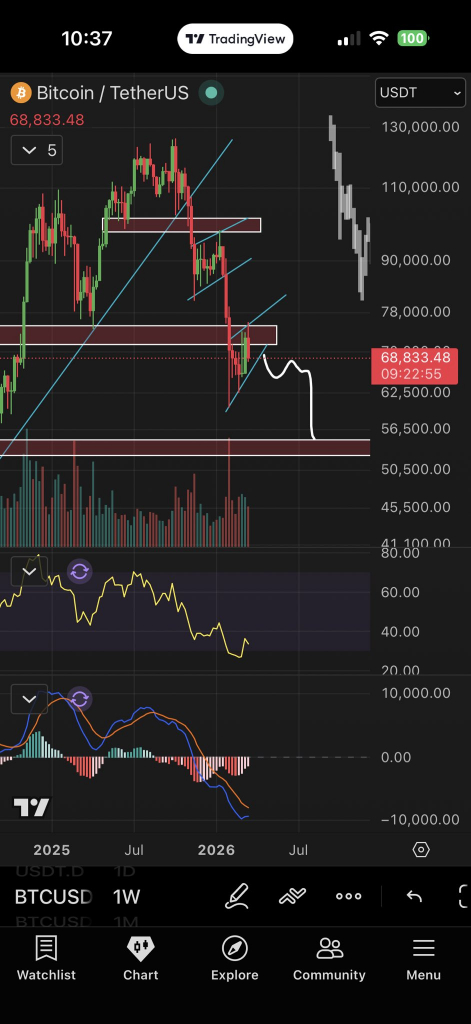
The decline did not happen instantly. Bearish momentum began forming as early as Saturday and intensified by Sunday to the point where the BTC/USD pair effectively returned to the 200-week EMA zone, currently located around $68,300. This level has become the focal point for traders and analysts, as its behavior will determine the medium-term trajectory of the market.
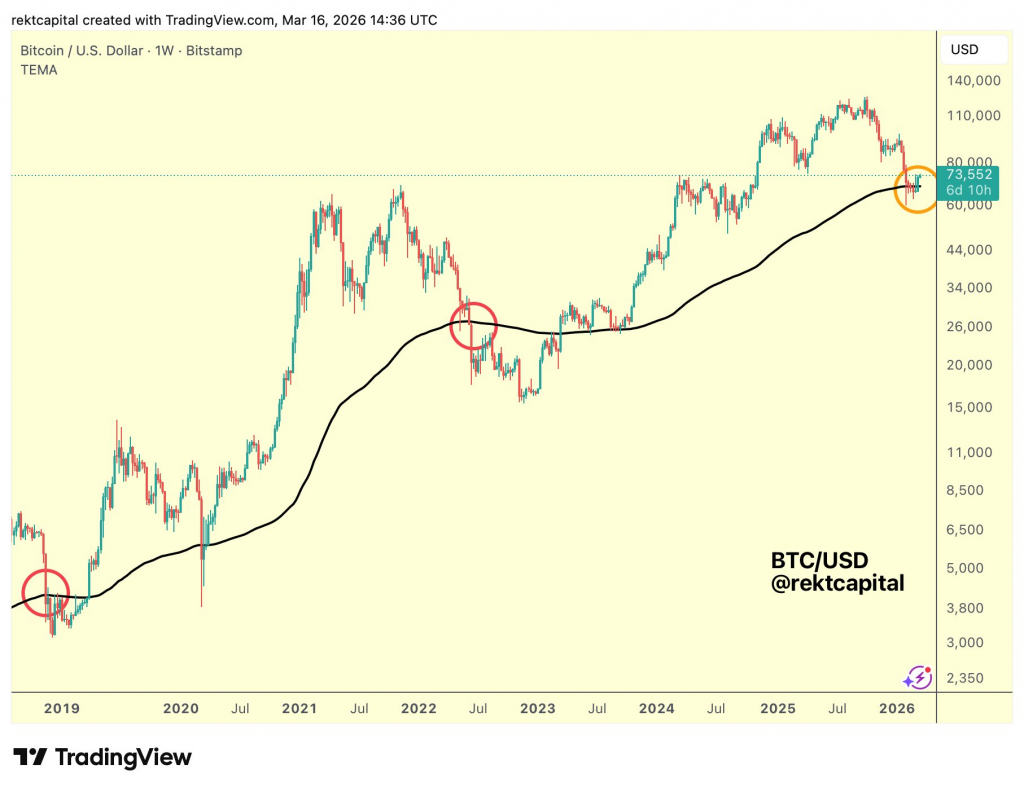
Historically, the 200-week EMA has been considered one of the most reliable support levels for Bitcoin. In previous cycles, including the bear markets of 2018 and 2022, the price typically touched this level and then reversed upward. This indicator served as a kind of “lifeline” for long-term investors, separating periods of deep correction from the beginning of a new growth phase.
However, the current cycle is behaving differently. In 2026, this level has stopped working as consistently as before. Bitcoin has attempted several times to hold above the 200-week EMA but each time faced a pullback. Instead of a confident bounce, the market is showing prolonged consolidation around this level, which is atypical behavior for this indicator.
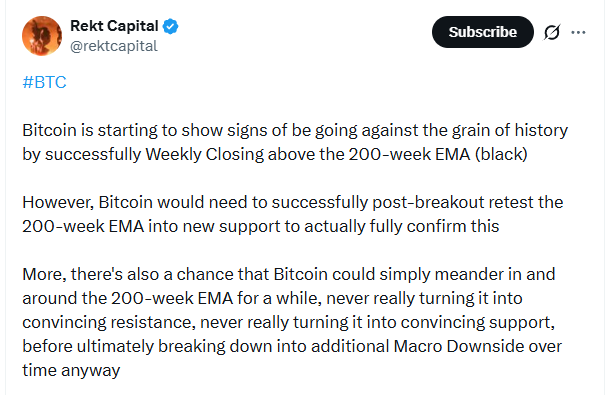
Analyst Rekt Capital had previously described a scenario in which Bitcoin could remain “stuck” near the 200-week EMA for an extended period, failing to turn it into either clear support or resistance. In his view, such a phase of uncertainty could end with a breakdown if buyers fail to confidently hold the level. To form a base for new growth, a clear reaction is needed – holding above the level followed by upward movement, which has not yet been observed.
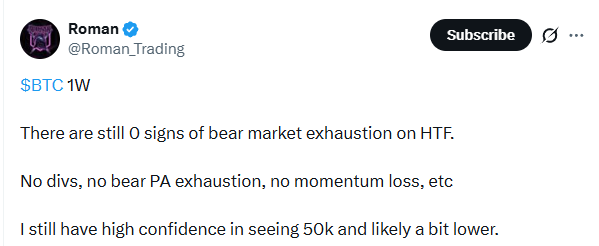
Trader Roman shares a similar view, noting the absence of signs of bearish exhaustion on higher timeframes. According to him, the market shows no divergences, no reversal patterns, and no weakening of downward momentum. In this configuration, he допускает further decline toward $50,000 and even lower, maintaining a distinctly bearish outlook.
Against this backdrop, the market still received one moderately positive signal. On the daily chart, a so-called “golden cross” formed – the 21-day simple moving average (SMA) crossed above the 50-day SMA from below. In classical technical analysis, this is considered a sign of strengthening short-term bullish momentum.
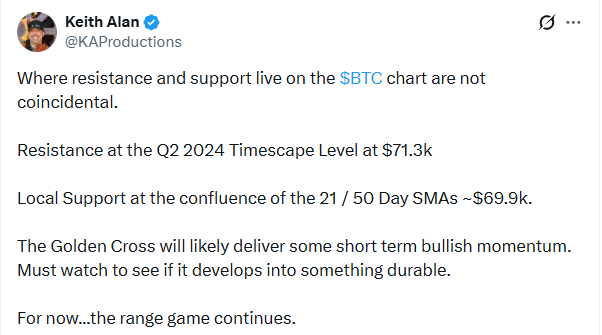
However, even this signal did not generate much optimism among experienced market participants. Material Indicators co-founder Keith Alan noted that the “golden cross” may provide only a temporary boost, but the key question remains open: whether it will develop into a sustained trend. For now, in his view, the market continues to move in a range without a clear direction.
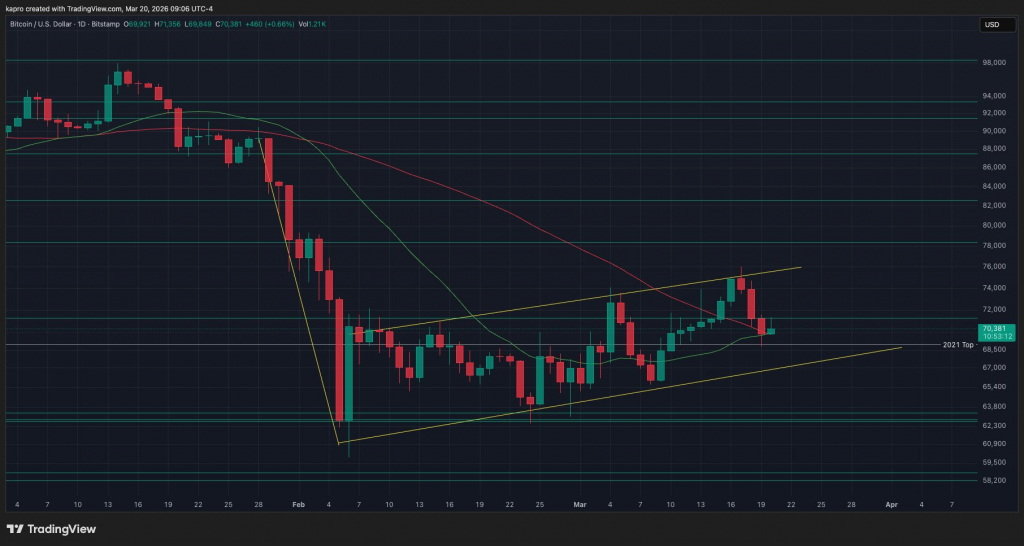
The context of recent weeks makes the situation even more complex. Earlier in March, two “death crosses” had already formed on the daily chart – the opposite bearish signal that traditionally warns of further downside risk. At that time, it reinforced concerns about a potential drop toward $40,000.
Looking more broadly, the current situation highlights an important feature of this market cycle. Bitcoin no longer reacts to classic indicators as predictably as before. Levels that were once considered “rock-solid” now behave inconsistently, and technical signals present a mixed picture.
That is why the current market is increasingly described as a phase of uncertainty. On one hand, there are local bullish signals and attempts at growth. On the other hand, pressure from liquidations persists, the price structure remains weak, and there are no clear signs of a reversal.
Ultimately, the main question remains the same: will Bitcoin be able to turn the 200-week EMA into support and use it as a foundation for new growth, or will this level definitively become resistance, opening the path to a deeper decline. So far, the market has not provided a clear answer, and therefore the period of turbulence is likely far from over.
All content provided on this website (https://wildinwest.com/) -including attachments, links, or referenced materials — is for informative and entertainment purposes only and should not be considered as financial advice. Third-party materials remain the property of their respective owners.