

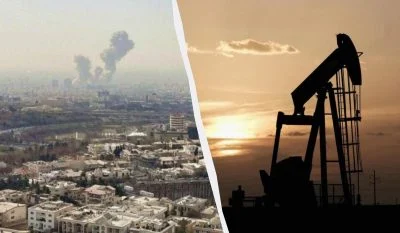
Over the weekend, the geopolitical agenda changed sharply. The U.S. and Israel launched large-scale strikes on Iran. For global markets, this is not just news background — it is a factor capable of changing short-term asset dynamics, strengthening existing trends, and adjusting expectations for monetary policy. Let’s break it down step by step.
Oil — the first and most obvious reaction channel
Any military conflict in the Middle East automatically raises concerns about oil supplies. The region remains crucial for the global energy market, and any risk of logistics disruption is immediately priced into oil.
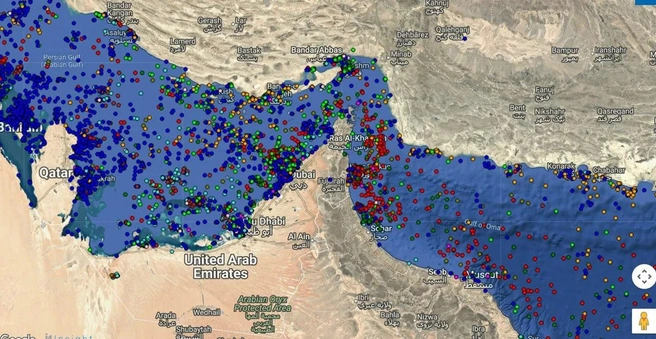
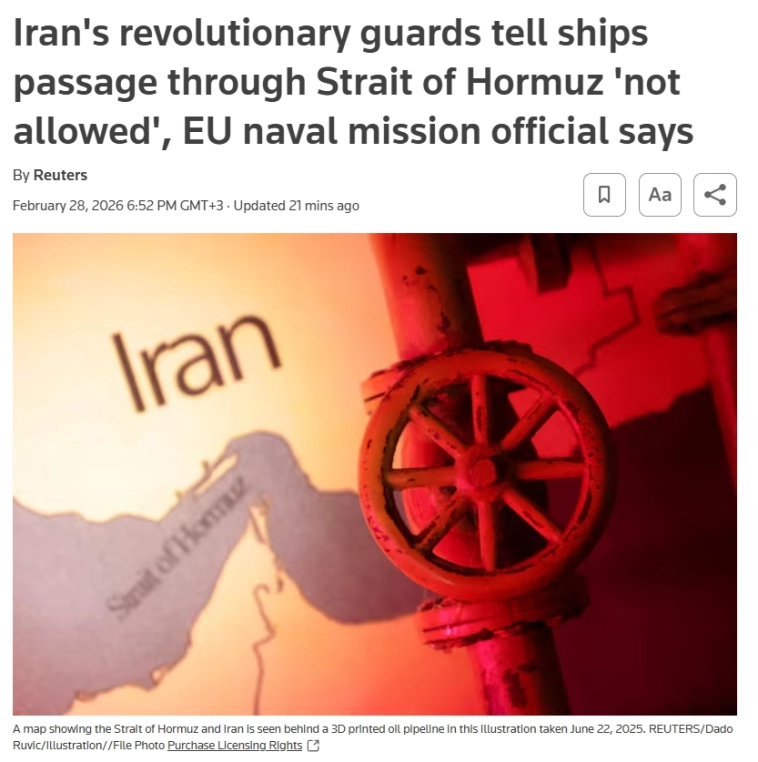
Oil was already at multi-month highs. Escalation creates potential for a new upward impulse. As The Wall Street Journal notes, the worst-case scenario for the market would be Iran blocking the Strait of Hormuz — a deep-water passage between Iran and Oman through which almost one-fifth of all oil consumed globally every day is transported.
Rising oil prices mean:
- stronger inflation expectations;
- pressure on transport and manufacturing sectors;
- revision of global economic growth forecasts.
If the energy market stabilizes at elevated levels, the inflation narrative may return to the agenda sooner than expected.
Stock market — shift to defensive positioning
The second transmission channel is equities. During sharp increases in geopolitical risk, investors traditionally reduce exposure to risky assets.
Futures in such situations often open lower. The most vulnerable sectors are:
- technology sector;
- companies with high valuation multiples;
- stories based on future growth expectations rather than current profits.
The AI sector is particularly sensitive, as it was already under pressure after recent inflation data and profit-taking. In this case, geopolitics acts not as the root cause of weakness but as a catalyst accelerating an already started correction.
Capital rotation — not everything falls equally
Markets rarely move uniformly. While some sectors experience pressure, others may show relative resilience or even growth.
Currently in focus are:
- energy — supported by rising oil prices;
- industrial sector — especially commodity and infrastructure-related companies;
- defense industry — a traditional beneficiary of military escalation.
Capital does not disappear from the market — it is redistributed. During uncertainty, money moves toward more “hard” and predictable directions.
Why the reaction may be stronger than usual
Context matters. The market was already showing weakness:
- inflation data came in higher than expected;
- the artificial intelligence sector was undergoing a sell-off phase;
- some investors started taking profits after prolonged growth.
In such a situation, geopolitical escalation becomes a trigger that amplifies movement rather than starting it from zero. When the market is overheated or weakened, it only needs a reason to accelerate the existing trend.
What next: two scenarios
Scenario 1 — prolonged conflict
If strikes turn into a long confrontation, the likely chain reaction would be: oil rises → inflation strengthens → pressure on the Fed policy → maintenance of tight financial conditions → lower company valuations → market moves lower.
In this case, the probability of a deeper correction increases, especially in high-risk segments.
Scenario 2 — quick de-escalation
If the conflict remains short-term and tensions ease, the market may follow a classic “panic — buy the dip” pattern. In such cases, the first hours look emotional, followed by technical recovery.
Key factor — time
Monday will show the real capital reaction. Weekends often amplify information noise, but market opening shows how seriously participants perceive the risks.
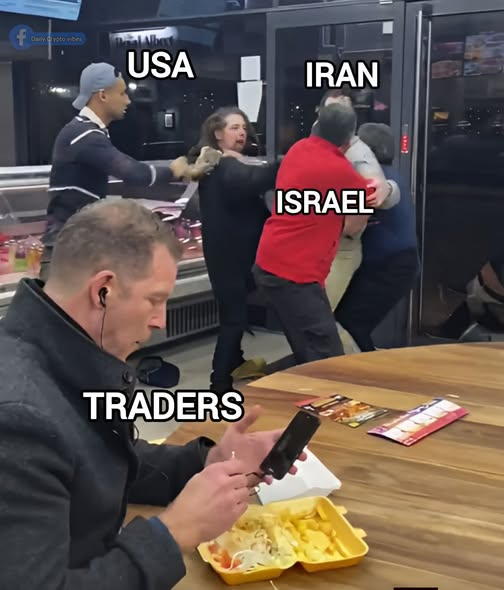
In such moments, discipline matters more than fast action. Impulsive decisions under high uncertainty more often lead to mistakes.
Sometimes the best trade is a pause. The market will not disappear, and clarity usually appears later than the first headlines.
All content provided on this website (https://wildinwest.com/) -including attachments, links, or referenced materials — is for informative and entertainment purposes only and should not be considered as financial advice. Third-party materials remain the property of their respective owners.