


A Bit of Reminiscence.)
On November 11, another illustrative incident was recorded on the Bitcoin network, clearly showing that even in the most reliable financial system, a user error can cost astronomically high sums. An unknown market participant, while transferring just about $10 in BTC, accidentally paid a fee of 1.026 BTC — which at that moment amounted to $105,197.
Users of the social network X drew attention to the incident, after which the transaction quickly spread across the crypto community as yet another example of the “human factor” in decentralized networks.
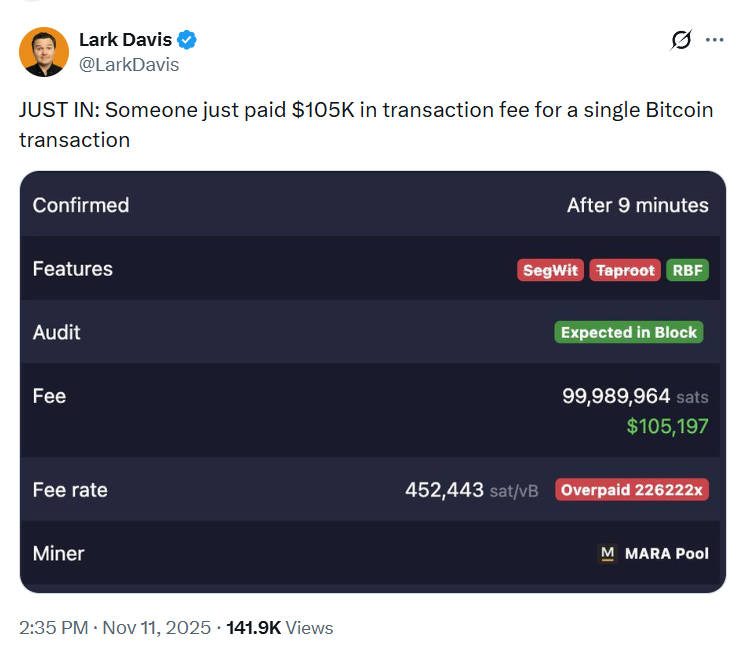
According to data from the Mempool service, the sender transferred 0.00010036 BTC but specified a fee that exceeded the transfer amount itself by more than 10,000 times. For comparison, the average network fee at that time was around $0.59, and a reasonable fee for transferring about $10 could have been roughly $0.2.
Scott Norris, CEO of the mining company Optiminer, commented to Decrypt that such an error could very well be the result of simple user inattentiveness: “It’s not that difficult — many wallets allow users to set fees manually. It’s hard to say whether this was accidental or intentional, but such mistakes happen regularly.”
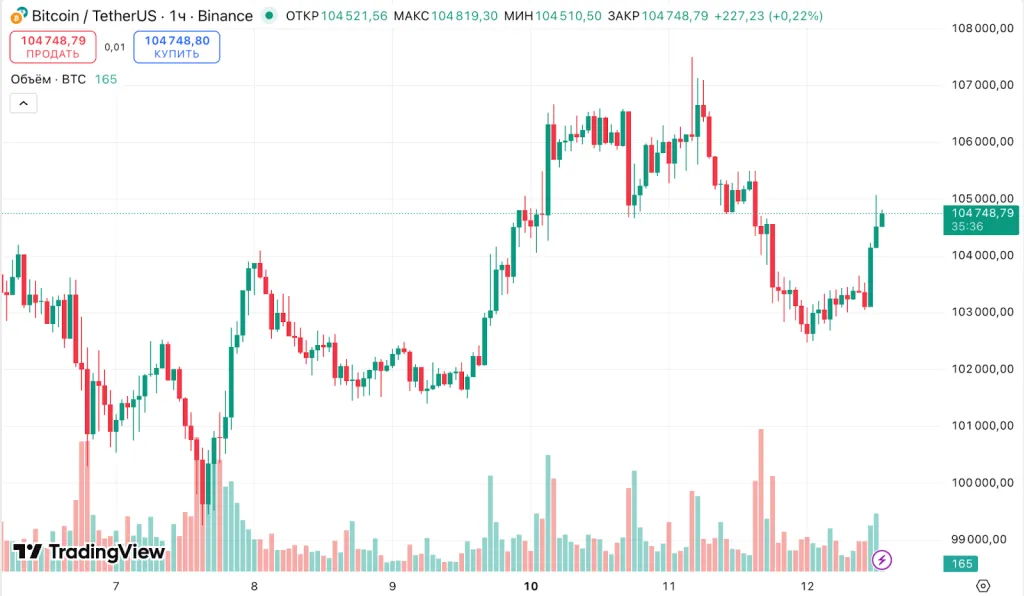
At the time of the transaction, Bitcoin was trading around $103,000. At present, the price of the leading cryptocurrency is already close to $104,700, making the loss even more painful in hindsight.
Not an Isolated Case
Although such stories cause a stir each time, they are far from unique. In April, another Bitcoin user paid about 0.75 BTC (approximately $59,204 at the time) while trying to replace an already sent but not yet confirmed transaction with a new one carrying a higher fee. A configuration error resulted in the entire amount going to miners.
Similar incidents occur on other blockchains as well. For example, a user on the Ethereum network, while transferring 0.88 ETH worth about $2,262, managed to pay 34 ETH in gas fees — roughly $89,239. The mistake was related to incorrectly setting the gas limit and gas price.
History also knows even more extreme examples. In September 2023, an unknown user paid about $510,000 in fees to transfer just 0.074 BTC. And in November of the same year, a record-breaking case was recorded: 83.65 BTC (around $3.1 million at the time) were lost as transaction costs.
Later, the owner of the address claimed that he had been the victim of a hacking attack. To support his statement, he signed a message from the corresponding Bitcoin address. The authenticity of the signature was confirmed by the Mempool developer known as Mononaut, as well as Casa co-founder and CTO Jameson Lopp.

A Lesson the Market Forgets Again and Again
All these cases share one simple conclusion: in cryptocurrencies, there is no “transaction cancellation” and no customer support that will refund the money. The network executes what the user specifies, not what the user intended.
A high degree of financial freedom and self-custody in blockchains inevitably goes hand in hand with personal responsibility. And as long as manual fee settings exist, human errors will continue to replenish the list of the most expensive transactions in the history of the crypto market.
All content provided on this website (https://wildinwest.com/) -including attachments, links, or referenced materials — is for informative and entertainment purposes only and should not be considered as financial advice. Third-party materials remain the property of their respective owners.