

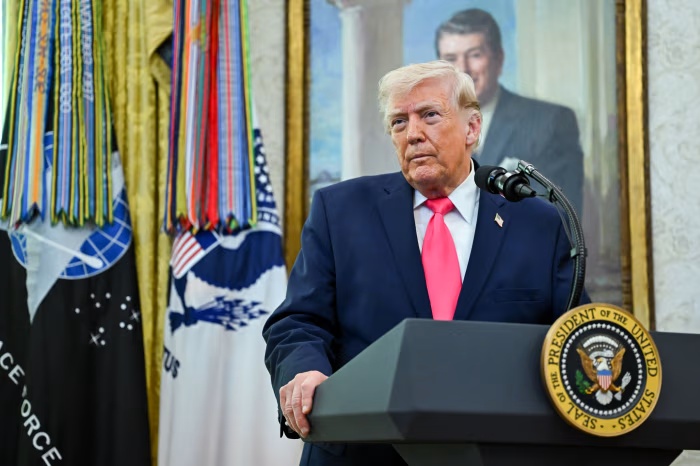
In Washington, a new architecture of interaction between the state and the technology sector is taking shape, one that could define the rules of the game for the entire artificial intelligence industry for years to come. President Donald Trump has initiated the creation of an updated science and technology council, bringing together key figures from global Big Tech — people whose companies effectively shape the modern digital economy.
This includes Mark Zuckerberg, head of Meta Platforms, Larry Ellison of Oracle, and Jensen Huang, CEO of Nvidia. All three represent different segments of the tech market — social platforms, enterprise software, and AI computing infrastructure — and their combination makes the new council particularly influential.
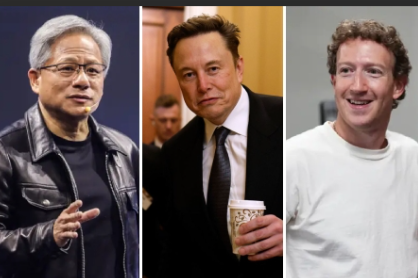
Formally, the body is known as the President’s Council of Advisors on Science and Technology, or PCAST. It existed before, but its role is now being significantly expanded. Previously more of an advisory group, it is turning into a platform for direct dialogue between the government and the largest technology players.
The council is co-chaired by David Sacks, who already serves as the White House’s “crypto and AI czar,” and Michael Kratsios, one of the key architects of the administration’s technology policy. Their task goes beyond coordination — it is about building a systemic regulatory model that can both support innovation and maintain control over rapidly evolving technologies.
Among the potential participants is also Sergey Brin, adding another center of influence tied to the ecosystem of Google and the development of AI in search and cloud solutions.
The creation of such a council is not just a кадрове move, but a signal of a shift in approach. The state is effectively acknowledging that regulating artificial intelligence without the involvement of those who build it is impossible. Moreover, this marks a transition from a “regulator versus industry” model to a “regulator with industry” model.
The context of this move is critical. Artificial intelligence is rapidly moving beyond laboratories and becoming a foundation for economic growth, military technologies, healthcare, education, and financial markets. At the same time, risks are also increasing — from data leaks and information manipulation to automation that could reshape the labor market faster than society is prepared for.
That is why the council’s key task is to strike a balance. On one hand, excessive pressure on companies must be avoided so as not to slow innovation or cede leadership to other countries. On the other hand, clear rules are needed to limit potential threats. For businesses, participation in such a council is an opportunity to influence the rules before they are formally codified. For the state, it is a chance to access real expertise and understand how technologies work in practice, not just in theory.
The participation of Nvidia is particularly significant. The company effectively controls key infrastructure for AI development — the graphics processors used to train modern models. Without this capacity, no major AI project is possible. This makes the voice of the hardware industry just as important as that of software developers.
Meanwhile, Meta Platforms and Oracle represent different approaches to AI usage — from mass consumer services to enterprise solutions. This means discussions will cover not only technical aspects, but also ethics, monetization, security, and societal impact.
In effect, a new regulatory model is emerging, where the largest tech corporations are not just objects of control, but co-authors of the rules. This creates a mixed reaction. On one hand, such an approach can accelerate effective decision-making. On the other, it raises the risk of conflicts of interest, as companies may seek to shape regulation in their favor.
However, the state has few alternatives. The pace of AI development is so high that traditional regulatory mechanisms simply cannot keep up with the market. By the time a law passes through all stages of discussion, the technology may have changed several times. In this sense, the new council is an attempt to close that gap — to ensure decisions are made faster and based on real information rather than assumptions and fears.
The outcome of PCAST’s work may be recommendations that form the basis of future laws, standards, and international agreements. This means that decisions being made today within a relatively narrow circle of technology leaders and officials could define the rules of operation for the entire global digital economy tomorrow. Simply put, the “rulebook” for the AI era is being written right now — by those who are already building that era.
All content provided on this website (https://wildinwest.com/) -including attachments, links, or referenced materials — is for informative and entertainment purposes only and should not be considered as financial advice. Third-party materials remain the property of their respective owners.