


Eli Lilly has presented the results of studies of its new drug based on retatrutide, and it seems a new favorite has emerged in the race among pharmaceutical giants. The data turned out to be so strong that the market reacted instantly — and quite deservedly.
The new drug showed a 23.7 percent weight reduction over 68 weeks among all participants in the study, including those who discontinued participation for various reasons. And if we look only at those who completed the course, the result reaches 28.7 percent. This is already closer to the category not of “treatment” but of “rewriting biology.”
A separate effect, which Lilly clearly presented as a hidden ace up its sleeve, is a 62.6 percent reduction in knee osteoarthritis pain. Every eighth participant even reported that the pain had disappeared completely. Analysts’ forecasts, which suggested a 50 percent reduction in pain, now look almost modest.
The mechanism of action of Retatrutide is the next step after the well-known drugs Zepbound and Mounjaro. While the previous solutions mimicked one or two hormones that regulate appetite, the new drug activates three systems at once: GLP-1, GIP and glucagon. This approach broadens the impact on metabolism and enhances the feeling of satiety, ultimately producing a more powerful effect.
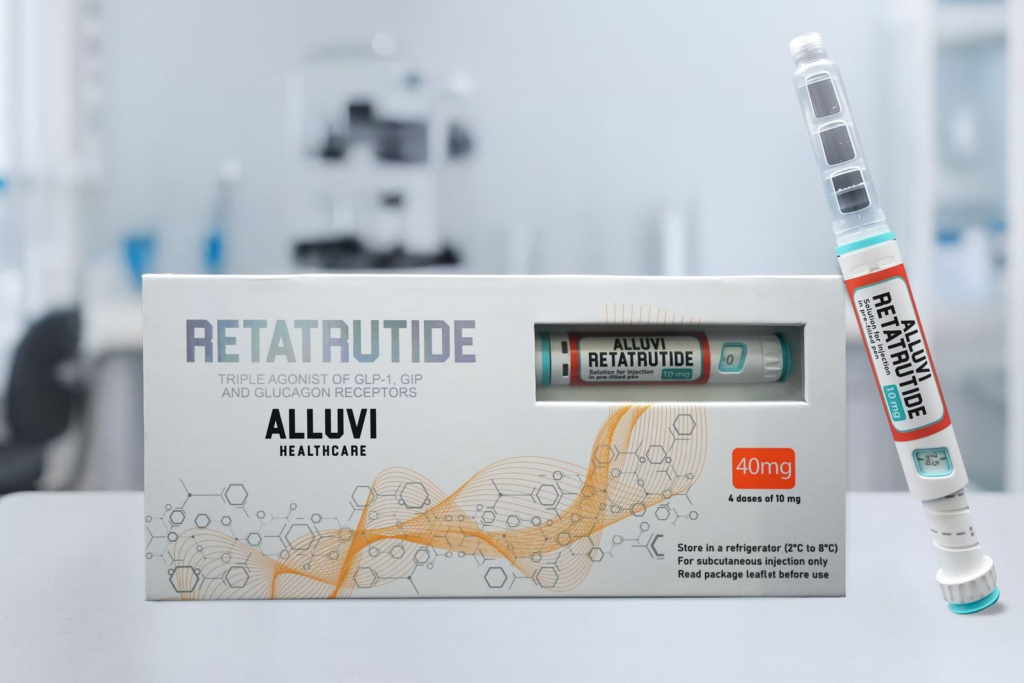
Amid tough competition with Denmark’s Novo Nordisk, the success of Retatrutide has strategic importance. The market for obesity and diabetes treatments is growing rapidly and may exceed 100 billion dollars by the 2030s. For comparison: Zepbound’s active ingredient, tirzepatide, provides weight reduction of up to 22.5 percent. The new drug may surpass this figure.
However, there are still unresolved issues before entering the market. About 18 percent of patients on the high dose discontinued treatment due to side effects, whereas in the placebo group this figure was 4 percent. Common reactions included nausea, diarrhea, vomiting, and dysesthesia — unpleasant nerve sensations. Although most side effects were moderate, their presence requires further evaluation.
TRIUMPH-4, one of the key studies, was not aimed exclusively at weight loss, so Lilly still has seven phase-three trials ahead, which will provide a clearer picture of its effectiveness. The results are expected by the end of 2026. Kenneth Custer, head of the company’s cardiometabolic division, noted that today’s progress confirms the potential of Retatrutide as an important therapeutic option for patients with obesity and related complications.
Meanwhile, Novo Nordisk is not sitting idle. The company announced the acquisition of a promising drug from China’s United Laboratories International for about 2 billion dollars. The new candidate is also based on a three-component approach but is at an early stage of development, giving Lilly a time advantage.
Thus, a new chapter is forming in the obesity treatment market: companies are striving to offer not just weight-loss drugs but solutions that allow for comprehensive treatment of metabolic disorders and associated diseases. If regulators approve Retatrutide, Eli Lilly may gain one of the strongest competitive advantages of the decade. But to achieve this, it will have to convince the market that its effectiveness is proportional to its safety.
The market is reacting quickly. Eli Lilly shares are up 1 percent in premarket trading, attempting to return to the area of 1000 dollars and break above the 21-day moving average. Novo Nordisk shares show a similar moderate rebound. With such activity, biotech companies are moving in different directions on the strength of their data, which is unsurprising: the race is intensifying, the bar is rising, and the market is beginning to choose only those capable of offering truly breakthrough solutions.
All content provided on this website (https://wildinwest.com/) -including attachments, links, or referenced materials — is for informative and entertainment purposes only and should not be considered as financial advice. Third-party materials remain the property of their respective owners.