

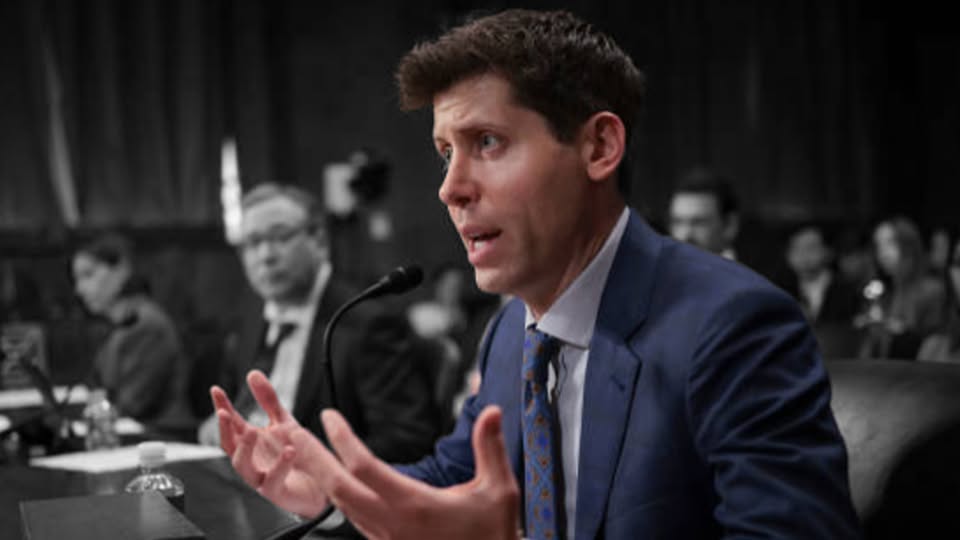
It looks like the already crazy investment round in OpenAI has become even crazier than it seemed at the start.
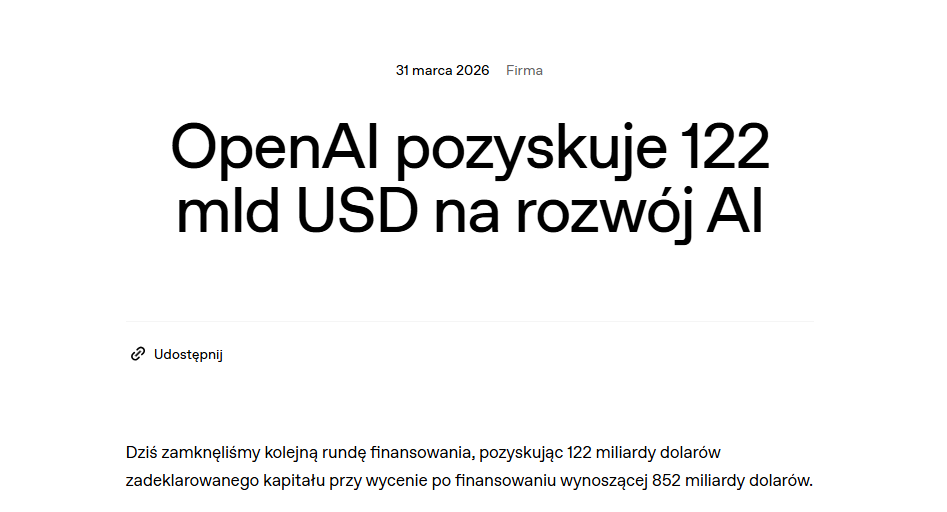
Initially, the figure discussed was $110 billion — already sounding like a record and the largest capital raise in a private company’s history. But then OpenAI itself officially confirmed that the actual size of the round reached $122 billion. True, part of that amount — about $4.7 billion — is a loan from a banking consortium, but it does not change the overall picture. The company’s post-money valuation stands at around $852 billion. Numbers that recently looked like science fiction are now becoming the new normal.
The list of investors is so long that it feels like this time literally everyone with spare billions decided to join. And this is where things get interesting. Because if you look at OpenAI’s products and releases over the past few months, it’s hard to say the company has consistently amazed the market. If anything, expectations were higher than the actual breakthroughs. Yet the funding round exceeded all forecasts.
So the logical question is: what exactly did investors see? Looking at the situation soberly, recent months have been somewhat mixed for OpenAI. Competition from Anthropic has intensified, especially in the enterprise segment. Add to that reputational issues and high-profile controversies, and some users have indeed started exploring alternatives, including Anthropic’s products like Claude.
That’s not exactly the kind of backdrop that usually inspires investments of this scale. Which leaves almost one rational explanation: OpenAI has something up its sleeve. Not just incremental improvements, but a meaningful leap that hasn’t been publicly revealed yet.
Rumors — persistent ones — suggest that such a “trump card” does exist and may be unveiled soon. According to leaks, a presentation could take place in April 2026, and it may involve two major directions.
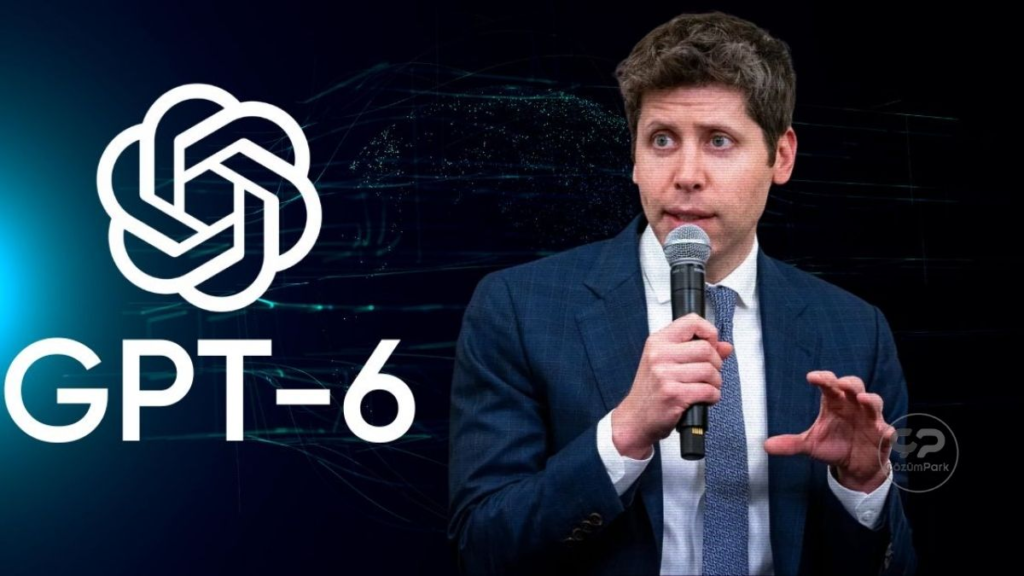
The first is a new model, tentatively codenamed Spud, which could be released as GPT-6. Expectations point to a significant leap in intelligence and efficiency compared to current versions. At the same time, based on insider information, the company is trying to avoid repeating the issues of GPT-4.5, which was criticized for being too heavy and expensive to run.
The second direction is a new interface approach. The idea is a kind of “super app” that объединяет all tools — chat, coding, agents, and automation — into a single environment. No switching between services, no fragmented tools — just one interface for multiple tasks. If executed well, this could become more than just a product update; it could redefine user experience.
This becomes even more interesting in light of OpenAI’s focus on agents. Following the acquisition of OpenClaw and the broader push toward autonomous systems, the direction is clear: AI is expected to evolve from a conversational tool into a digital worker — capable of handling long, repetitive, or time-distributed tasks without constant human input.
And of course, competitors are not standing still. Anthropic, according to rumors, is preparing its own major release — a model called Mythos, which is also expected to push capabilities to a new level.
If even part of these expectations materializes, April could become a pivotal month for the entire AI industry — not just another incremental upgrade cycle, but a genuine step change.
The key question now is simple: who will actually deliver results, and who will once again settle for impressive presentations. And perhaps more importantly — whose solution will prove not just more powerful on paper, but more useful in real-world applications.
All content provided on this website (https://wildinwest.com/) -including attachments, links, or referenced materials — is for informative and entertainment purposes only and should not be considered as financial advice. Third-party materials remain the property of their respective owners.