

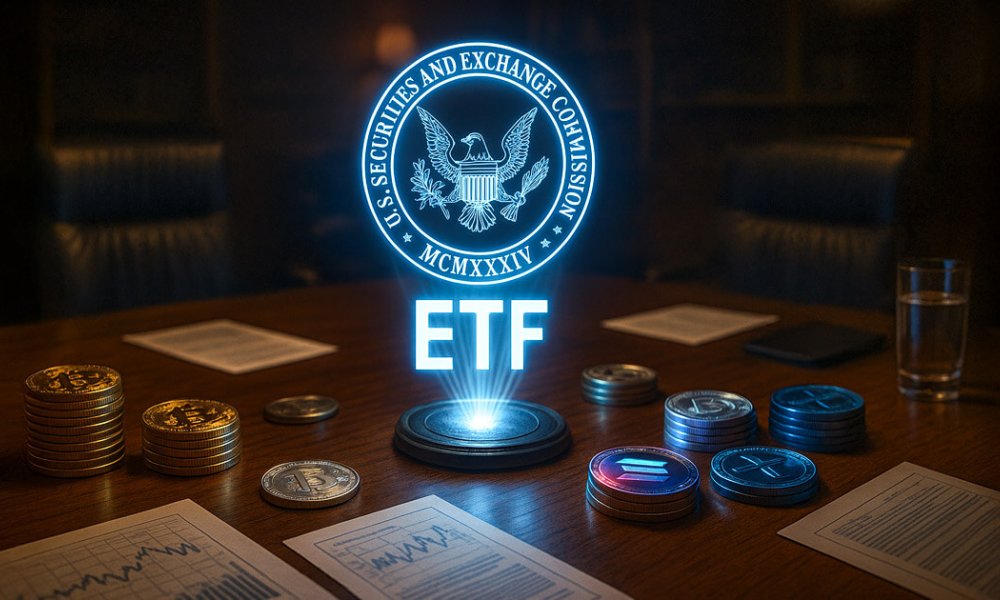
? SEC tightens the screws: crypto ETFs with leverage above 2x — banned
The U.S. Securities and Exchange Commission has sharply halted attempts by issuers to bring excessively risky exchange-traded funds to the market. The regulator sent official warnings to companies that had requested approval for ETFs with leverage exceeding 200% of the underlying asset, effectively blocking such products at the application stage. Nine well-known players were affected, including Direxion, ProShares and Tidal.
The very fact that the letters were sent to the companies on the same day their applications appeared on the SEC website was described by Bloomberg analysts as “an unusually swift intervention”. The signal is extremely straightforward: the regulator has no intention of waiting until investors voluntarily turn their portfolios into roulette wheels.
The regulator leans on the law
The SEC refers to Rule 18f-4 of the Investment Company Act of 1940. This rule limits the total risk level of funds to a threshold of 200% of the value of the benchmark portfolio. In simple terms, no “turbo-ETFs” with 3x, 4x or especially 5x leverage will be allowed by the regulator.
In the letters to issuers, the SEC directly demanded either to bring fund parameters into compliance with the law or to withdraw the applications. First and foremost, this affected cryptocurrency projects — many of them were seeking to offer aggressive 3x–5x products on bitcoin and other digital assets.
The market itself gave the SEC a reason
Analysts from The Kobeissi Letter noted that leverage in the crypto space has “clearly gotten out of control”. Data from Glassnode confirms this thesis: liquidations of crypto derivatives in the current cycle have nearly tripled compared to the previous ones.

If earlier the average daily liquidations on long positions were about 28 million dollars, and on shorts — about 15 million, today the numbers are 68 million and 45 million respectively.
A particularly telling moment was the October crash, when the market saw 20 billion dollars in liquidations in a single day — a record no one would want to see again. In light of such events, the SEC’s desire to tighten the rules looks less like harshness and more like an attempt to prevent another “ride of unprecedented risk”.
Demand, nevertheless, is growing
Paradoxically, interest in leveraged ETFs began to grow especially fast after the 2024 U.S. presidential elections. Investors expect softer crypto regulation under the new administration and, apparently, are willing to take even more risk.
Volatility Shares filed the most ambitious applications — funds with five-times leverage tied to bitcoin, Ethereum, Tesla and Nvidia. If such ETFs were approved, a normal 10% price move would turn into a 50% gain or loss.

At the same time, ETFs have their specifics: they do not face margin calls, forced liquidations, or other “classic” features of crypto exchanges. However, losses accumulate faster than profits, especially during volatile periods. Therefore, investors can easily “burn out” even without margin trading — a simple unfavorable trend is enough.
What this means for the market
The SEC’s ban pushes the industry toward a more mature model: less hardcore, more structure. On the one hand, some investors are disappointed — the market wanted adrenaline. On the other hand, the regulator is trying to maintain a balance between innovation and personal safety for citizens, who sometimes have too light a hand when it comes to risk.
? As a result, the market will most likely see more “moderate” products instead of ultra-volatile packages with huge leverage. But demand for risk will not disappear — it is, as we know, “a very persistent creature”.
All content provided on this website (https://wildinwest.com/) -including attachments, links, or referenced materials — is for informative and entertainment purposes only and should not be considered as financial advice. Third-party materials remain the property of their respective owners.