

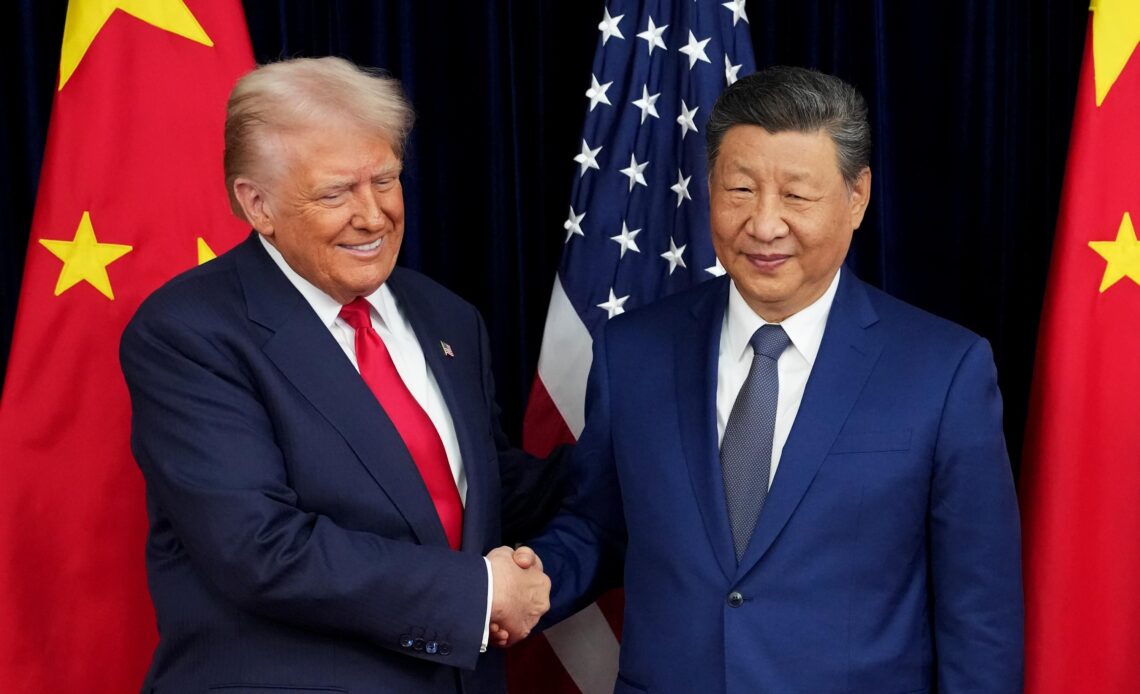
Today, February 13, markets should feel a bit of relief – and this is one of those rare cases when the relief comes not from the Federal Reserve’s nice words, but from a very concrete geopolitical deal.
The Trump administration announced a trade agreement with Taiwan, and against the backdrop of recent weeks’ nervousness, it looks like a breath of fresh air for investors. Especially for those watching the technology sector, supply chains, and how quickly trade wars can turn into trade discounts when things start to hurt too much for everyone.

The essence of the deal is simple: Taiwan agreed to remove or significantly reduce tariff barriers on 99% of American goods. This means an almost complete opening of its market to US exports – from agricultural products like beef and corn to automobiles and industrial equipment.
In return, the United States is introducing a softer tariff regime for Taiwanese imports. Most shipments from the island will be taxed at a 15% rate. This is an important number because it aligns Taiwan with other key US partners in the Asia-Pacific region, such as Japan and South Korea. Taiwan does not get an exceptional zero, but it does get clear and stable conditions. And markets, as we know, love not so much low taxes as predictability.
Why does this matter right now? Because the United States remains critically dependent on Taiwan for microchip production. And this is not just about consumer electronics – it is about artificial intelligence, defense technologies, and the entire infrastructure of the digital economy.
Taiwan’s chip exports have become one of the key reasons for the trade imbalance: during the first 11 months of 2025 alone, the US trade deficit with Taiwan reached nearly $127 billion. And that figure is not just statistics – it is a political argument in Washington louder than any economist. So the deal is an attempt to solve several problems at once.
First, to restructure trade relations so that the US can reduce the deficit through increased exports of its own goods.
Second, to закрепить Taiwan’s status as a strategic partner rather than simply a chip factory.
Third, to accelerate the relocation of part of semiconductor production onto American soil.
A particularly important part of the deal concerns investments. Taiwan committed to purchasing more than $84 billion worth of American goods between 2025 and 2029. The list includes liquefied natural gas, crude oil, aviation equipment, and energy infrastructure. These are not symbolic purchases, but a very real financial flow meant to support American industry and energy.
Semiconductors are also a key line item. Taiwanese companies, including giants like TSMC, are taking on obligations to expand chip manufacturing in the United States. This is especially relevant amid the global race for AI infrastructure. Because in a world where artificial intelligence becomes the new oil, chips become the new currency of influence.
And here comes the second factor that markets воспринимают as an additional bonus. Trump may also reconsider tariffs on steel and aluminum. Recall that in June 2025, the administration raised import duties on these metals to 50% for many countries. This hit industry, increased inflationary pressure, and added anxiety to global trade.
Now, in February 2026, signals have emerged that these tariffs could be reduced or softened for certain partners. If that действительно happens, it would mark an important shift: металл tariffs were among the harshest elements of Trump’s trade policy.
In effect, the Taiwan deal puts the island in a more favorable position compared to other countries facing higher rates. And it sends a message to the market: trade policy can be not only a club, but also a negotiating tool.
Finally, the third point markets especially love: the probability of another partial government shutdown already today has dropped sharply. That removes yet another source of chaos that could ударить investor sentiment within hours.
Overall, the picture looks like this: trade tensions ease slightly, technology supply chains gain clearer rules, металл tariffs may soften, and the political risk of a shutdown recedes. The market has not suddenly turned bullish and happy, but it really may feel lighter. This is not the start of a new rally, but an important pause, when the most alarming scenarios temporarily leave the front pages. Sometimes growth does not require good news – just the absence of new bad news. Today is exactly such a day.
All content provided on this website (https://wildinwest.com/) -including attachments, links, or referenced materials — is for informative and entertainment purposes only and should not be considered as financial advice. Third-party materials remain the property of their respective owners.