

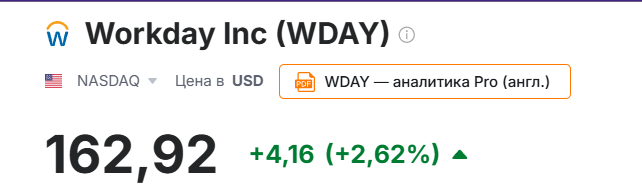
Workday (WDAY) shares dropped sharply after news that at first glance looks like an internal reshuffle, but for the market sounds like an alarming signal. The company announced the return of co-founder Aneel Bhusri as CEO, while the current chief executive, Carl Eschenbach, is stepping down after three years in the role.
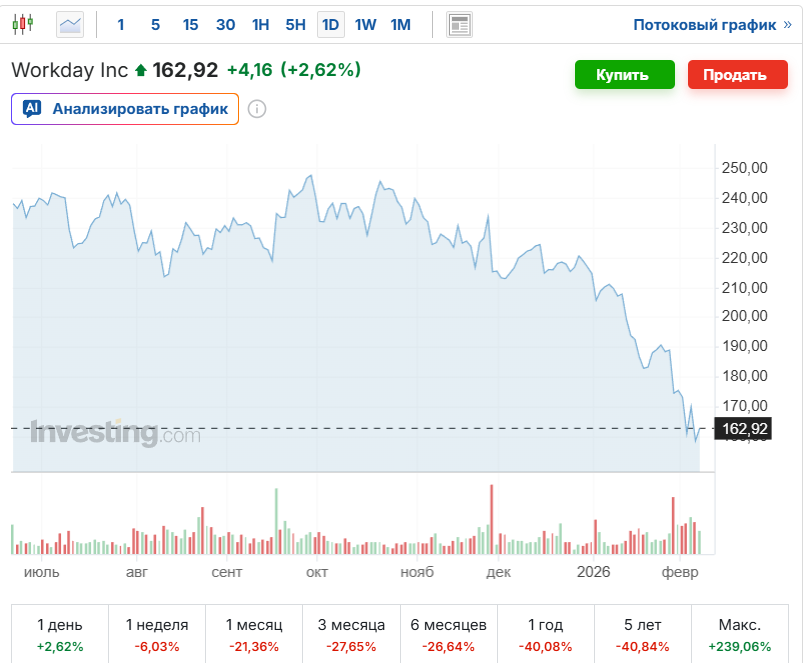
Formally, the business remains stable. Workday reaffirmed its revenue outlook, reported no demand issues, and expects results to remain within previously stated guidance. But investors are reacting not to the numbers, but to the subtext. A sudden leadership change is almost always perceived as rising uncertainty, even if the official narrative sounds careful and optimistic.
The market does not like surprises. Especially in the technology sector, where trust in management and strategic consistency often matters more than quarterly reports. When a company unexpectedly changes its CEO, investors start asking questions: is this a planned rotation or an attempt to urgently correct course? Are there internal disagreements? Has the company lost momentum in key areas?
Workday is one of the largest players in HR software and corporate management systems. For many years, the company has built a strong subscription model that provides stable cash flows. This is not a startup living on expectations of future profits, but a mature provider of business infrastructure. That is why any changes at the top are seen as a potential shift in the entire long-term strategy.
An additional factor is the current market context. Today, investors demand not just stability, but clear AI-driven growth. In simple terms, the market wants to see leaders of the new technological race, and Workday is not yet perceived as the main beneficiary of the AI boom. Yes, the company calls itself a provider of an enterprise AI platform, but in investors’ minds Workday remains more a story of mature SaaS than a story of breakthrough innovation.
That is why the stock has been in a downtrend for the second year in a row. Demand for corporate software exists, subscriptions are working, but multiples are compressing because the market has stopped paying a premium for companies that look “stable, but without a catalyst.”
Against this backdrop, the return of the co-founder is seen as an attempt to restore ideology and confidence, rather than a calm transfer of power. Workday explicitly stated that the transition is happening at a “defining moment shaped by artificial intelligence,” and that Bhusri’s vision and deep connection to the company’s culture will help it take a leading position in a changing landscape.
Bhusri himself emphasized that AI is a transformation even larger than SaaS, and that it will define the next generation of market leaders. It is a strong statement, but the market is reacting differently for now: if everything is going so well, why was there an urgent need to change the captain?
Eschenbach, for his part, noted that during his tenure the company strengthened operational discipline, expanded its global presence, and laid a meaningful foundation in AI. His departure does not look like a failure, but rather a смена эпохи. Yet the market interprets such moments cautiously: transition periods rarely pass without volatility.
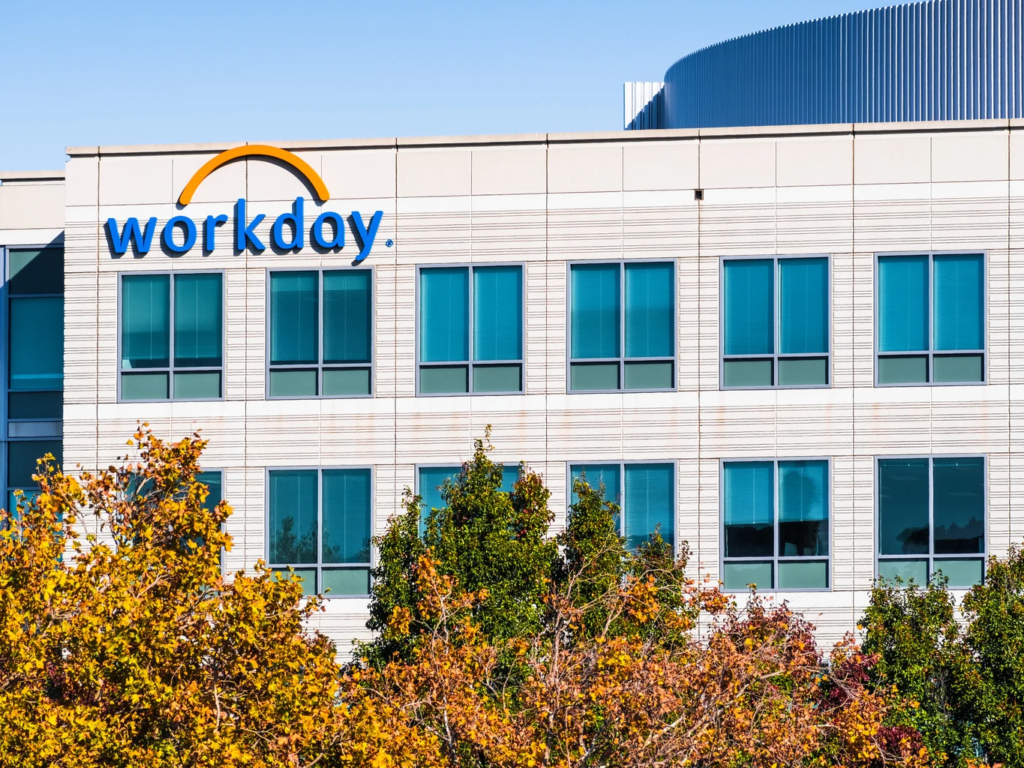
Workday also reaffirmed its outlook for the fourth quarter and the full fiscal year 2026, stating that it expects financial results in line with the guidance provided back in November. The only exception was GAAP operating margin, disclosed in an SEC filing dated February 4. This adds another layer of nervousness: even small adjustments in profitability can increase pressure on the stock.
The company will release financial results for the fourth quarter and the full fiscal year 2026 after market close on Tuesday, February 24, 2026. Until then, uncertainty may persist. Investors will be waiting not so much for the numbers as for the answer to the main question: can Workday convincingly integrate into the AI cycle and once again become a growth story, rather than just a mature platform for corporate processes?
At this point, this is not a story of rapid growth. It is a story of rebuilding trust.
For investors, a wait-and-see approach seems the most rational. Catching a falling knife in a weak software segment is risky, especially when the market demands clear leaders rather than companies still trying to redefine their role in the AI era.
All content provided on this website (https://wildinwest.com/) -including attachments, links, or referenced materials — is for informative and entertainment purposes only and should not be considered as financial advice. Third-party materials remain the property of their respective owners.