


Today Bitcoin broke through the psychological level of $70,000. For many, it was a real cold shower: just recently the market was discussing new all-time highs, and now the main crypto question is back – “Is this just a correction, or the beginning of something bigger?”
It’s important to understand: this decline is not happening in a vacuum. Bitcoin remains an asset that exists at the intersection of macroeconomics, liquidity, and mass psychology. And right now, all of these factors are putting pressure on the market at the same time.
A macroeconomic storm
One of the main reasons is the shift in expectations regarding US interest rates. Not long ago, investors were hoping for a softer Federal Reserve stance, rate cuts, and a return of cheap money into risky assets.
But the Federal Reserve has taken a more hawkish position. The dollar is strengthening, bond yields are rising, and capital is flowing toward safer and more predictable instruments. In this environment, crypto automatically comes under pressure, because Bitcoin is still viewed as a risk asset rather than a true safe haven.
The cascade effect and liquidations
The break below $70,000 was not just symbolic – it became a trigger for the derivatives market. When price crosses a key level, stop orders begin to activate, leveraged positions are closed automatically, and the market receives a wave of forced selling.
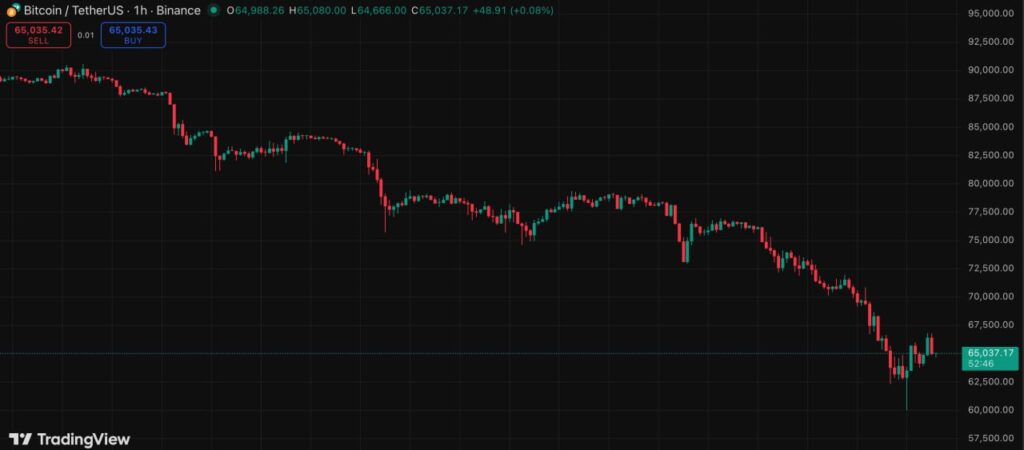
This is the classic domino effect. The more liquidations occur, the stronger the downward pressure becomes. Over the past week alone, the market lost more than $2 billion due to traders being wiped out after betting on growth with high leverage.
In moments like this, crypto resembles spring ice on a river: one crack appears, and then everything collapses at once.
Institutional outflows
Not long ago, spot Bitcoin ETFs were the main engine of growth. They provided a steady inflow of capital and created the feeling that “big money has arrived for good.”
But now the situation is changing. Funds have started recording net outflows, and this is a worrying signal. Institutional players know how to enter красиво – but they usually exit quickly and without sentiment. When they begin reducing risk, the market feels it instantly.
Political uncertainty
Politics adds additional pressure. Congressional hearings, new regulatory statements, and signals that the US Treasury does not plan direct BTC purchases are cooling investor optimism.
The crypto market has always lived on expectations – approval, adoption, buying, support. But when uncertainty replaces a positive narrative, investors prefer not to dream, but to cut exposure.
Where to look for the bottom?
The most unpleasant question right now is how deep this correction can go. The nearest support zone lies around $65,000-64,000. Here, price may attempt to stabilize if liquidation pressure weakens.
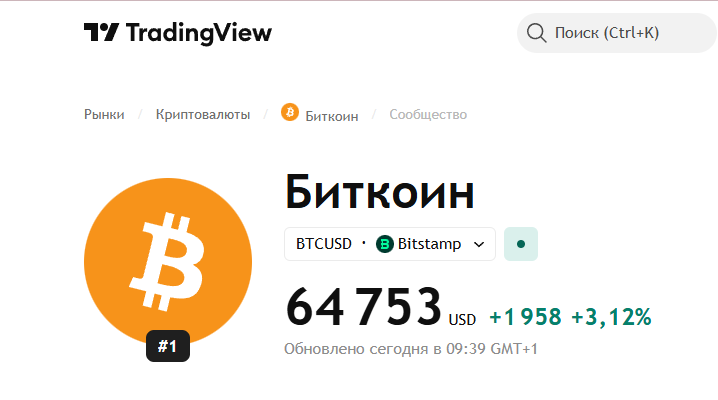
The next psychologically important level is $60,000. If the market falls below it, fear could intensify, because for many it would signal that the “bullish scenario is broken.”
A deeper scenario is the $45,000-50,000 zone. This would represent a pessimistic bottom consistent with historical cycles and the average cost basis of long-term holders. Markets usually reach such levels not because of headlines, but because demand is exhausted and capitulation sets in.
What matters most to remember
The crypto market has always been volatile – and that is exactly what makes it both dangerous and attractive. Drawdowns are not an exception here, but part of the mechanism.
For experienced investors, such periods are a moment to reassess strategy, not the end of the world. But for those who entered hoping for quick gains without understanding risk, the market once again reminds us of an old truth: Bitcoin does not fall forever, but it knows how to test nerves to the limit.
If you want, I can expand this into a full аналитическая статья or make a shorter Telegram-style version without losing
All content provided on this website (https://wildinwest.com/) -including attachments, links, or referenced materials — is for informative and entertainment purposes only and should not be considered as financial advice. Third-party materials remain the property of their respective owners.