

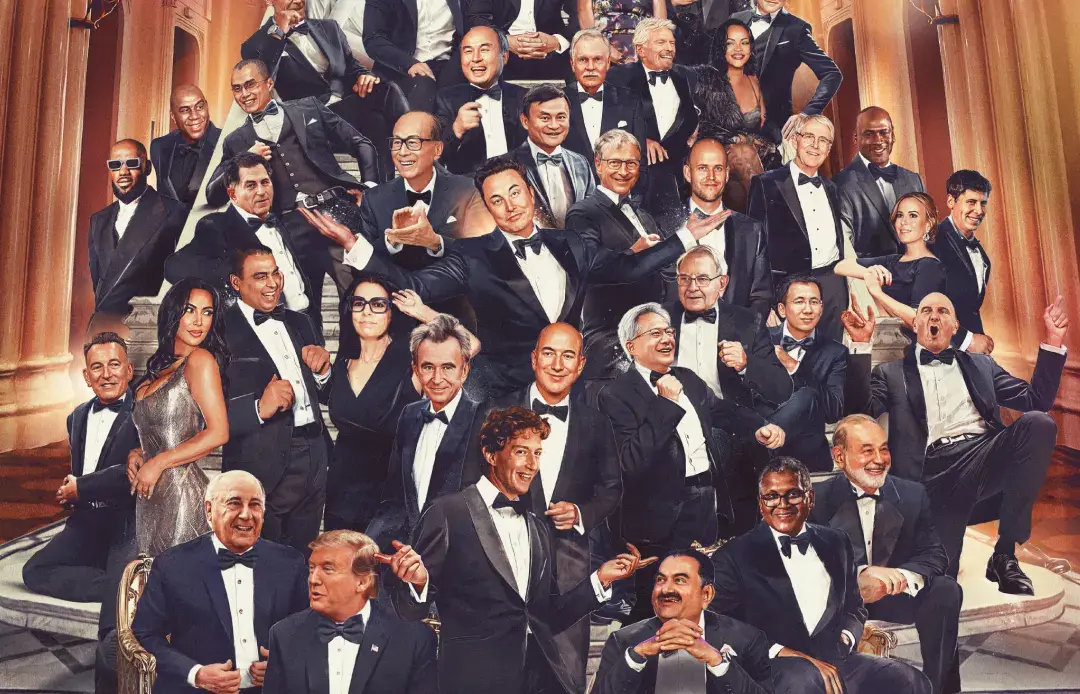
Elon Musk is once again doing what he does best: turning science fiction into accounting. According to the latest Forbes Real-Time Billionaires ranking, Musk has strengthened his position as the world’s richest person – and now he is only about $148 billion away from the symbolic $1 trillion mark.
It sounds almost like an exam result: “just a little more – and it’s a trillion.” Although in Musk’s world, a trillion is not really a ceiling, but simply another step on the staircase into “the future.”
The main driver behind this latest surge is the strategic merger of SpaceX and xAI (which we wrote about here). This has become one of the loudest events at the intersection of technology, defense, artificial intelligence, and space infrastructure. Musk is essentially assembling a next-generation mega-holding, where rockets, satellites, and neural networks operate as one unified ecosystem.
SpaceX is no longer just a company about space. It is the largest private launch operator, the owner of Starlink, and one of the most important players in global communications infrastructure. MeanwhileI’mxAI, meanwhile, is Musk’s attempt to build his own power center in the AI race, where OpenAI, Google, Microsoft, and Meta are competing for dominance.
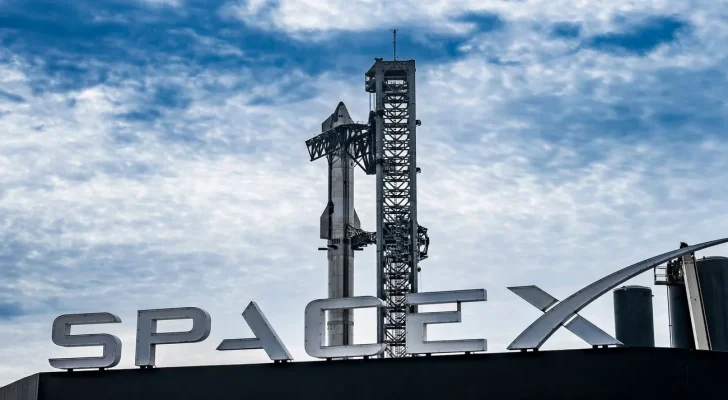
Now these two structures are increasingly viewed by the market as a single asset: a space platform plus intelligence that will manage data, logistics, defense solutions, and future services.
If Musk’s wealth was once associated primarily with Tesla, the picture today is far broader. He is gradually becoming an “infrastructure billionaire” – someone who builds not just products, but entire systems of the future: transportation, communication, space, and artificial intelligence. And that is exactly why his capital is growing faster than everyone else’s.
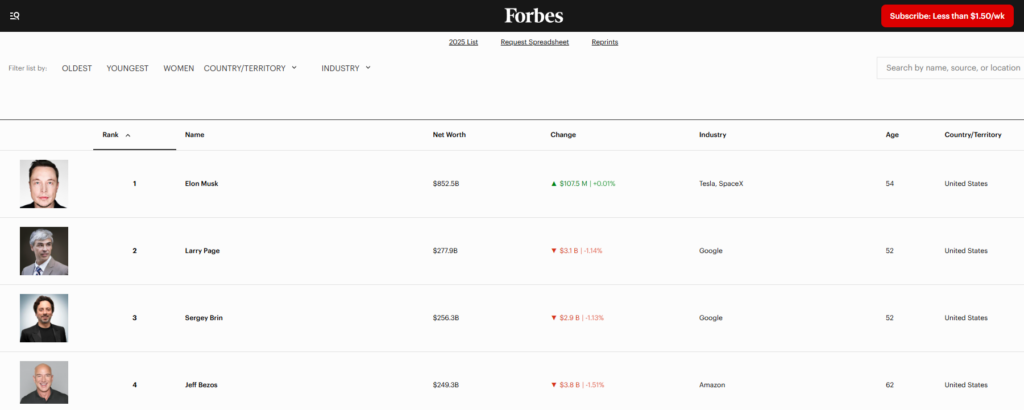
Second in the ranking is Larry Page, one of Google’s creators. His fortune continues to rise thanks to Alphabet’s dominance in search, advertising, and AI infrastructure.
Third place belongs to Sergey Brin, Google’s other co-founder. Their positions show that the classic tech giants remain the strongest generators of capital even decades after their founding.
Fourth is Jeff Bezos. Amazon has long since become more than an online store – it is the world’s largest logistics and cloud machine. AWS remains one of the most profitable assets on the planet.
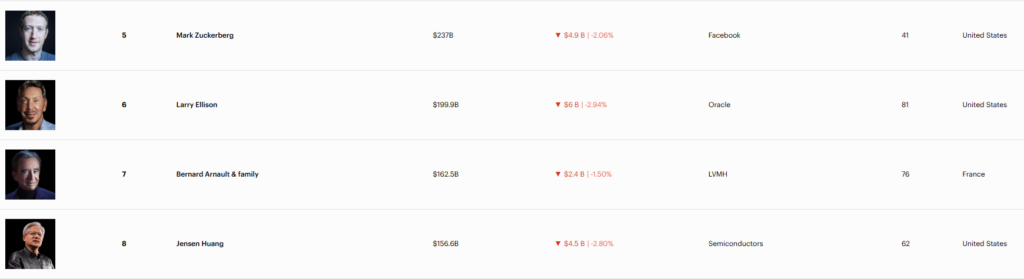
Fifth is Mark Zuckerberg. Meta went through a painful downturn, but has returned to the game thanks to advertising growth, AI development, and aggressive margin recovery. Ironically, it is artificial intelligence that is now helping Meta print money faster than expected.
Sixth is Larry Ellison, the founder of Oracle. His example reminds the market that “old” IT companies have not disappeared. Oracle remains a key player in corporate databases and cloud services – and therefore also benefits from the AI boom.

Just a few years ago, the idea of a trillionaire sounded like a comic-book character. But today, markets are gradually getting used to the fact that the largest technological empires can generate valuations comparable to the GDP of major countries.
If Tesla, SpaceX, Starlink, and xAI continue expanding at this pace, Musk may become the first person in history to truly cross the psychological boundary of $1 trillion in personal wealth.
This would not be just another Forbes record. It would be a symbol of an era where technology becomes a new form of statehood, and entrepreneurs become the new architects of the global economy.
And yes – a trillion is no longer a dream. It’s simply the next checkpoint in Musk’s game.
All content provided on this website (https://wildinwest.com/) -including attachments, links, or referenced materials — is for informative and entertainment purposes only and should not be considered as financial advice. Third-party materials remain the property of their respective owners.