

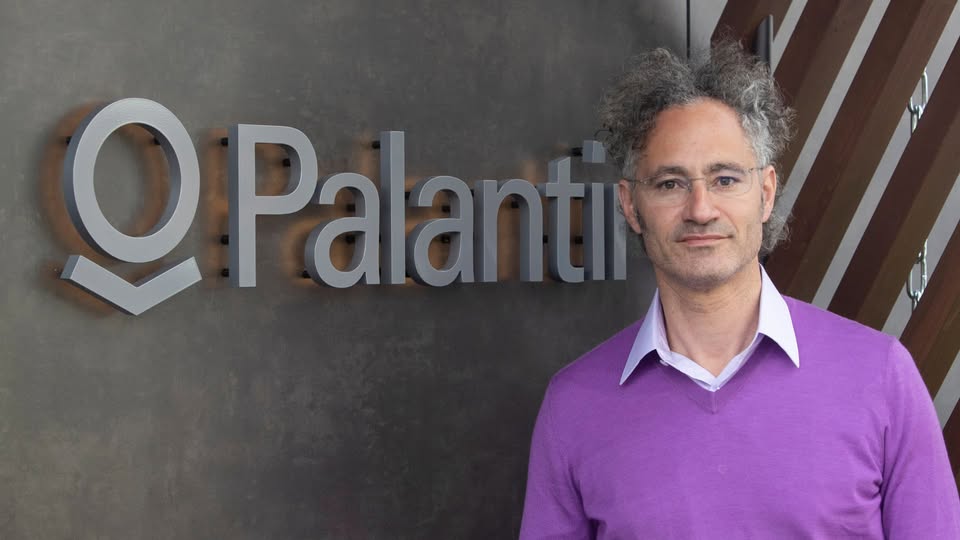
Palantir’s earnings report came in far stronger than Wall Street expectations and became one of the most talked-about events of the season. The company not only beat revenue and profit forecasts, but also delivered an extremely optimistic outlook for 2026, forcing the market to rethink the pace of AI monetization happening today rather than in some distant future.
The key growth driver is the acceleration of Palantir’s commercial AI business in the United States. The company is increasingly selling its platforms not only to government agencies and the defense sector, but also to large corporations that are adopting AI not as an experiment, but as a core operational tool for management, analytics, logistics, finance, and decision-making. This fundamentally changes how Palantir is perceived: it is rapidly evolving from a “government contractor with an AI label” into a full-scale commercial player.
The market also paid close attention to free cash flow. FCF came in well above analyst expectations, signaling a maturing business model. Palantir is not just growing, it is growing efficiently, without aggressive capital burn. For investors, this is especially important amid tighter financial conditions and increasing sensitivity to earnings quality.
Before the report, expectations were relatively modest. Most market participants were pricing in “normal” growth based on a familiar narrative. Instead, Palantir demonstrated aggressive business expansion and made it clear that demand for AI solutions from both corporations and government clients is far stronger than previously assumed. In effect, the company showed that AI is no longer a concept or a long-term bet – it is already generating real revenue today.
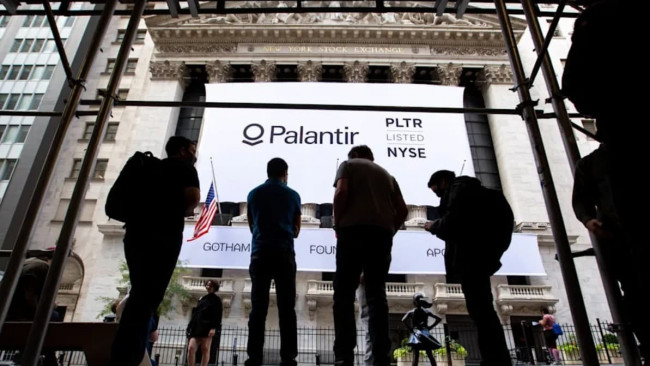
In this sense, Palantir is becoming a key indicator for the entire AI sector. If Nvidia reflects demand for hardware, and Microsoft and Google represent infrastructure and ecosystems, Palantir shows how artificial intelligence translates directly into revenue and cash flows at the end-customer level. This makes the company’s report important not only for PLTR shares, but for the broader technology market.
The stock reaction was sharp and emotional, which is hardly surprising given Palantir’s history and investor base. At the same time, it is important to remember that Palantir remains a volatile asset, sensitive to overall market sentiment and the news cycle. Still, this report fundamentally strengthened the company’s growth story and provided grounds to talk about a new phase of expansion rather than a short-lived spike.
The key question now is whether the momentum can be sustained. Much will depend on price action in the next few trading sessions and on whether long-term institutional investors step in. If the market sees confirmation of durable demand and continued positive guidance, Palantir’s report could become a catalyst for a new wave of interest in the AI sector as a whole.
The coming days and weeks will be decisive. Right now, the market is determining whether this was a one-off “wow effect” or the beginning of a broader revaluation of the role of artificial intelligence in the real economy.
All content provided on this website (https://wildinwest.com/) -including attachments, links, or referenced materials — is for informative and entertainment purposes only and should not be considered as financial advice. Third-party materials remain the property of their respective owners.