

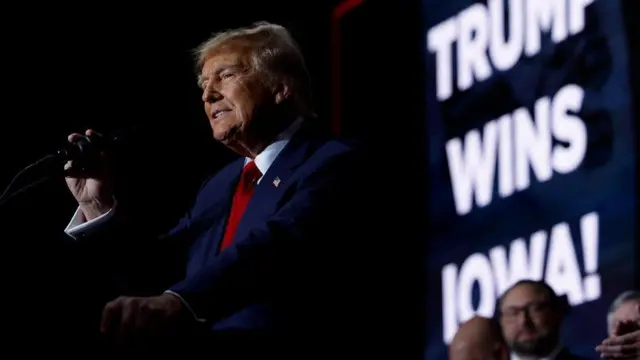
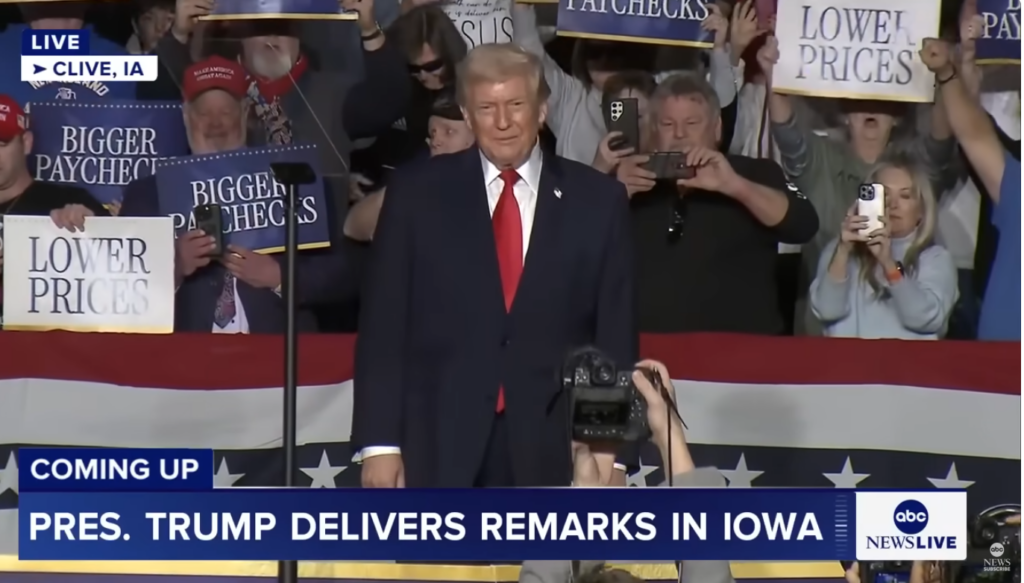
On Tuesday, January 27, U.S. President Donald Trump delivered a speech in the state of Iowa — a symbolic place for his political career (full speech). In American political tradition, Iowa is considered the starting point of presidential campaigns, and Trump deliberately used this location as part of his political narrative: “we are back where it all began.”
The speech was structured as a demonstration of restored strength, confidence, and control over the agenda. Iowa was presented not simply as a state, but as a point of power legitimization — a place where, according to Trump, the people granted him a mandate for economic and political change.
Iowa as a symbol of “returning power to the people”
Trump emphasized that support from Iowa and caucus participants became the foundation of his return to power. In his interpretation, this was not just an electoral victory, but confirmation of the correctness of his course: tough immigration policy; economic growth; energy independence; rejection of the globalist model in favor of national interests.
In this logic, Iowa is “America in miniature”: agricultural, industrial, conservative, and focused on the real economy rather than financial abstractions.
Economy: growth as the main argument of legitimacy
The economy took center stage in the speech. Trump once again used his favorite technique — linking political effectiveness to the personal well-being of citizens.
“I made many people rich. Even those I don’t like.” This phrase is not just a joke, but a clear signal: the economy is above ideology, and growth matters more than political sympathies.
Key figures cited by Trump:
- the stock market reached 52 historical highs;
- total savings of Americans increased by $9 trillion;
- $18 trillion in investments were attracted in one year;
- for comparison, according to him, the Biden administration failed to attract even $1 trillion over four years.
Even allowing for elements of political exaggeration, the focus itself is telling: Trump speaks the language of capital, markets, and scale.
The Federal Reserve and interest rates: preparing for future conflict
A separate block was devoted to a sharp statement against the Federal Reserve. Trump directly accused current Fed Chair Jerome Powell of restraining growth, calling him “Jerome the Brake.”
According to Trump, rates were reduced despite resistance from the Fed. In the near future, he intends to announce a new candidate for the position of Fed Chair, after which, he claims, rates will “decline significantly.”
This is an important signal to markets: Trump is effectively declaring his intention to increase political influence over monetary policy, which has traditionally been considered a “red line” for U.S. institutions.
Trade and tariffs: the return of protectionism
Trump once again returned to one of his key themes — the trade balance and tariff policy. In this logic, tariffs are presented not as a tax on consumers, but as a tool for restoring national wealth and fairness in global trade.
Main points:
- the U.S. trade deficit was reduced by 77%;
- previously, reducing the deficit by even 1% was considered a major achievement;
- tariffs bring the U.S. hundreds of billions of dollars;
- “before, we were being robbed, now they pay us.”
In this logic, tariffs are presented not as a tax on consumers, but as a tool for restoring national wealth and fairness in global trade.
“America has become a rich country”
This phrase is the quintessence of the speech. Trump deliberately shapes the image of the U.S. as:
- a strong economic center;
- a creditor nation, not a victim of globalization;
- a state that sets the rules rather than adapts to them.
The US Dollar: Control Without Rigid Promises
Ahead of the speech, Trump also commented on the state of the US dollar, noting that it is “doing fine.” His wording was characteristic: “It can go up and down, like a yo-yo.” This was a carefully calibrated signal to the markets: no hard commitment to a specific exchange rate, but no sense of panic either. In essence, it was a green light for volatility without undermining trust in the dollar as the world’s reserve currency.
The Emotional Element: Supporters’ Tears and a Dance
As in many of his speeches, Trump added an emotional layer. He said that supporters in Iowa were crying and thanking him for “restoring the country,” and he allowed himself deliberately informal behavior, including a dance. This was no coincidence.
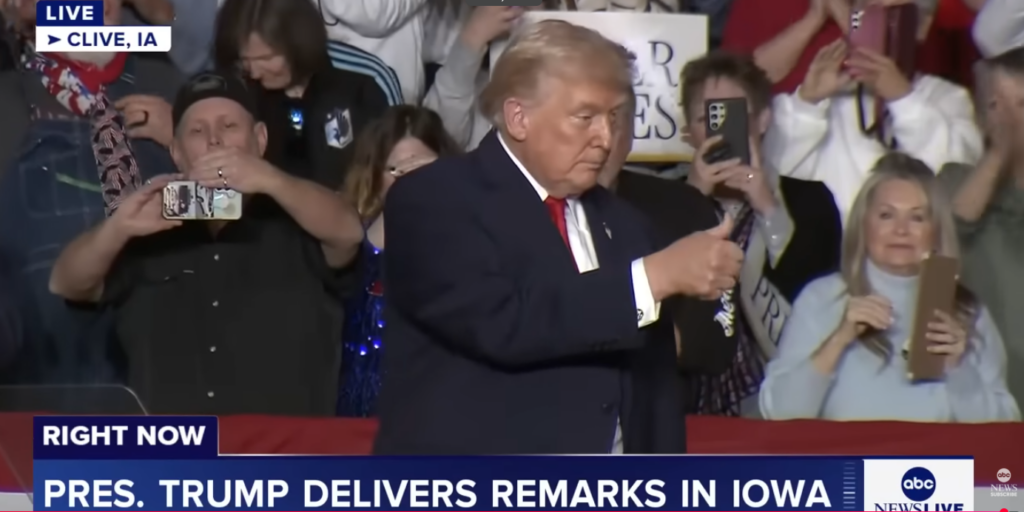
Such a style reinforces the image of a “man of the people” – a politician who stays close to the public and consciously breaks with protocol.
Overall conclusion
The Iowa appearance was not just a regional visit. It served as:
- a reaffirmation of the “America First” strategy;
- a signal to markets about potential future changes in monetary and trade policy;
- a demonstration of confidence in the economic strength of the United States;
- groundwork for a tougher and more personalized model of governance.
Once again, Trump is betting on a simple formula: growth, money, control, and national interests. And judging by the audience’s reaction, this language is still well understood.
A video clip from the speech is available on our Telegram channel.
All content provided on this website (https://wildinwest.com/) -including attachments, links, or referenced materials — is for informative and entertainment purposes only and should not be considered as financial advice. Third-party materials remain the property of their respective owners.