


Blockchain detective ZachXBT has published one of the most high-profile investigations in recent times — concerning the alleged theft of confiscated cryptocurrency from the US government totaling approximately $90 million. The story reads almost like a television series script, but with real addresses, transactions, and very tangible individuals involved.
The central figure of the investigation is John, known online under the nickname Lick. According to ZachXBT, he is the son of the head of CMMDS (also referred to as CMDSS in some sources), a company that had an active contract with US government agencies to manage, store, and dispose of confiscated digital assets. This fact turns the case from yet another crypto scam into a potentially massive failure of the system overseeing government-held crypto assets.
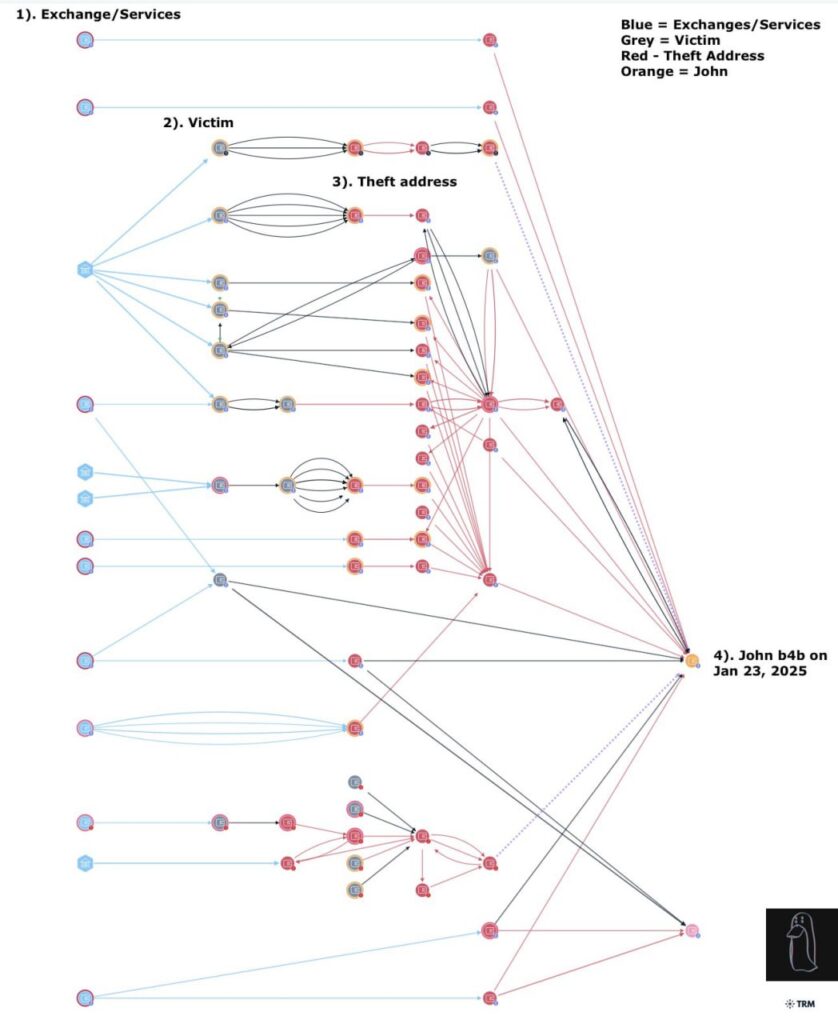
According to the published data, approximately $43 million was transferred directly to addresses associated with John from wallets holding confiscated assets. In addition, ZachXBT identified another roughly $63 million in inflows from other, as yet unidentified sources. A portion of the funds has already been traced and linked to specific transactions — the amount of theft confirmed so far stands at around $23 million, while the total estimated damage reaches $90 million, or more than 1,000 BTC at current prices.
The key question in this case is how John gained access to government wallets. There is currently no direct evidence of the hacking method or a private key leak. However, the surrounding context raises far too many uncomfortable questions. At the time of the alleged thefts, John’s father was working under contract with the state of Virginia and was directly involved in the management of confiscated assets. Investigators do not rule out the possibility that access was obtained through internal procedures, negligence, or an abuse of trust. The potential involvement of the head of CMMDS is also being considered, although no official charges have been brought against him so far.
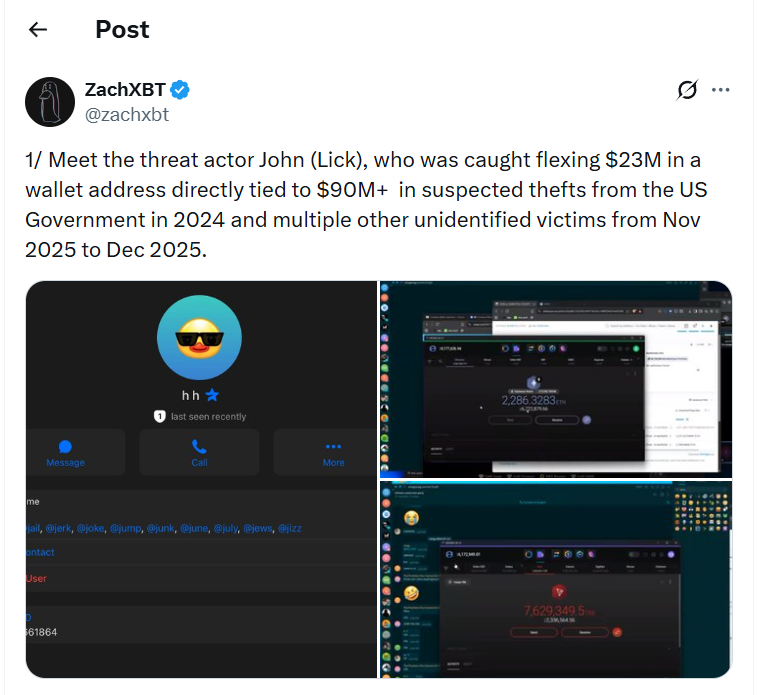
The particular cynicism of the situation lies in the fact that the suspect made little effort to hide. On the contrary, John was highly active within the crypto community, participated in private Telegram chats, engaged in disputes over the size of his wealth, and personally provided evidence of control over large wallets. He posted videos featuring expensive watches (a fragment of this boasting can be seen in our Telegram channel), displayed wallet balances, and openly bragged about a level of wealth that clearly did not correspond to his age or any legitimate sources of income.
It was precisely this public behavior that ultimately worked against him. ZachXBT correlated social media activity, post timestamps, fund movements, and behavioral patterns, ultimately linking specific blockchain addresses to a real individual. In essence, the suspect left behind enough digital footprints to assemble a comprehensive picture of what was happening.
The story highlights several deeply troubling issues at once. First, it raises questions about the security and oversight of government-held crypto assets. Confiscated cryptocurrency is increasingly becoming part of law enforcement balance sheets, yet the infrastructure for its storage remains largely opaque and vulnerable. Second, it underscores conflicts of interest and the level of trust placed in contractors entrusted with critical asset management functions. Third, it exposes the naive belief held by some market participants that blockchain anonymity still allows tens of millions of dollars to be moved with impunity.
ZachXBT has once again confirmed his reputation as one of the most effective independent investigators in the crypto space. Without access to government databases, but armed with deep expertise in on-chain analytics, he managed to uncover a case that will inevitably move from Twitter and Telegram into investigators’ offices and courtrooms.
For John, this story appears to be nearing its conclusion. His ability to enjoy the stolen wealth is rapidly diminishing, while the attention of law enforcement continues to intensify. For the market, it serves as yet another reminder: in the era of public blockchains and permanent digital traces, bragging and overconfidence are among the most expensive mistakes one can make.
All content provided on this website (https://wildinwest.com/) -including attachments, links, or referenced materials — is for informative and entertainment purposes only and should not be considered as financial advice. Third-party materials remain the property of their respective owners.