

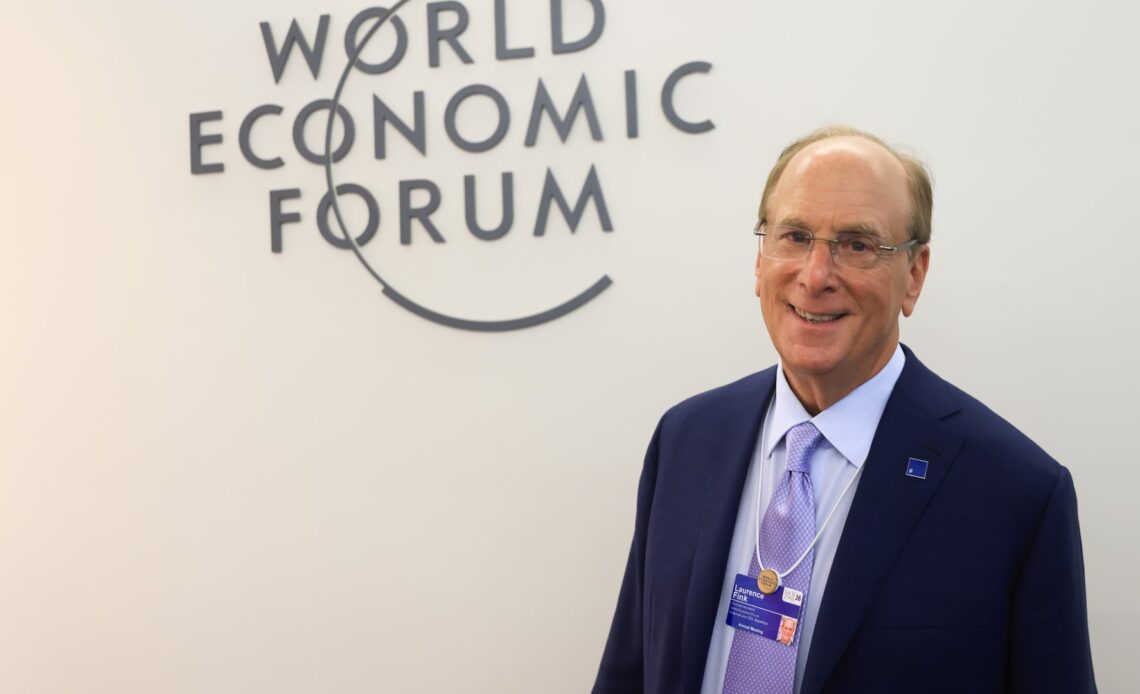
Capitalism must evolve so that economic growth stops being a spectacle for the few and becomes a working mechanism for a much broader group of people. With this thesis, BlackRock CEO Larry Fink opened his keynote speech at the World Economic Forum in Davos. In essence, it was not merely a philosophical remark, but an attempt to reformulate the role of financial markets in a world where social tension, inequality, and technological shifts are growing faster than the ability of institutions to adapt.
Fink emphasized that the current model of capitalism is increasingly perceived as a system in which some participate and win, while others merely watch the accumulation of someone else’s wealth. According to him, if this logic persists, trust in markets and democratic institutions will continue to erode. Therefore, in the view of the head of the world’s largest investment company, capitalism must become more inclusive – not through slogans, but through real financial instruments, access to investments, and participation in value creation.
Against this backdrop, Fink devoted particular attention to digital assets. His statement that “we need to move faster into crypto” became one of the most quoted lines in Davos. Coming from a person managing tens of trillions of dollars in assets, this no longer sounds like an experiment or a flirtation with a fashionable topic. Rather, it is an acknowledgment that crypto infrastructure is ceasing to be a peripheral element of the financial system and is increasingly becoming its potential core.
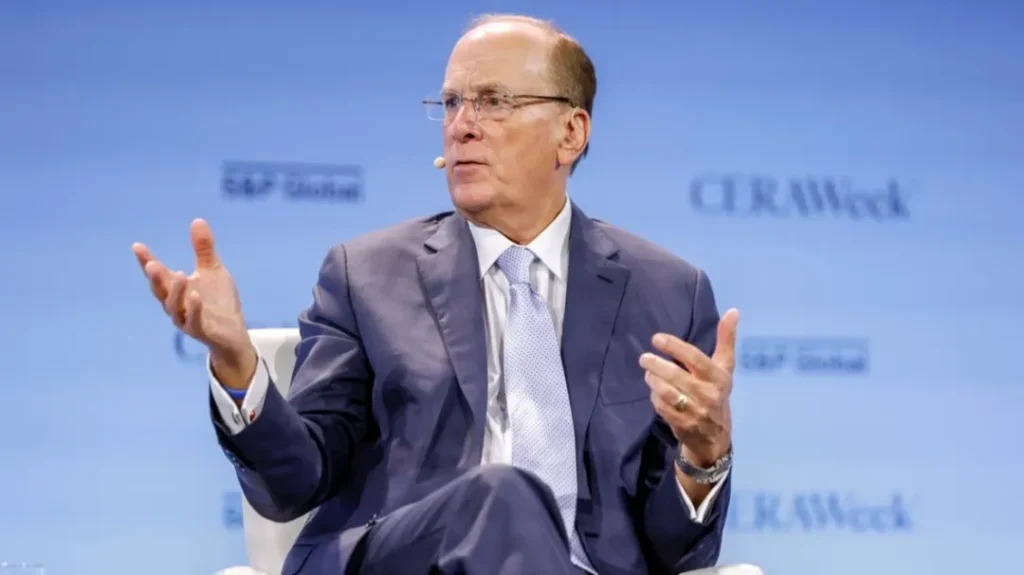
However, this is where a key dissonance arises. Alongside calls for accelerated movement toward cryptocurrencies, BlackRock continues to sell millions of dollars’ worth of bitcoin and ether on a daily basis. This appears contradictory only at first glance. In practice, it reflects not a lack of trust in the asset class, but classic liquidity management, risk balancing, and the reallocation of flows within products. BlackRock has long acted not as an ideological champion of crypto, but as an infrastructure player building bridges between traditional markets and digital assets, without tying itself to short-term price dynamics.
It is also important that Fink did not speak of cryptocurrencies as a means of quick enrichment. In his rhetoric, they appear as a technological layer capable of lowering entry barriers, simplifying access to investment products, and making financial markets more transparent. This fits logically into his broader thesis about the evolution of capitalism. If participation in complex investment strategies was previously accessible mainly to institutions and wealthy private investors, tokenization, blockchain, and digital assets potentially broaden that circle.
Fink published the full text of his speech on LinkedIn, which is telling in itself. He is addressing not only policymakers and participants in closed panels, but also a broad professional audience, shaping a long-term narrative. In this narrative, BlackRock positions itself not merely as an asset manager, but as an architect of the future financial system, where traditional markets, government regulation, and digital technologies are meant to coexist rather than clash.
Ultimately, Fink’s Davos speech can be read on two levels. On the surface, it is a conversation about the social responsibility of capitalism and the need for adaptation. On a deeper level, it is a signal to the market that the largest players are already thinking in terms of the next financial cycle, in which cryptocurrency and blockchain cease to be alternatives to the system and begin to integrate into it. And if capitalism is indeed to evolve, then, judging by Fink’s words, it will be through such instruments that it will attempt to restore the trust of those who have so far remained on the other side of economic success.
All content provided on this website (https://wildinwest.com/) -including attachments, links, or referenced materials — is for informative and entertainment purposes only and should not be considered as financial advice. Third-party materials remain the property of their respective owners.