


According to industry research and investigations in the field of digital marketing, up to 80% of accounts belonging to female bloggers who actively promote “business advice,” investing, trading, personal growth, and financial independence may have nothing to do with the images users see on their screens. Behind an attractive avatar, a confident look, and motivational quotes often stands a team of operators or a single individual, frequently located thousands of kilometers away from the audience.
Most often, this involves so-called account farms based in India, Bangladesh, and Pakistan, where the creation and management of such profiles has long been industrialized. One person can manage dozens of “girls,” respond to comments, write direct messages, post stories, and consistently maintain audience engagement. Formally, this is an influencer. In reality, it is a well-trained content operator. Sometimes it really is Rajesh from Mumbai with a mustache, and sometimes it is an entire shift of Rajeshe.
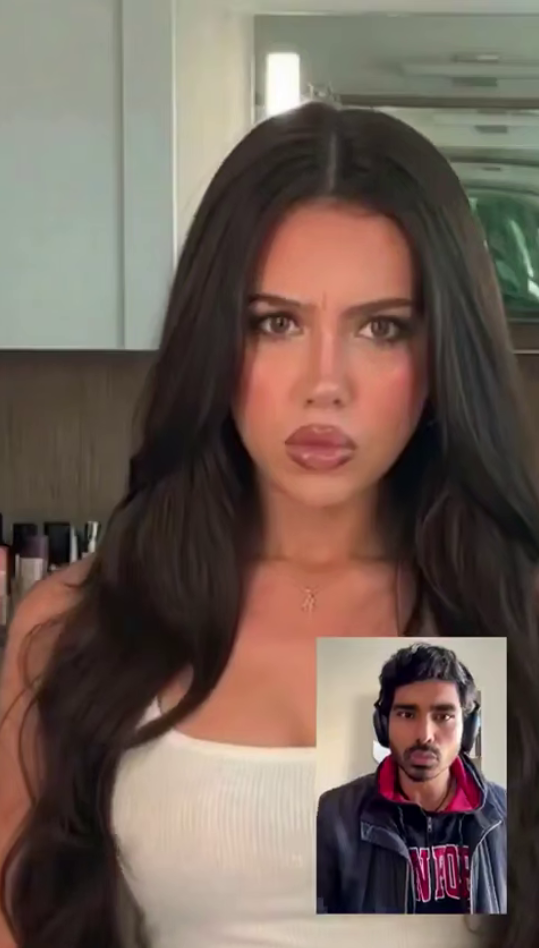
At first glance, this looks like a joke, a meme, or another reason to laugh at digital reality. But behind the ironic presentation lies a much more revealing story about how the economy of attention and trust works on the internet in 2026.
These accounts operate using a simple and effective model. First comes the visual hook: an attractive face, a polished appearance, confident delivery. Next comes universal content: “how to reach income,” “the mindset of a millionaire,” “five mistakes that prevent you from getting rich.” Then follows a gradual shift toward closed chats, paid courses, signals, mentoring, or affiliate programs. Likes, comments, and audience trust become the fuel for monetization.
In 2026, a like is no longer just a gesture of sympathy or a harmless reaction. It is a signal to algorithms that increases reach, pushes an account further, and effectively votes for the credibility of the source. Algorithms do not distinguish who is in front of the camera – a real woman or an operator with Google Translate and a response checklist. They care about engagement. And engagement sells very well.
The defining feature of such accounts is that they are максимально universal and depersonalized. They are not tied to a specific culture, country, or economy. The advice is generic enough to apply to everyone, and the language of the content is intentionally simplified. This allows such profiles to be scaled across different markets by changing only the caption language and advertising geography.
It is important to understand that the problem is not nationality and not India as such. This is about a global industry of digital simulations, where personality becomes an interface and trust becomes a product. The visual image is sold separately from real experience, education, and responsibility for the consequences of the advice given.
When you subscribe to a “beautiful girl with business advice,” you are most often subscribing not to expertise, but to a script. Behind the avatar may be a person who has never launched a business, never managed capital, and never risked their own money. Their task is to hold your attention, collect likes, and guide you through a pre-built sales funnel.

That is why in 2026, basic digital hygiene means skepticism. Verifying sources, analyzing account history, real cases, inconsistencies in biography and presentation. A world where a face on the screen no longer guarantees authenticity requires new navigation skills.
So the warning “guys, be careful with likes” no longer sounds like a joke, but like a very practical piece of advice. In an era where algorithms trust likes more than facts, every gesture of attention works for someone’s business. Sometimes – not at all the one you think you are supporting when you see a beautiful image in your feed.
A video fragment of the conversation with the “girl” has been published on our Telegram channel.
All content provided on this website (https://wildinwest.com/) -including attachments, links, or referenced materials — is for informative and entertainment purposes only and should not be considered as financial advice. Third-party materials remain the property of their respective owners.