


What until recently was considered a relatively calm industrial metal has now become one of the main drivers of global commodity markets. Copper, an inconspicuous reddish metal that for decades was used mainly for wiring, pipelines, and basic industrial needs, has suddenly turned into an object of close attention from traders, investors, and analysts. In early January 2026, copper futures on the London Metal Exchange (LME) are confidently holding above the 13,000 dollars per ton level – practically at historical highs. In 2025, the price jumped by more than 40%, marking the strongest rally since the late 2000s, the era of powerful commodity booms.
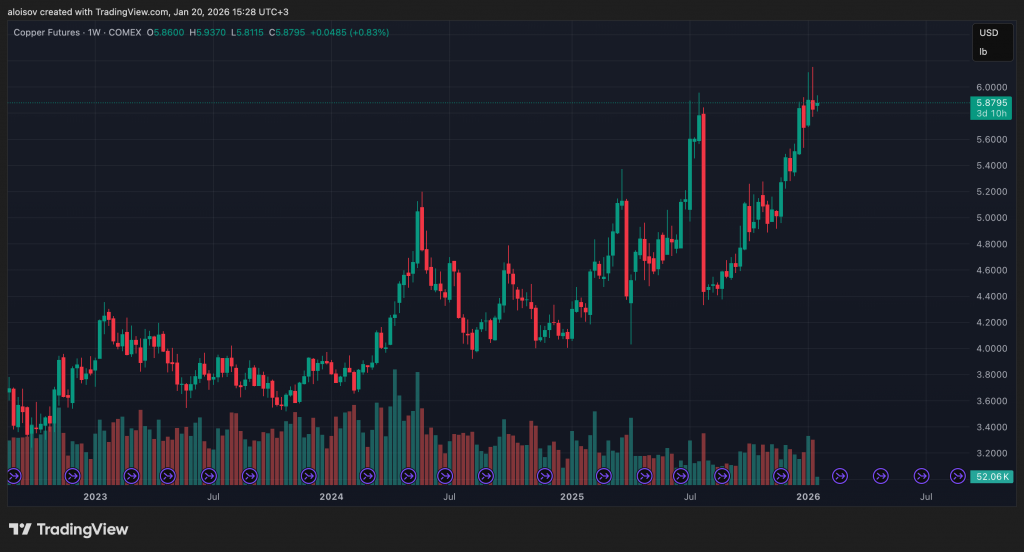
Weekly chart of copper futures. Source: COMEX
Why did copper become a star?
The answer lies in global structural changes in the world economy. Copper has long ceased to be just “fuel” for industry – today it symbolizes the technological revolution, electrification, and the transition to renewable energy.
Electric vehicles, charging infrastructure, modernization of power grids, construction of data centers, and infrastructure for artificial intelligence – copper is needed everywhere, and in very large quantities. For example, a single large data center supporting AI infrastructure can consume tens of thousands of tons of copper just for wiring, cooling systems, and distribution networks. And this is not an isolated case – with each new data center project or battery manufacturing plant, demand grows exponentially.
From 8,000 to 13,000 dollars: the anatomy of a rally
At the beginning of 2025, copper was trading at 8,000-9,000 dollars per ton. These levels seemed normal, but the market was already preparing a surprise. By mid-year, the price broke above 12,000, and by the end of 2025 it moved toward 13,000. This is not just volatility, it is a structural revaluation of the metal caused by a combination of sharply rising demand and constrained supply.
Supply cannot keep up with demand
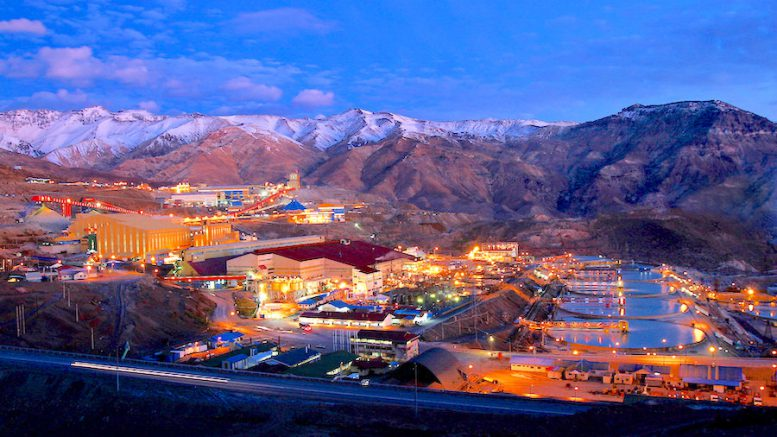
The situation with copper mining is complicated by a number of factors. The largest mines in Indonesia, Chile, and Peru face technical problems, environmental restrictions, and social conflicts. Giants such as Freeport-McMoRan and Codelco are struggling with aging infrastructure and declining ore quality. New projects require years to launch, while investments are constrained by both financial and geopolitical risks.
Historical parallels
Copper has always been a “barometer of the economy”. In the 1990s, a trader from Sumitomo Corporation temporarily monopolized the market, artificially driving prices higher. During the Great Depression, copper prices collapsed along with industrial production, confirming its role as an indicator of economic health. However, the current cycle is unique: it is based on long-term structural changes rather than short-term speculation. Electrification, renewable energy, and the growth of AI have created demand channels that did not exist a decade ago.
Deficit as the new norm
The imbalance between demand and supply is not temporary – it is a long-term trend. According to S&P Global forecasts, copper demand could increase by 50% by 2040 due to transport electrification, grid construction, and climate investments. At the same time, supply growth is limited by geological resources, regulatory requirements, and the complexity of launching new projects.
Copper inventories on exchanges are shrinking, and the likelihood of a refined copper deficit remains in 2026 and beyond. Copper is no longer just an industrial metal – it is becoming a strategic resource, a key element of the energy transition and digital infrastructure.
Who benefits
Investors and mining companies have already felt the upside. Freeport-McMoRan (NYSE: FCX) is extracting maximum profit from rising prices and constrained supply. Southern Copper Corporation (NYSE: SCCO) shows impressive cash flow thanks to its assets in Mexico and Peru.
Diversified giants such as BHP Group (NYSE: BHP) receive an additional boost, as rising copper prices support their resource portfolios. Smaller companies, for example Hudbay Minerals (NYSE: HBM), demonstrate high returns thanks to leverage to production growth.
Outlook for 2026 and beyond
The forecasts look intriguing: production will grow moderately, and refined copper output may fail to keep pace with demand. This creates a structural deficit that supports prices, especially amid continued expansion of data centers and transport electrification.
Geopolitics, trade policy, and investment in new mines will determine the global resilience of supply. If obstacles to expansion persist, tensions in copper markets will intensify.
Copper and the technological revolution
Copper is ceasing to be a simple industrial indicator and is becoming a strategic asset. It is key to the energy transition, Web3 infrastructure, and AI data centers. Copper shortages stimulate innovation: patent activity related to room-temperature superconductors has increased by 340% over three years, and China is investing 50 billion dollars in deep-sea mining technologies capable of doubling global copper reserves by 2035.

History suggests that shortages of critically important resources inevitably stimulate technological breakthroughs. Whether the current copper boom will become a catalyst for a technological revolution or repeat past cycles will be shown by the coming decade.
Conclusion
Copper in 2026 is not just a metal, but a strategic resource and an indicator of technological and energy progress. Markets, companies, and investors are closely watching this asset because its significance goes far beyond ordinary industrial trade.
All content provided on this website (https://wildinwest.com/) -including attachments, links, or referenced materials — is for informative and entertainment purposes only and should not be considered as financial advice. Third-party materials remain the property of their respective owners.