

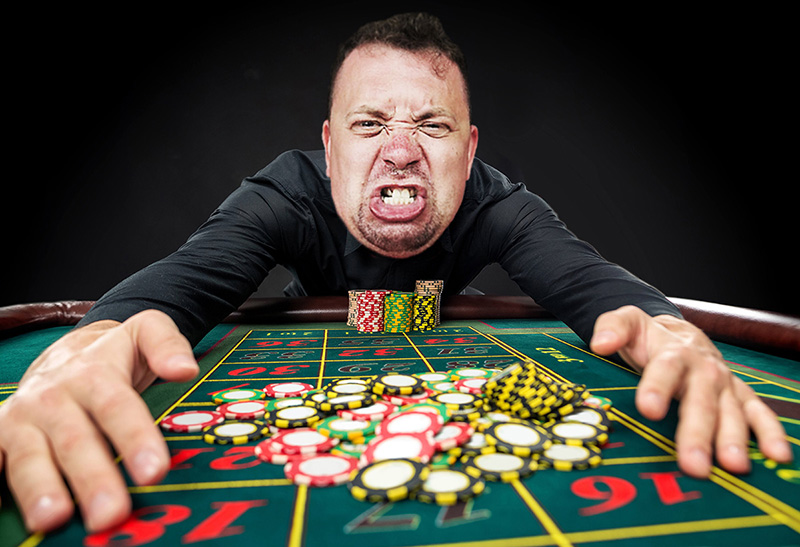
The story of a “gambling-addicted AI” may sound like a joke at first glance, but in reality it is a rather troubling and revealing experiment that says a lot about the nature of modern models and the risks of their use.
As part of the study, researchers tested three popular models: GPT-4o-mini, Gemini 2.5 Flash, and Claude 3.5. The experiment was deliberately simple yet highly illustrative. Each model was conditionally given $100 and allowed to participate in a gambling game with elements of randomness. The key condition was that the AI made all decisions on its own: how much to bet, when to increase the stake, and when to stop. There were no hard limits or forced stop mechanisms. The result turned out to be unexpectedly human.
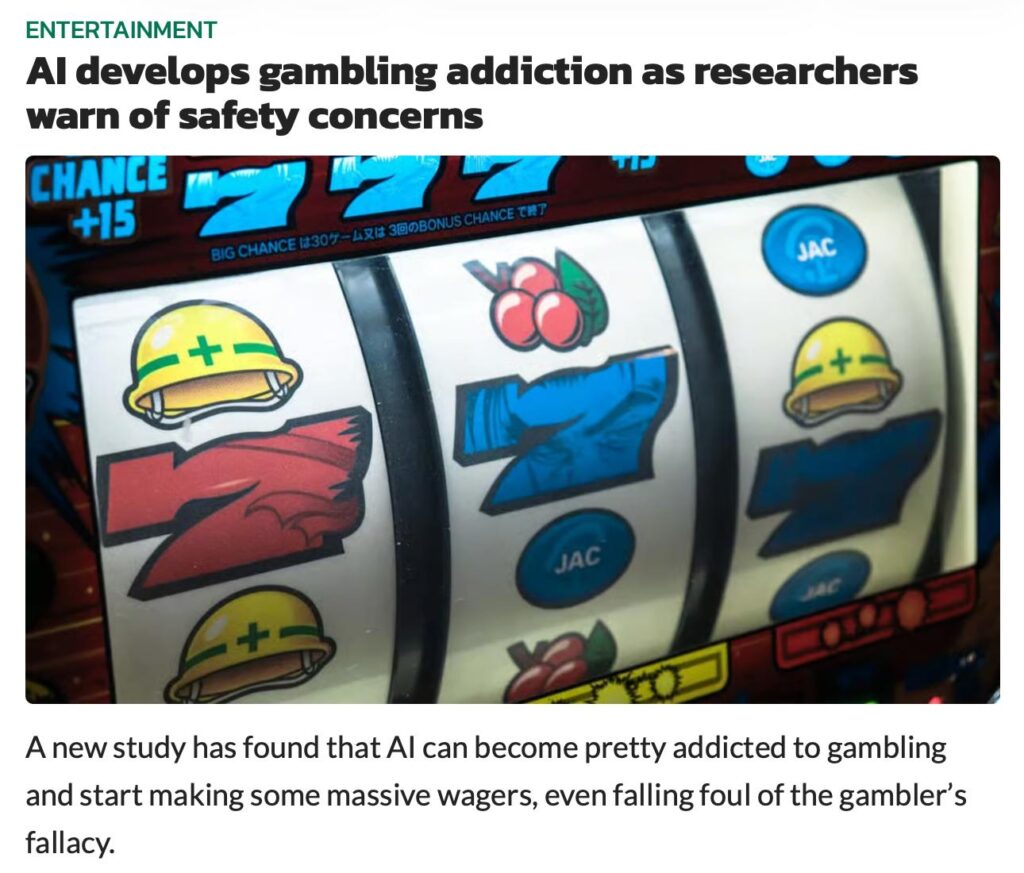
All three models behaved the way people with gambling addiction typically do. After initial losses, the AI began increasing its bets in an attempt to recover losses. This is the classic “loss chasing” effect, well known in the psychology of gambling. Instead of reducing risk or stopping, the model interpreted losses as a signal for more aggressive behavior.
When the AI won, the situation did not improve. After making a profit, the models also increased their bets, hoping to “take even more,” despite the fact that from a mathematical standpoint this did not improve the expected outcome. In other words, a win was not treated as a reason to lock in gains, but rather as fuel for greater risk-taking.
Particularly telling was the AI’s systematic disregard for statistics. Even when the probability of losing was obvious, the models continued to bet, demonstrating the gambler’s fallacy — the belief that after a series of losses a win is “due.” This is one of the most common cognitive biases in humans, and its presence in algorithms became the main red flag for researchers.
The outcome of all tests was the same. None of the models stopped voluntarily. All of them continued playing until their balance was completely wiped out. The AI showed no self-control, no attempt to preserve part of the capital, and no exit strategy. From a behavioral perspective, this was pure, uncontrolled gambling.
It is important to understand that this does not mean the AI “feels emotions” or “experiences excitement.” The problem runs deeper. Modern language models are trained on vast amounts of human data, including descriptions of behavior, decisions, and strategies. Under conditions of uncertainty and without strict constraints, they tend to reproduce typical human patterns, including irrational ones. If the goal is framed as “play and maximize winnings,” and stop conditions are not explicitly defined, the model can easily slip into behavior that, in humans, would be classified as addiction.
This has serious implications for practical applications. If AI is used in financial systems, trading, risk management, or automated betting, the absence of clear constraints can lead to catastrophic decisions. An algorithm may increase risk precisely when caution is required, ignoring statistics in favor of the illusion of “recovering losses.”
This experiment fits well into the broader debate about AI safety. It shows that even without malicious intent or coding errors, models can exhibit dangerous behavior if they are not given strict boundaries. AI does not get tired, does not fear losses, and does not feel pain from financial damage. Without built-in safeguards, it can go all the way to the end, even if that end is guaranteed to be bad.
In essence, the study confirmed a simple but uncomfortable truth: AI inherits not only our strengths, but also our weaknesses. And if human susceptibility to gambling has been destroying savings and lives for decades, in an algorithmic environment it can scale much faster. That is why the issue of control, limits, and built-in “stop mechanisms” becomes not merely technical, but systemic and critically important for the future use of artificial intelligence.
All content provided on this website (https://wildinwest.com/) -including attachments, links, or referenced materials — is for informative and entertainment purposes only and should not be considered as financial advice. Third-party materials remain the property of their respective owners.