

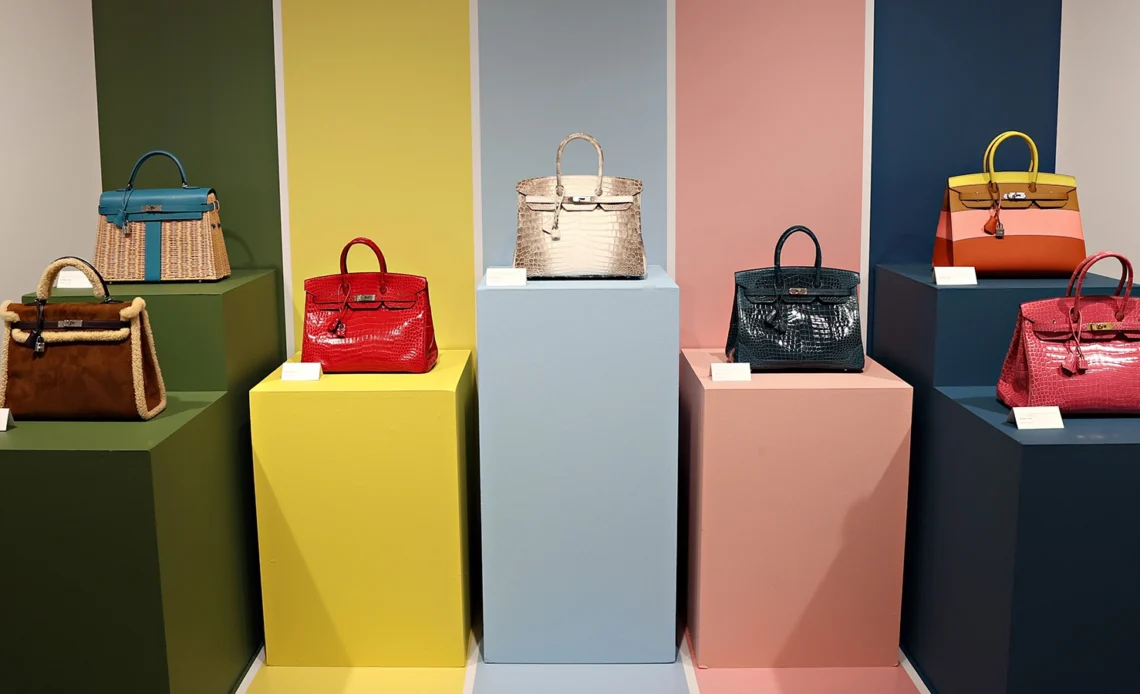
The Hermès brand, which for decades has cultivated an image of understated luxury and unattainable status, in practice turns out to be far more down-to-earth and, in the opinion of many clients, openly intrusive. Around the iconic Birkin bag, an entire system of informal customer monitoring has been built – one that increasingly resembles not exclusive service, but a form of social casting with elements of surveillance.
According to Glitz Paris, Hermès boutique staff check potential and existing clients well beyond the walls of the store. Managers study social media profiles, analyze lifestyles, photographs, and social circles, and sometimes even look at clients’ homes through Google Maps. All of this is done to assess whether a person “fits the spirit of the brand” and is worthy of the opportunity to purchase a Birkin bag, whose price starts at $8,000 and can easily climb much higher.
Formally, Hermès offers a more democratic route – a lottery for the right to purchase the bag. In practice, however, even winning such a lottery provides no guarantees. The final decision always rests with the boutique manager, who can refuse without explanation. In reality, a client may spend years buying the “right” products, maintaining a relationship with a particular store, and demonstrating loyalty to the brand, yet still never gain access to the desired bag.
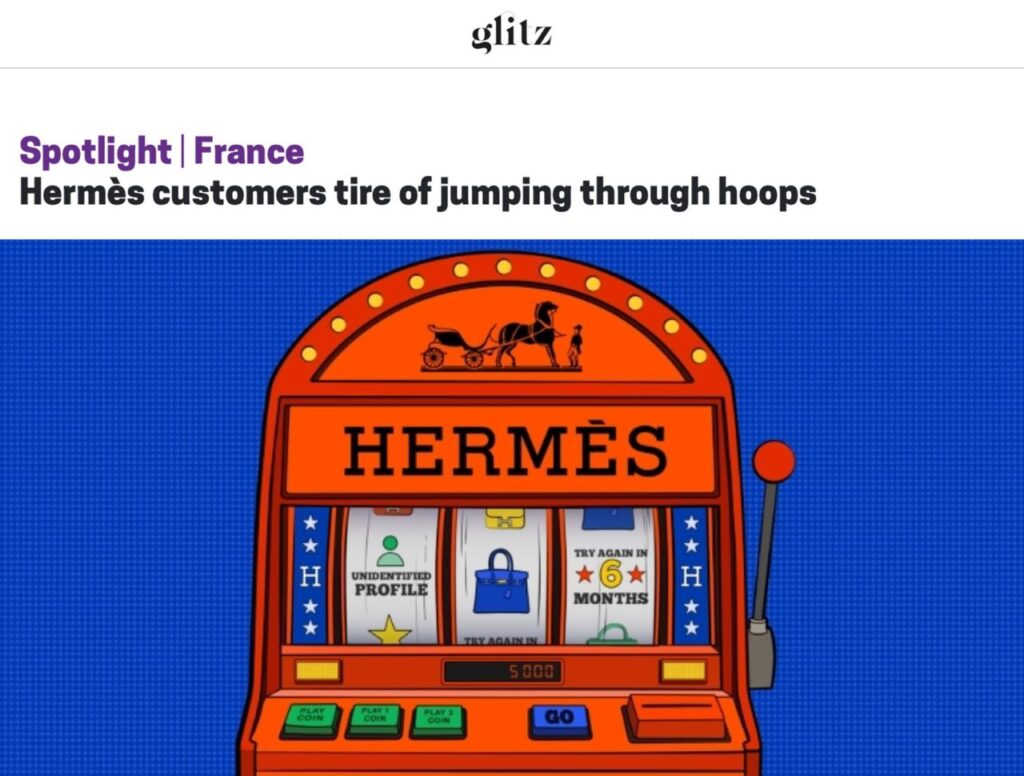
This sales model is increasingly irritating even to wealthy buyers. Clients complain about feelings of humiliation, a lack of transparency in the rules, and the need to literally prove their right to spend their own money. Instead of the classic formula “the customer is always right,” Hermès offers a different philosophy – the brand decides who is worthy of being its client and who is not.
The paradox is that financially Hermès is doing exceptionally well. The company reports strong results, steady growth, and high demand. Yet behind this outward success, customer dissatisfaction is building. Buyers increasingly say that excessive control and secrecy alienate even the most loyal clients, turning the purchasing process into a psychological ordeal.
As a result, the Birkin bag is gradually shifting from a symbol of refined luxury to a marker of belonging to a closed club, where not only money matters, but also the approval of an inner circle. And while scarcity was once perceived as part of the brand’s magic, today it increasingly looks like an artificially maintained barrier, behind which lies not exclusivity, but a rigid hierarchy.
The Hermès story is a clear example of how control and the desire to preserve “brand purity” can lead to customer alienation. Luxury built on trust and respect inspires admiration. Luxury that requires checking profiles and homes on Google Maps increasingly raises questions.
All content provided on this website (https://wildinwest.com/) -including attachments, links, or referenced materials — is for informative and entertainment purposes only and should not be considered as financial advice. Third-party materials remain the property of their respective owners.