


Cambodian authorities have arrested Prince Group chairman Chen Zhi and extradited him to China at the request of Chinese law enforcement agencies as part of what was described as “cooperation to combat transnational crime.” This was reported by The Wall Street Journal, citing Cambodia’s Ministry of Interior. The very fact of the extradition became a rare and telling event for the region, where figures of this scale had for years felt virtually untouchable.
Chen Zhi is considered a key figure behind one of the largest fraud empires in Asia. According to U.S. law enforcement authorities, the structure he created systematically defrauded citizens of dozens of countries, including the United States, Europe, and Southeast Asia. This was not a collection of isolated scams, but industrial-scale financial crime built on corporate principles.
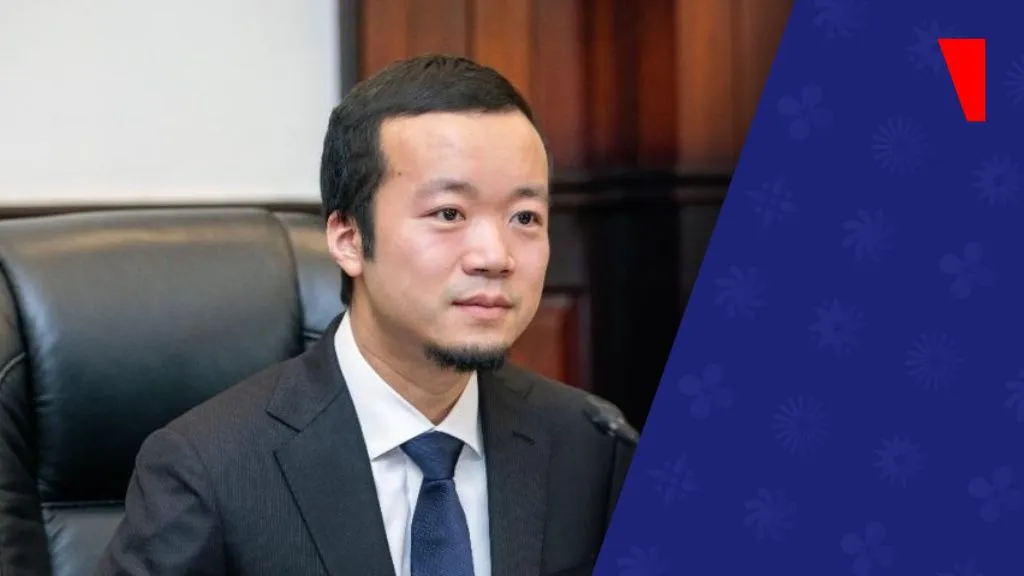
In October 2025, the U.S. Department of Justice formally charged Chen with fraud and money laundering. At that time, U.S. authorities announced the seizure of nearly $12 billion worth of bitcoin, which investigators say represented proceeds from so-called pig butchering schemes – multi-stage investment scams in which victims are “fattened up” over months by building trust before being completely stripped of their funds. These schemes primarily targeted U.S. citizens, but in practice spanned the entire world.
According to the indictment, Chen Zhi, a native of China who later obtained several other citizenships, transformed Prince Group – a formally legitimate Cambodian conglomerate – into one of the region’s largest transnational criminal organizations. Under the Prince Group brand operated businesses in real estate, banking services, casinos, online entertainment, and tourism. This legal façade, according to U.S. authorities, made it possible to conceal the scale of illegal activity and effectively launder money.
The paradox of the situation is that Chen is only 38 years old, yet in a short period he became one of the richest and most influential people in Cambodia. He actively participated in the country’s public life, invested in infrastructure projects, and even officially served as an advisor to two Cambodian prime ministers. This provided him with political cover and near-total immunity at the local level.
The U.S. Department of Justice claims that behind the façade of a respectable business, Chen and Prince Group operated at least ten large-scale fraud compounds within Cambodia. According to investigators, these centers employed thousands of people, many of whom were brought in from China and other countries using human trafficking schemes. Workers were effectively held against their will and forced to participate in defrauding victims through psychological pressure, threats, and physical violence.
The indictment describes a network of more than one hundred companies across more than thirty countries. A significant portion of these entities was used exclusively for financial transactions and money laundering – through bank accounts, cryptocurrencies, shell companies, and offshore jurisdictions. This structure allowed the origin of funds to be obscured and significantly complicated the work of law enforcement agencies.
In addition to criminal prosecution, the U.S. Department of the Treasury imposed sanctions on Chen himself, several top executives of Prince Group, and dozens of companies linked to the conglomerate. These sanctions effectively cut the structures off from the U.S. financial system and made any dealings with them toxic for international banks.
Prince Group itself stated back in November that the allegations were unfounded and that the asset seizures were illegal. Company representatives claimed the conglomerate conducts exclusively legitimate business and that all accusations are based on erroneous or politically motivated information. However, following reports of the extradition, Chen’s lawyers in the United States and representatives of Prince Group declined to respond to media inquiries.

According to U.S. investigators, Chinese law enforcement authorities had also been investigating Chen and Prince Group for a long time. A number of lower-level employees of the conglomerate have already been convicted in China on charges of money laundering and organizing illegal gambling operations. Chen himself, however, allegedly avoided serious accountability for years.
U.S. prosecutors allege that Chen and his associates used political influence and bribes to neutralize threats from Chinese security services. The indictment describes an episode in which one of Chen’s associates allegedly proposed to “resolve the issue” through the son of a high-ranking official of China’s Ministry of Public Security. In response, it is claimed, there was a hint that individuals connected to Prince Group could be “pulled out” of problematic situations.
It is also alleged that Chen himself boasted of arrangements with China’s Ministry of State Security, which supposedly warned him about law enforcement actions in exchange for bribes. If confirmed, these claims could have far-reaching political consequences, as they touch on issues of corruption and the entanglement of business with security agencies.
Investigators also focus on Chen’s personal role in managing the fraud centers. According to the U.S. Department of Justice, he was not a passive owner but directly controlled financial performance, set revenue targets, and personally communicated with subordinates on matters of “discipline.” In one documented case, Chen allegedly discussed punishment for workers and specified that victims “should not be beaten to death,” underscoring the level of cruelty and cynicism within the system.
The extradition of Chen Zhi to China could become a turning point in the fight against transnational fraud networks in Southeast Asia. This case demonstrates that even figures with enormous wealth, political connections, and multiple passports can eventually lose their protection. The question now is whether Chen’s case will lead to real convictions and the dismantling of the entire Prince Group structure, or whether it will become yet another high-profile episode without systemic consequences.
A video clip of the arrest can be viewed on our Telegram channel.
All content provided on this website (https://wildinwest.com/) -including attachments, links, or referenced materials — is for informative and entertainment purposes only and should not be considered as financial advice. Third-party materials remain the property of their respective owners.