


An anonymous miner has accumulated Bitcoin worth $375 million over eight years and has never sold…
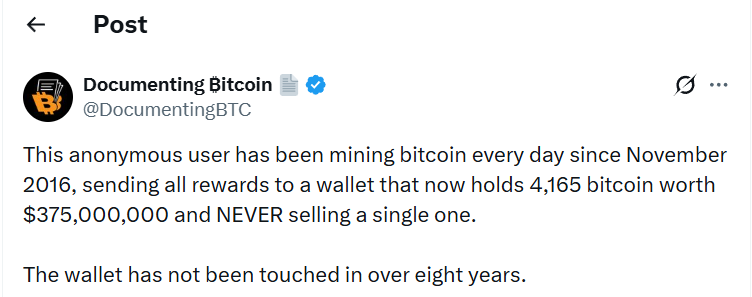
The crypto community is once again discussing a striking example of extreme HODL. According to the Documenting Bitcoin account on X (formerly Twitter), an anonymous miner has been mining Bitcoin daily since November 2016 and carefully sending all rewards to the same address. Over nearly eight years, more than 4,165 BTC have accumulated in this wallet, with a current market value estimated at around $375 million.
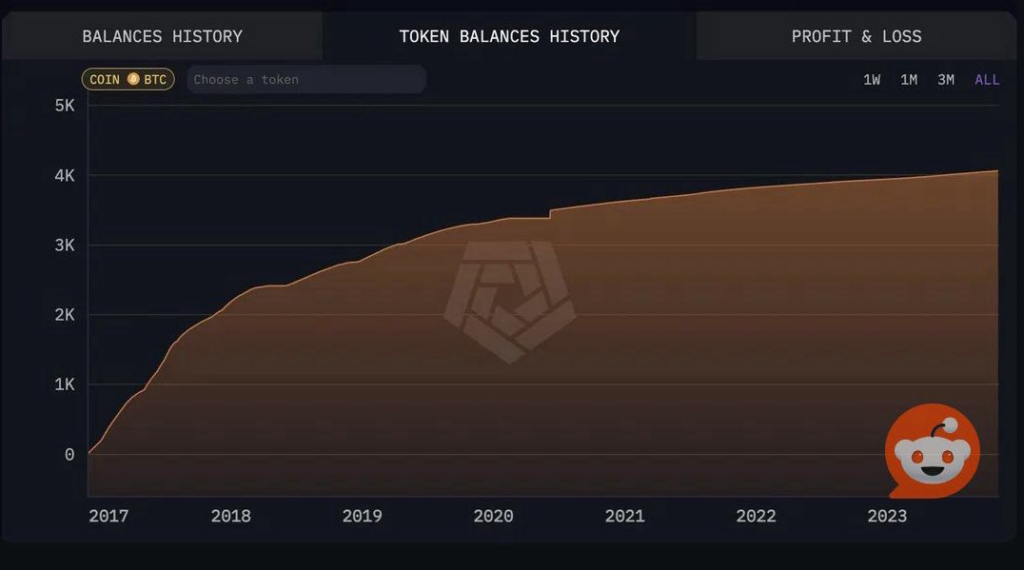
Dynamics of Bitcoin accumulation by the miner. Data: Documenting Bitcoin
The peculiarity of this story lies not only in the amount but also in the behavior of the owner. According to blockchain data, not a single outgoing transaction has been made from this address. Moreover, the last recorded activity on this wallet dates back more than eight years. All mined coins were simply received by the address but never left it.
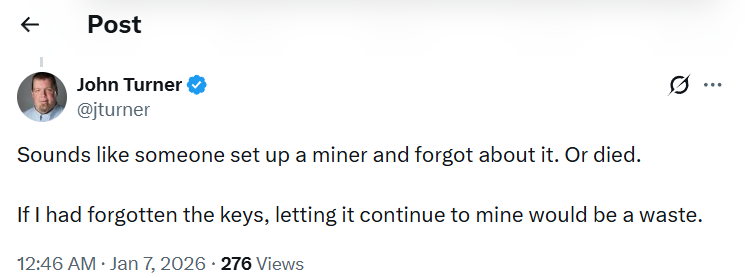
This behavior sparked lively discussion on X. Some users suggest that the miner may have simply lost access to the private keys, in which case we are talking about another case of “lost Bitcoin” that has permanently exited circulation. In this scenario, the wallet becomes another example of how mistakes by early network participants led to a significant portion of BTC supply being locked.
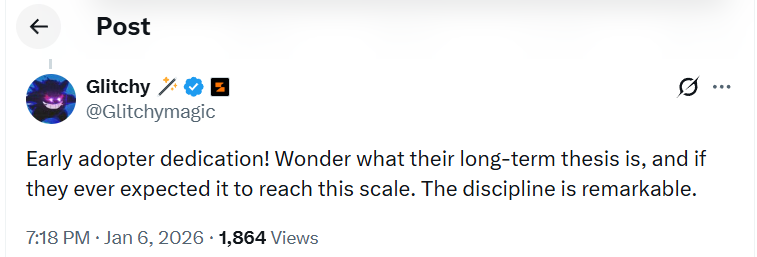
However, another part of the community leans toward a more romantic interpretation. In their view, the address owner is an example of extreme discipline and belief in Bitcoin’s long-term value. Such a miner may have consciously adopted a strategy of complete non-sale, enduring all key market cycles: the crash after the 2017 bubble, the 2018–2019 bear market, the pandemic downturn, the collapse of major crypto companies, and subsequent new highs.
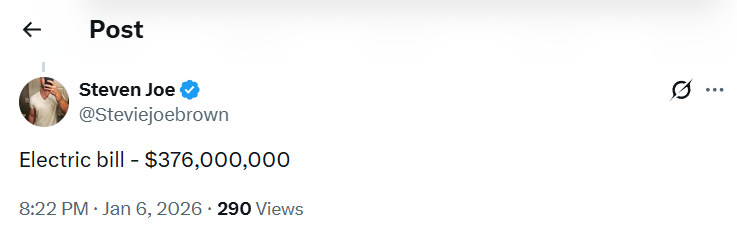
The economic aspect of the story also deserves special attention. Users have also noted the potential cost of electricity and infrastructure over the entire mining period. If the miner truly operated continuously since 2016, the total expenses for electricity, equipment, cooling, and maintenance could have amounted to tens of millions of dollars. This makes the “never sold once” strategy even more impressive—especially considering that in the early years, Bitcoin mining was far less profitable than it is today.
The story also raises questions about centralization and BTC supply distribution. One wallet with over 4,000 coins is not a “whale” on the scale of institutional players, but it is far from a retail participant. If such addresses truly belong to individual miners rather than pools or funds, this supports the thesis that a significant portion of Bitcoin remains in the hands of long-term holders who do not react to short-term price fluctuations.
In any case, this case is another reminder of Bitcoin’s key feature: the network is indifferent to the owner’s intentions. It does not know whether an address is lost, forgotten, or carefully guarded. For the blockchain, only one thing matters — the private key. For the market, these stories become part of Bitcoin’s mythology, where alongside traders and funds exist individuals capable of mining and holding the asset for years, resisting both fear and greed.
It is precisely such addresses that make Bitcoin what it is today: an asset combining technology, economics, and human psychology in its most extreme manifestations.
All content provided on this website (https://wildinwest.com/) -including attachments, links, or referenced materials — is for informative and entertainment purposes only and should not be considered as financial advice. Third-party materials remain the property of their respective owners.