

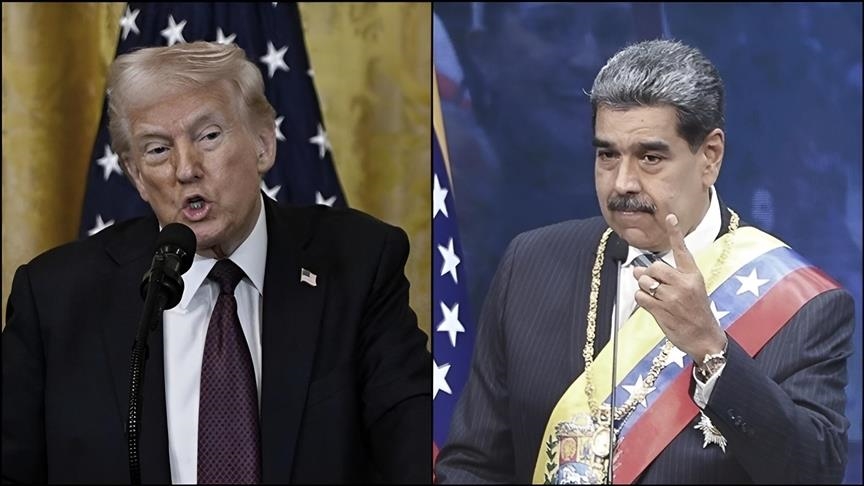
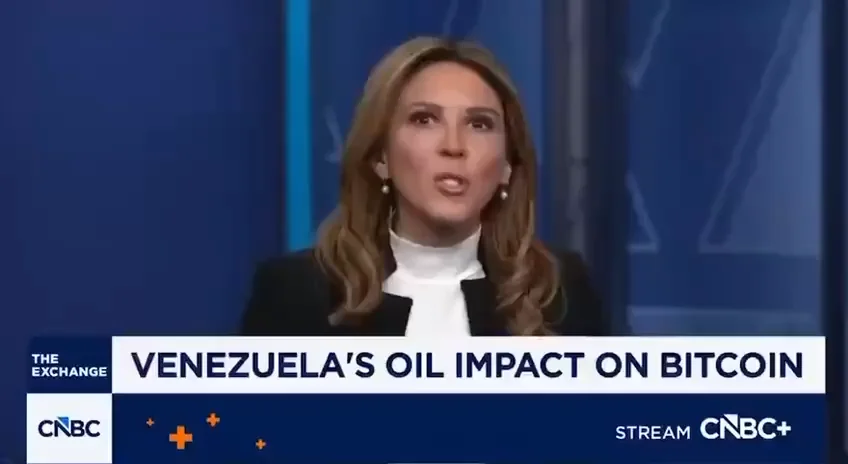
The topic currently being actively promoted by CNBC sounds loud and almost sensational: allegedly, as a result of US actions, up to 600,000 BTC could be confiscated from Venezuela in favor of the American state. The number sounds so impressive that it immediately triggers two parallel effects – market excitement and skepticism among those who are used to checking facts rather than headlines.
Let’s start with the main point. No one has publicly seen these 600,000 BTC. There have been no confirmed addresses, no blockchain analytics data, and no court documents indicating the existence of exactly such an amount of bitcoin under the control of the Venezuelan state. As skeptics aptly note, the arrested Maduro was not wearing a Ledger around his neck, and no one has ever shown the world a government “cold wallet.” For now, this is not about proven facts, but about hypotheses, assumptions, and logical chains that are actively discussed in the media.
Here, by the way, you can buy legendary hardware wallets for beginners with all the basic functions!
Nevertheless, the logic behind these arguments is understandable. Over the past decade, Venezuela has been living under conditions of chronic hyperinflation, strict currency controls, and international sanctions. In such an environment, cryptocurrencies indeed became not an exotic curiosity but a survival tool. CNBC rightly notes that ordinary Venezuelans widely used bitcoin and ether as a store of value and an alternative source of income. Home mining, especially during the years of subsidized electricity, was widespread, and crypto became a way to escape the devaluation of the bolivar.

Then comes the more controversial but interesting part. According to analysts speaking on CNBC, cryptocurrencies may have been used not only by private individuals but also by state structures. In particular, a version is being discussed according to which the Venezuelan government could have converted part of its oil revenues into USDT and then into Bitcoin, using crypto infrastructure to bypass sanctions and international restrictions. Such reports have been circulating in the market for years, but they have never received comprehensive documentary confirmation.
This is where the topic of possible confiscation emerges. If we assume that such bitcoin reserves do indeed exist and are under the control of structures affiliated with the Venezuelan state, then their discovery and seizure by the US would be an unprecedented event for the crypto market. 600,000 BTC is about 3% of the total bitcoin supply and is comparable to the holdings of the largest institutional holders. Any change in the status of such a volume of coins would inevitably trigger a powerful market reaction.

This leads to the next layer of analysts’ reasoning. If these bitcoins are not dumped on the market but instead confiscated and placed into a US strategic reserve, this would effectively reduce the available supply of BTC. In the logic of a scarce asset, such a scenario looks positive for the price. Some commentators are already drawing parallels with past BTC confiscations from darknet markets and hackers, which ultimately strengthened the narrative of “bitcoin as a strategic asset” rather than just a speculative instrument.
However, it is important to keep a cool head here. At this point, we are dealing not with a confirmed confiscation, but with a discussion of a hypothetical scenario amplified by geopolitical context and media interest. CNBC certainly knows how to “pump a story,” especially when it involves the intersection of politics, oil, sanctions, and cryptocurrencies. But the market has already seen many loud stories about “state bitcoin reserves” dissolve without a trace, leaving behind nothing but volatility and clicks.
In dry terms, the situation looks like this. Venezuela has indeed become one of the symbols of cryptocurrency use under conditions of economic collapse. The version about using bitcoin and stablecoins to bypass sanctions is logical, but it still remains at the level of indirect evidence. The figure of 600,000 BTC so far looks more like an information hook than an established fact. But the market’s reaction to such news is telling: bitcoin is increasingly perceived not just as a risky asset, but as an element of a geopolitical and macroeconomic game.
This, and not the mythical Ledger of Maduro, is the main signal of the entire story.
A video fragment of the discussion can be watched on our Telegram channel.
All content provided on this website (https://wildinwest.com/) -including attachments, links, or referenced materials — is for informative and entertainment purposes only and should not be considered as financial advice. Third-party materials remain the property of their respective owners.