

The story of a refrigerator that drove its owner to a psychiatric hospital looks like a plot from the series Black Mirror. But this is neither science fiction nor a work of imagination. It is a real case from 2025, in which advertising algorithms, smart devices, and vulnerable human psychology converged at their most dangerous point.
Details of the incident became known thanks to a post by the victim’s brother on Reddit. His sister Carol – a woman diagnosed with schizophrenia – had been in stable remission for more than two years. She lived a normal life, followed maintenance therapy, and, according to relatives, showed no signs of relapse.
The situation changed suddenly. One day, Carol called her brother in a state of intense emotional agitation and said a phrase that initially sounded like a typical symptom of psychosis: “Someone is trying to communicate with me through the fridge.” Shortly afterward, she called a taxi on her own and went to the emergency department. She spent two days there under medical observation. Doctors recorded an acute psychotic episode and adjusted her medication. Similar hospitalizations had occurred before – roughly once every two years – but until this point the specific trigger had remained unclear.
A few days after discharge, Carol was able to return home. It seemed that the crisis had been contained. However, it was at this moment that the story took a disturbing turn.
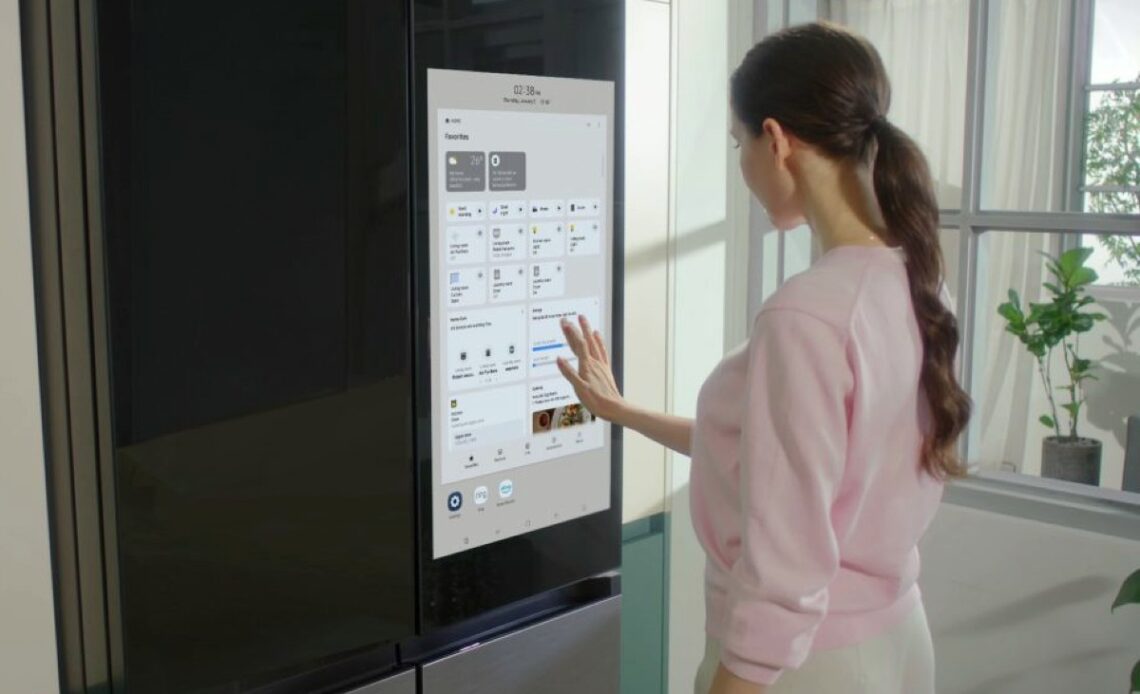
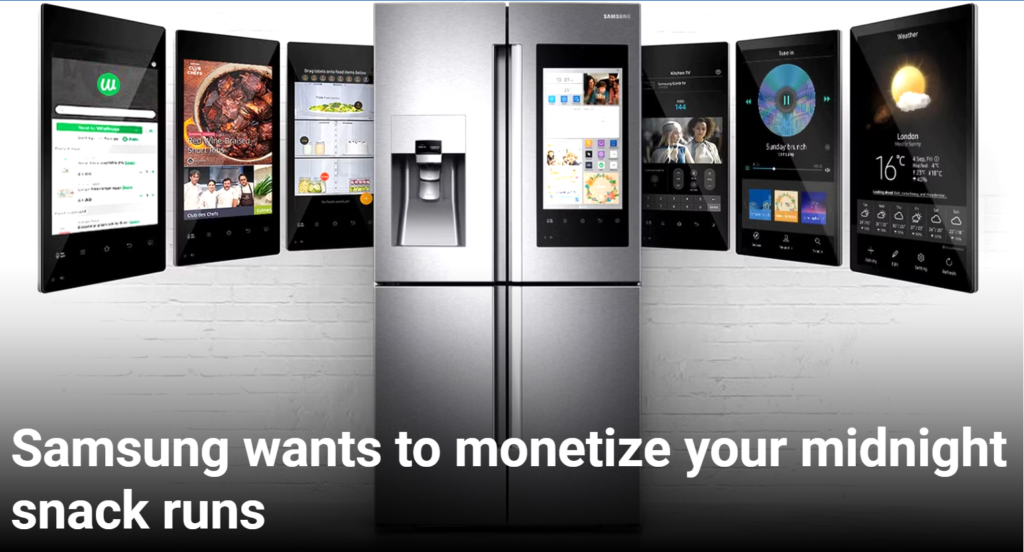
While scrolling through Facebook, Carol’s brother noticed a strange advertisement displayed on the screen of a premium Samsung smart refrigerator (the price of such models ranges from $3,000 to $5,000. The device is equipped with a large touchscreen and connected to the manufacturer’s service ecosystem).
An advertisement for the TV series One of Many appeared on the screen. Against a neon-yellow background, a large-font message read: “WE’RE SORRY WE UPSET YOU, CAROL.”
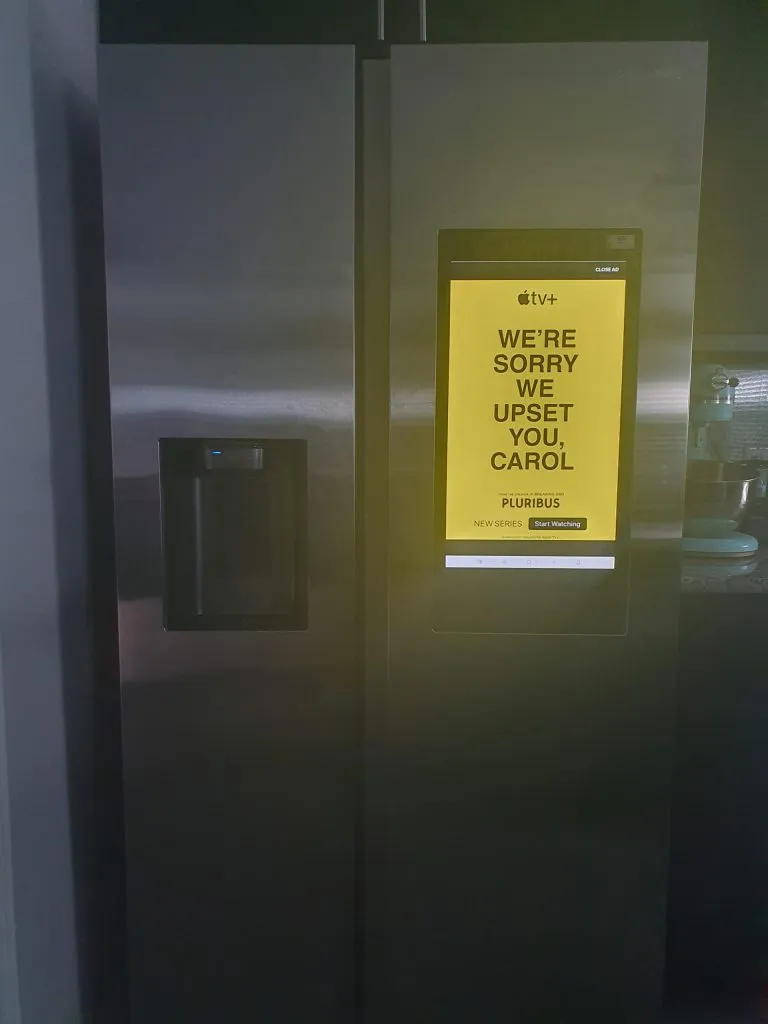
The message looked ominous and personalized. It appeared in a place where a user would normally expect to see a grocery list, a weather forecast, or a reminder about milk expiration dates – not an apologetic message addressed by name.
The brother photographed the screen and sent the image to his sister, asking whether this was the message she had been talking about. Carol confirmed that this was exactly the advertisement she had perceived as an attempt at communication. The name of the series character fully совпided with the name of the refrigerator’s owner. For a person without a psychiatric diagnosis, this would have seemed like a strange but harmless coincidence. For Carol, however, the message became a personal signal, an address from some unseen observer. As a result, the advertising banner triggered a psychotic episode, led to hospitalization, and called into question the effectiveness of her previously prescribed therapy.
It is important to emphasize that this was not a system malfunction or a device hack. What happened was a logical consequence of the modern Web2 model. Even when purchasing expensive appliances, the user does not truly gain full control over the device. The screen in the kitchen remains a corporate platform – a channel for advertising delivery, format experimentation, and data collection. In this configuration, the individual ceases to be a customer and becomes an object of monetization.

The incident involving Carol exposed a serious legal and ethical issue. Experts in digital law point out that such advertising formats operate on the edge of what is permissible. In the United Kingdom, the Advertising Standards Authority (ASA) explicitly requires that advertisements must not imitate personal messages or mislead consumers.
Users of the LegalAdviceUK subreddit emphasized that placing a commercial message on a household appliance in wording that appears to be a personal address can cause real harm, especially to vulnerable groups. In this case, the harm was not abstract but entirely tangible – hospitalization, a revision of medication, and the collapse of a long-term remission.
In the wake of the incident, owners of premium Samsung devices have increasingly expressed dissatisfaction with the way “smart” appliances are turning into intrusive advertising surfaces. Discussions more frequently mention radical solutions – completely disconnecting refrigerators and televisions from the internet. The paradox is that such a step simultaneously deprives users of part of the functionality they have already paid for.
Carol’s story has become a clear illustration that the issue of device control extends far beyond convenience and privacy. It is a matter of safety, including mental health. And it is precisely here that the ideas of Web3, the machine economy, and autonomous devices with their own wallets begin to look not like futuristic theory, but like a potential way to return control to the person over what stands in their kitchen.
All content provided on this website (https://wildinwest.com/) -including attachments, links, or referenced materials — is for informative and entertainment purposes only and should not be considered as financial advice. Third-party materials remain the property of their respective owners.