

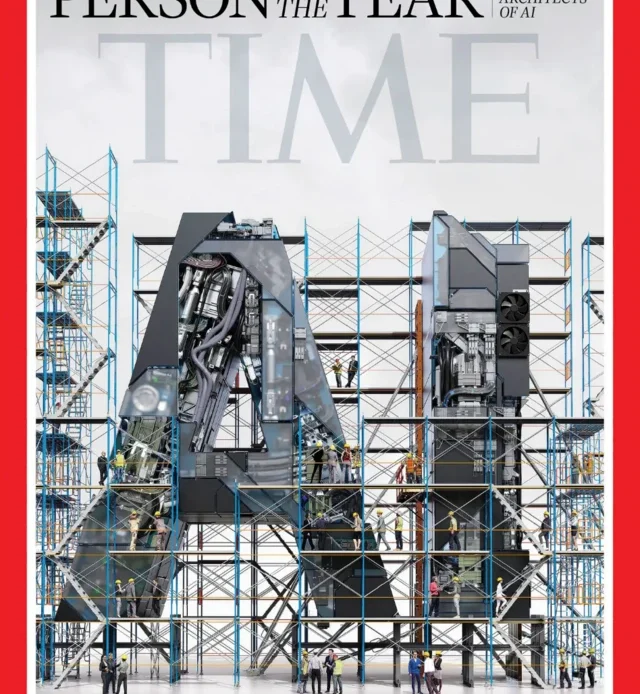
Sam Altman, Elon Musk, Jensen Huang and other leaders of AI companies received the collective title of “Person of the Year 2025” according to Time magazine — under the shared definition “the architects of artificial intelligence.” This editorial decision became one of the most symbolic in recent years: the recognition was given not to a single individual but to a whole group of people who are literally reshaping the future by implementing technologies that are transforming human civilization.
The American publication explained its choice very directly: no one in 2025 had a greater impact on the world than the people who created and advanced artificial intelligence in its current, rapidly evolving form. Time’s Editor-in-Chief Sam Jacobs noted that these are the ones who “imagined, designed and built AI,” turning the abstract dream of “thinking machines” into a reality that already affects the economy, culture, education, politics — and essentially every person.
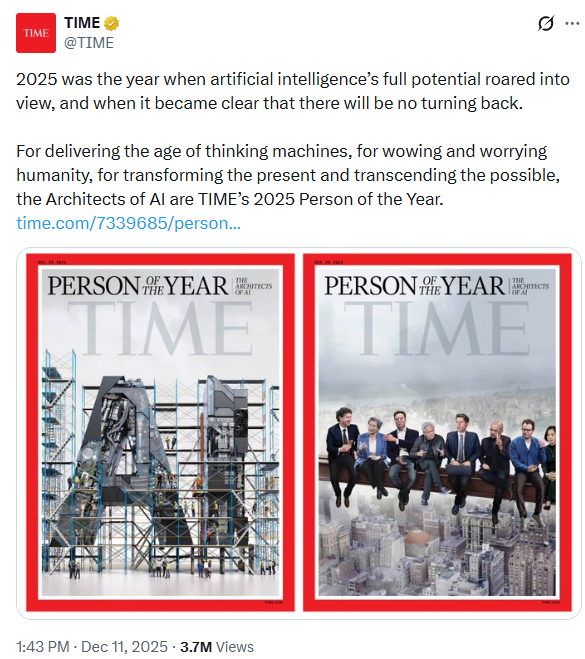
In a letter to readers, Jacobs emphasized that “the architects of AI both awe and worry humanity,” and also “transform the present and expand the boundaries of the possible.” The editors write that 2025 became the moment when the world for the first time saw the full scale of artificial intelligence — and understood that there is no way back.
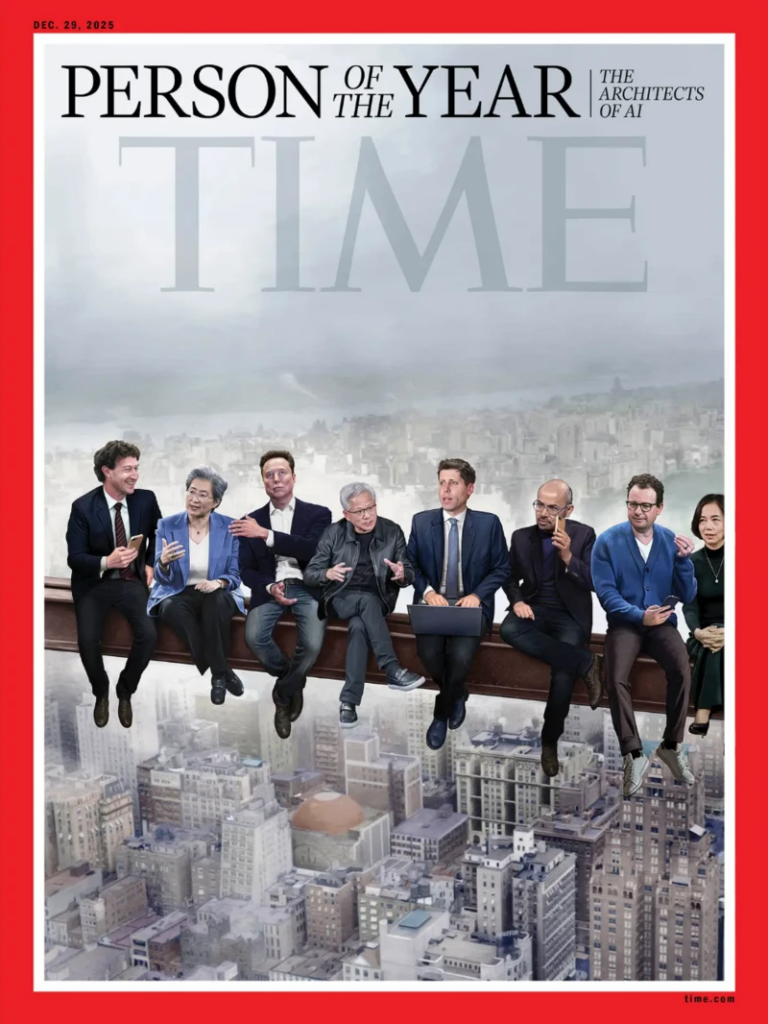
The magazine’s covers drew particular attention. One of them is a clear reference to the iconic early 1930s photograph showing workers sitting on a steel beam above New York while constructing a skyscraper. Only now, on the “beam of the future,” sit the key faces of the global technological era: Nvidia CEO Jensen Huang, Meta founder Mark Zuckerberg, X owner Elon Musk, and the “godmother of artificial intelligence” Fei-Fei Li. The second cover continues the theme of a collective portrait of the people who built the foundation of the AI era.

Time writes that humanity has been observing the development of “thinking machines” for several decades: admiring their victories over world chess champions, their ability to predict protein structures and accelerate scientific discoveries, while also trying to cope with the anxiety caused by technologies that challenge the familiar understanding of human uniqueness.
Time’s decision fits into the history of the award: the publication has repeatedly granted the title not to individuals but to groups or even objects. In different years, “Person of the Year” was awarded to American soldiers (1950, 2003), American scientists (1960), protesters (2001). In 1982, in a gesture of technological optimism, the “person of the year” was named the computer, and in 1988 — the Earth, which found itself under threat of an environmental crisis.
Experts note that the choice in favor of the “architects of AI” highlights the incredible speed at which artificial intelligence is changing the world. This is no longer just an innovation but a force influencing global markets, labor relations, medicine, culture, and even the structure of international security. And today’s AI leaders have essentially become the new “builders of the era” — people who define the parameters of the future just as engineers and industrialists once defined the era of electricity and telecommunications.
Thus, Time captures the moment when AI technologies finally transitioned from the realm of experimental development into a large-scale civilizational project, and their creators — into the ranks of the most influential people on the planet.
All content provided on this website (https://wildinwest.com/) -including attachments, links, or referenced materials — is for informative and entertainment purposes only and should not be considered as financial advice. Third-party materials remain the property of their respective owners.