


Anonymous cryptocurrencies are a special class of digital assets created for one key purpose: to hide participants and transaction details so thoroughly that even the most curious network audit runs into a cryptographic wall. They use a combination of technological methods — from ring signatures to zero-knowledge proofs — that complicate or completely eliminate the possibility of tracking the sender, receiver, and amount.
Simply put, if regular blockchains operate on the principle of “everything is visible but names are hidden,” anonymous cryptocurrencies strive for a mode of “nobody saw anything, nobody knows anything, everyone is satisfied.” Because of this, they traditionally attract increased interest from both users and regulators.
The largest representatives of this direction by market capitalization are: Monero (XMR), Dash (DASH) and ZCash (ZEC), each with its own technologies and privacy philosophy.
Monero: the gold standard of privacy
Monero is a payment system and cryptocurrency that uses the CryptoNote protocol, created by an anonymous author under the pseudonym Nicolas van Saberhagen. The idea was first implemented in Bytecoin, from which Monero forked in April 2014.
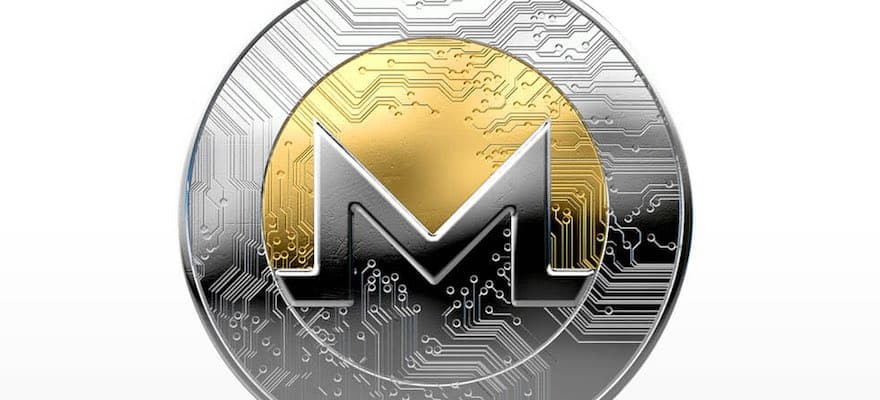
Monero relies on three key privacy tools:
- Ring signatures: allow mixing inputs from many users, creating a crowd effect — who exactly signed the transaction is unclear.
- Stealth addresses: a system of one-time addresses where each payment receives its own unique address not linked to a public wallet.
- RingCT: hiding the transaction amount.
However, in 2018 Monero improved network efficiency by implementing Bulletproofs, which replaced the heavy RingCT mechanism. This significantly reduced transaction size, fees, and network load.
The Monero network runs on Proof-Of-Work optimized for GPU mining. Developers regularly perform hard forks to resist ASIC devices — in other words, they try to keep mining decentralized and not concentrated in a few large players’ hands.
Even though Monero provides a high level of privacy, it is not a magical invisibility cloak. If a hypothetical majority of the network were controlled, a privacy attack would be possible — though extremely difficult and expensive to execute.
ZCash: cryptography of the “higher mathematics plus magic” level
ZCash is a cryptocurrency and payment system created by the Zerocoin Electric Coin Company based on research projects by cryptographers at Johns Hopkins University. The core technology is zk-SNARK, zero-knowledge proofs.
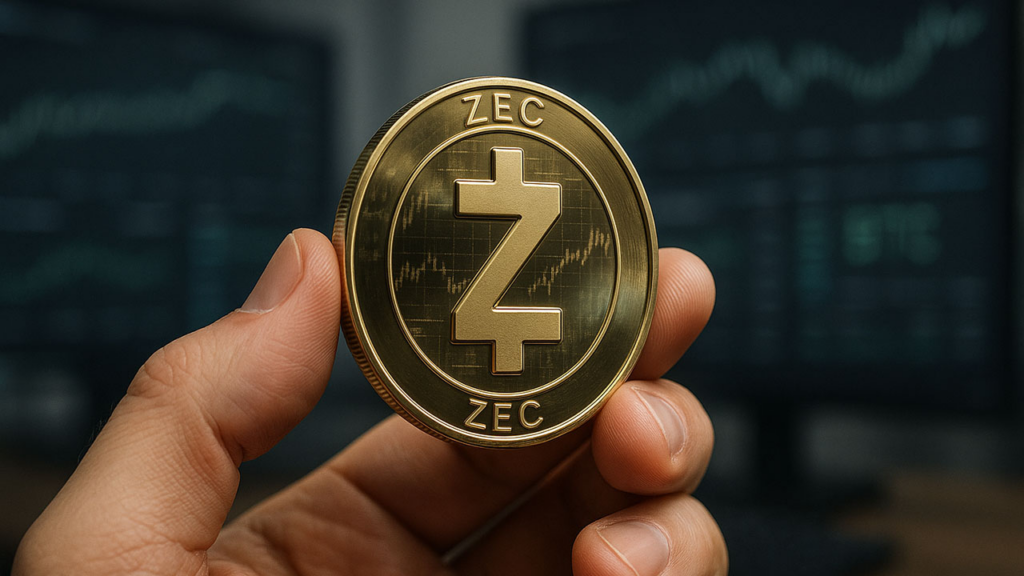
In short: zk-SNARK lets you prove that a transaction is valid without revealing the sender, receiver, or amount. Only a timestamp appears on the blockchain. Everything else remains hidden.
The user chooses the type of transaction:
- Shielded — completely private but heavier computationally.
- Transparent — faster and cheaper but public.
At the end of October ZCash released the Sapling upgrade, which greatly simplified shielded transactions, reduced their size, and enabled their use even from light wallets on mobile devices — a step toward privacy “by default.”
The ZCash network also uses GPU-oriented PoW. There is no ASIC protection, but development continues through the independent ZCash Foundation.
Dash: privacy plus speed
Dash was created in 2014 as a Bitcoin fork called XCoin. Later it was renamed Darkcoin and then Dash (Digital Cash).
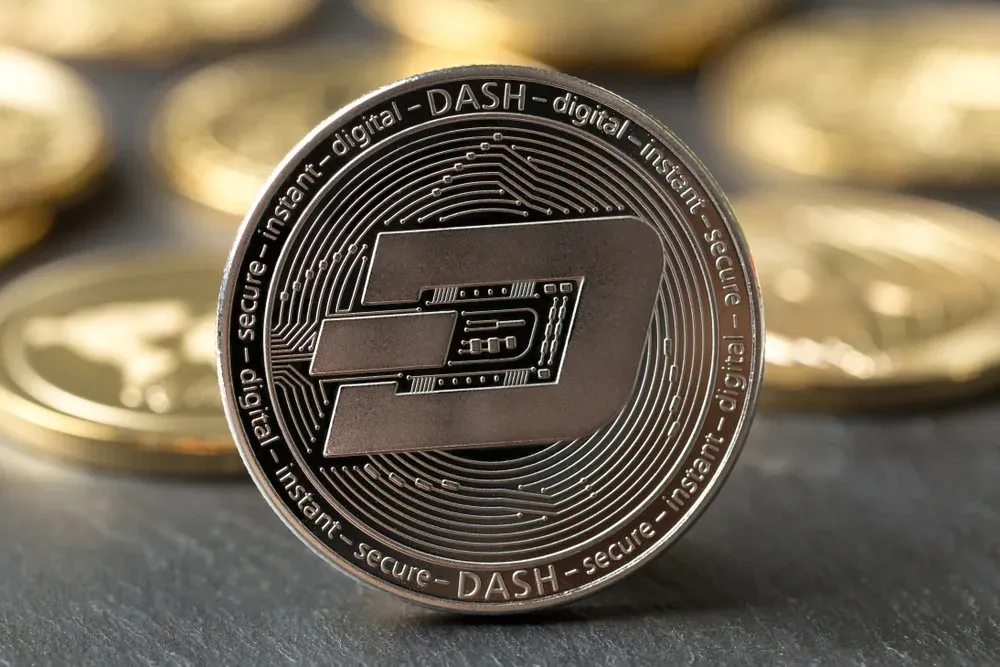
Dash’s key feature is its masternode system. Masternode owners lock 1000 DASH as collateral and receive part of the block reward. Masternodes enable privacy mechanisms and instant transactions.
Dash technologies:
- PrivateSend — a CoinJoin-based anonymization mechanism that mixes coins several times through random masternodes, blurring the link between sender and receiver.
- InstantSend — fast transactions validated by a quorum of 10 masternodes, suitable for real-time payments.
The network uses the X11 algorithm and its own adaptive difficulty mechanism, Dark Gravity Wave.
Why are anonymous cryptocurrencies criticized?
Convenience for users often means convenience for criminals. Main issues:
- Mining through malware.
Monero is frequently used in cryptojacking. Infected computers become unwilling miners. - Money laundering.
Ransomware operators (like WannaCry) convert funds into anonymous cryptocurrencies to hide the trail. - Regulatory responses.
Japan required exchanges to delist Monero, ZCash, and Dash. The U.S. Secret Service also called for stronger oversight. - Technical challenges.
Anonymous transactions are heavier: they require more memory and node resources. However, upgrades in Monero and ZCash reduce this disadvantage.
Which other cryptocurrencies provide anonymity?
The list is fairly broad:
- Grin and Beam (MimbleWimble protocol) — more compact and scalable blockchains with privacy by default.
- BitShares — supports confidential transactions with stealth addresses.
- ZenCash (Horizen) — a ZCash fork enabling private messages alongside shielded transactions.
- Verge — anonymizes IP using Tor/I2P and the Wraith protocol.
- PIVX — a Dash fork with the Zerocoin protocol and expanded privacy tools.
All content provided on this website (https://wildinwest.com/) -including attachments, links, or referenced materials — is for informative and entertainment purposes only and should not be considered as financial advice. Third-party materials remain the property of their respective owners.