


A video is rapidly going viral online in which a journalist puts on experimental smart glasses powered by artificial intelligence. As soon as he walks down the street, the device instantly identifies random passersby and produces a full dossier about them: name, social media profiles, occupation, and other digital traces people usually leave behind without even noticing it.
The video itself is a vivid demonstration of something that, ten years ago, looked like a plot from a dystopia. When a person walks down the street, they expect to remain anonymous: just a passerby among other passersby, blending into the crowd. But the era in which everyone has a smartphone in their pocket, and social networks collect more data than public registries, is gradually turning this familiar anonymity into a convenient myth.
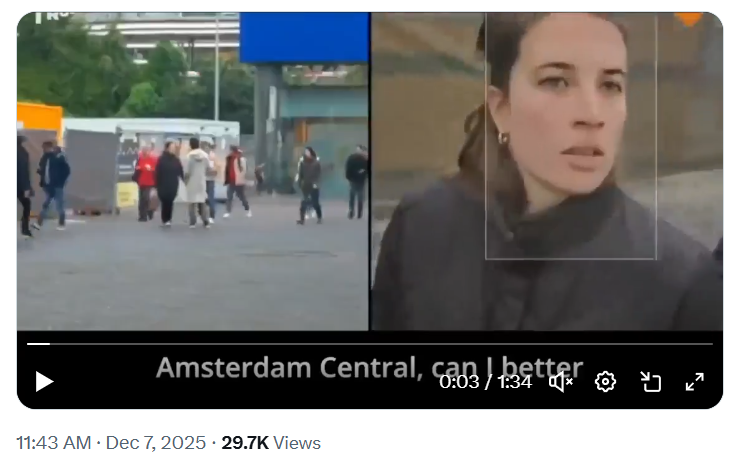
Facial recognition technologies have long advanced, but now they are supplemented by a layer of generative AI that can gather information from open sources faster and more accurately than any human. The glasses in the video are not a mass product but an experimental prototype, yet the direction of development is obvious: the possibility of instant identification is becoming a matter not of “if” but “when.”
With each passing year, the boundary between digital and physical space becomes increasingly blurred. A person may try to hide their social media profile, restrict access to their data, or turn off geotags. But if your photo has ever appeared even once in an abandoned alumni group or in an old corporate report album, algorithms will eventually find a path.
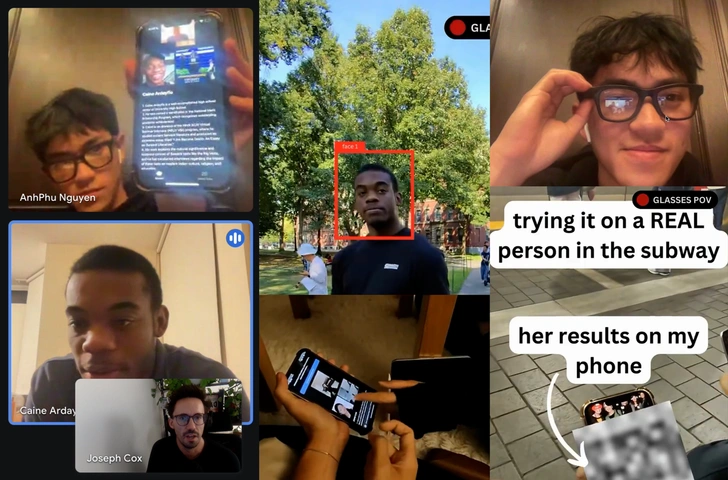
The video circulating online raises the fundamental question: what will happen next to privacy in public spaces? When any passerby can potentially be recognized in real time, confidentiality becomes more of a convention than a default right.
It seems that street anonymity, which people have long taken for granted, is slowly dissolving. And the question is shifting from “who are you?” to “who else knows it?”
A video fragment of this “event” can be viewed on our Telegram channel.
All content provided on this website (https://wildinwest.com/) -including attachments, links, or referenced materials — is for informative and entertainment purposes only and should not be considered as financial advice. Third-party materials remain the property of their respective owners.