

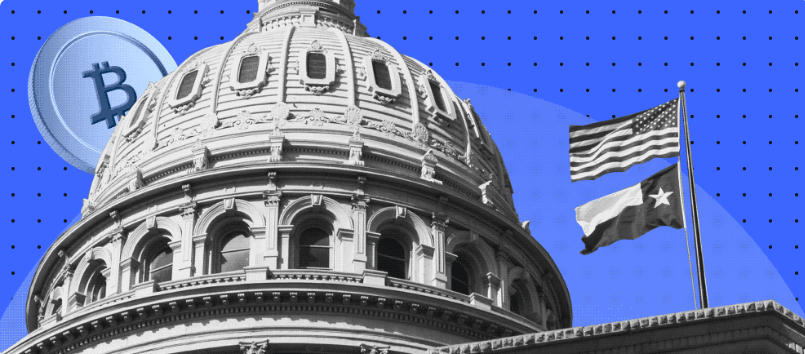
🚀 Texas becomes the first U.S. state to officially purchase Bitcoin: what it means for the market and future regulation
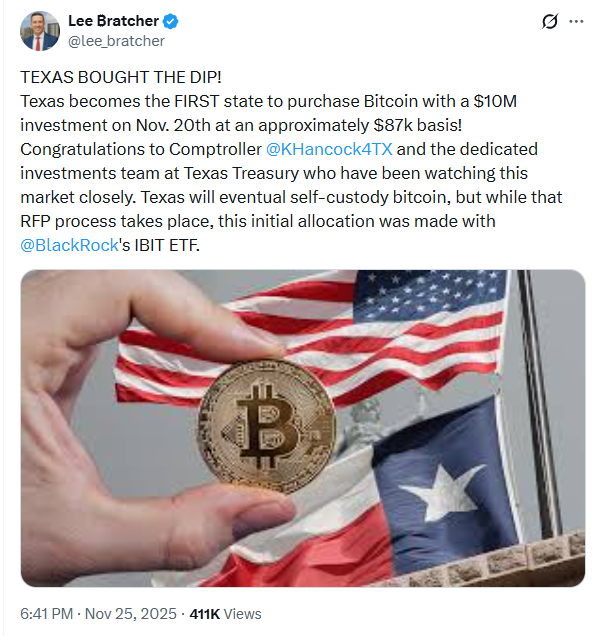
Texas once again decided to show the country how things should be done when it comes to new technologies and major financial moves. The state government has purchased $10 million worth of Bitcoin through BlackRock’s spot ETF (IBIT).
The transaction took place on November 20 at roughly $87,000 per BTC — becoming the first official state-level Bitcoin purchase of this scale in U.S. history.
Previously, only individual cities held Bitcoin on their balance sheets — like Miami or Fort Worth, which even mined BTC inside a city hall building. But now a much bigger player has stepped in: an entire state, and one of the most economically powerful at that.
Why Texas Wants Bitcoin
The decision came from the Texas Comptroller’s Office, which manages the state treasury and its investments.
In Texas, the Comptroller of Public Accounts is the official responsible for tax collection, budgeting, investments and financial oversight.
@KHancock4TX is the X account of Kelly Hancock, the current Texas Comptroller — the official who oversaw the BTC purchase and the work of the investment team behind it.

According to the office, the team has been watching the crypto market for a long time and saw a strategic opportunity:
- diversification of state reserves
- a long-term bet on digital asset growth
- strengthening Texas’s financial autonomy
- interest in technologies tied to digital currencies and blockchain infrastructure
Essentially, the state concluded:
Bitcoin is becoming a recognized investment asset, and spot ETFs have made it accessible and regulated — so why not include it in the state portfolio?
The decision is especially symbolic given that Texas is already one of the top crypto mining hubs in the U.S., offering tax incentives and low-cost energy for miners.
Why the Purchase Was Made Through BlackRock
Although Texas plans to eventually store Bitcoin independently, the self-custody infrastructure is still under development. A vendor tender for secure BTC storage is currently being prepared.
To avoid waiting and to enter the market promptly, the first tranche was executed through BlackRock’s IBIT — the most liquid and one of the most reliable BTC ETFs.
“TEXAS BOUGHT THE DIP!”
With this phrase, the investment team announced the purchase — and the crypto community loved the timing. Yes, the state bought BTC right after a local price pullback.
Why This Is a Historic Moment — and What Comes Next
- For the first time ever, a U.S. state has officially acquired Bitcoin within a fully regulated investment framework.
- This creates a precedent: other U.S. states may now consider adding BTC to their reserves.
- Texas strengthens Bitcoin’s status as a macro asset — comparable to gold or bonds.
- Moves like this push regulators toward updating laws for the new digital financial reality.
Texas has long been a crypto-friendly jurisdiction, but now it has cemented itself as a leader — openly declaring its intention to build an innovative financial strategy at the state level.
According to the Comptroller’s Office, this is only the beginning. Texas plans to:
- increase the share of Bitcoin in the state’s investment portfolio
- transition to self-custody without intermediaries
- expand cryptocurrency infrastructure across Texas
- support mining and high-tech industries
If the experiment succeeds, it may influence not only neighboring states but also the national discussion on the role of digital assets in managing public reserves.
Bottom Line
Texas is betting on the future — boldly, loudly and in true cowboy style.
A state buying Bitcoin isn’t just an investment; it’s a statement of leadership in a new financial era where digital assets become tools of public governance.
🎯 And while other states are still thinking, Texas is already acting — confidently, decisively, and with its signature Texan flair.
All content provided on this website (https://wildinwest.com/) -including attachments, links, or referenced materials — is for informative and entertainment purposes only and should not be considered as financial advice. Third-party materials remain the property of their respective owners.