

🌍 Elon Musk has once again shaken up the rules of the social network X: users can now see the region from which any account is posting.
The update is already provoking a strong reaction — from excitement to concern. But the loudest critic turned out to be Ethereum co-founder Vitalik Buterin, who called the new feature “a risky step” that may threaten user privacy.
The social network X has introduced a new function: it now shows the country or region from which posts are published. Musk presents this as a transparency tool aimed at fighting fake accounts, particularly those who call themselves “war correspondents from the frontline” but actually post from completely safe locations. According to him, the update should reduce manipulation and increase trust in the platform.
However, the changes affect not only “frontline bloggers.” Localization will apply to everyone — media, political commentators, influencers, commercial accounts and regular users. The principle is simple: if you claim to be in one place but post from another — the audience will now see it.
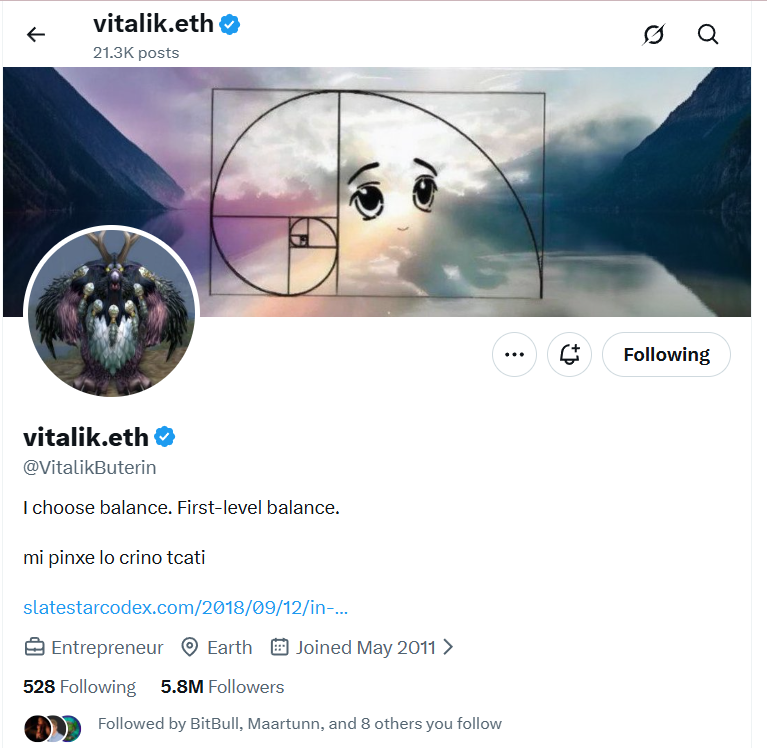
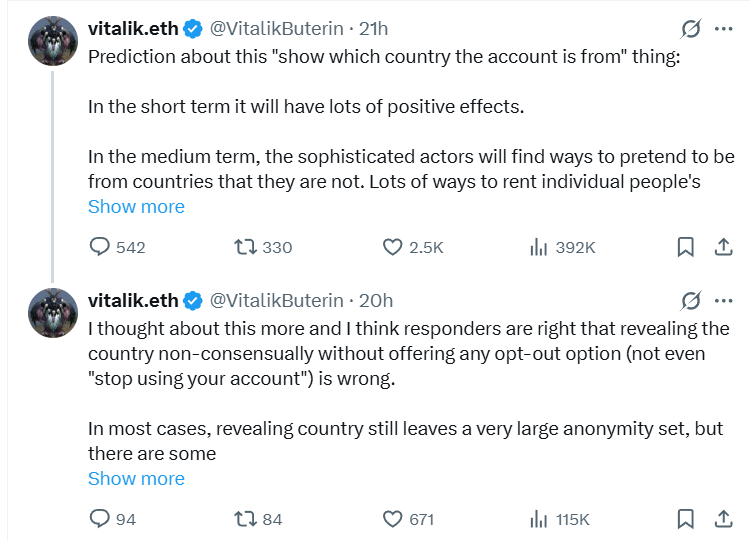
The new feature triggered a strong wave of criticism, and among those who spoke out against it was one of the most influential voices in the crypto industry — Vitalik Buterin. As of 24.11.2025, he stated that the feature revealing localization poses “significant risks to user privacy and personal safety.” Buterin emphasized that even a country or region is already sensitive information, especially for people living under government pressure, censorship or political conflict.
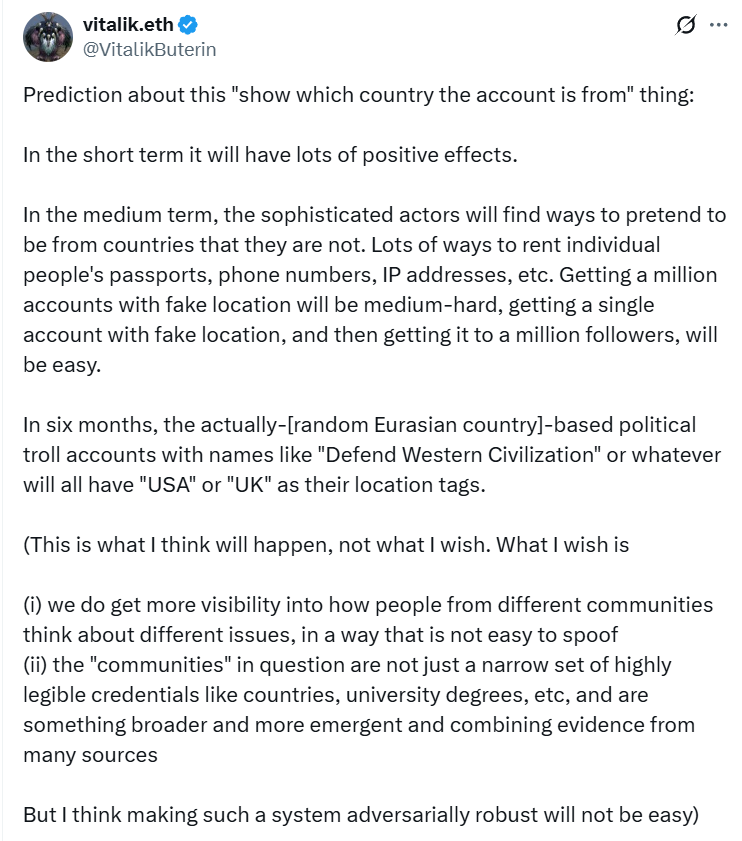
Buterin noted that privacy is one of the key factors of digital security. According to him, such decisions must be implemented extremely carefully, taking into account potential threats in different countries. He gave an example that under political repression, even a hint of a region can put activists, journalists, researchers or members of vulnerable communities at risk.
Meanwhile, Musk claims that showing the region is “a balance between transparency and safety,” since the system does not reveal the exact city or coordinates. In his view, the update will help fight misinformation: fewer fake “insiders,” “experts,” and “war bloggers” who for years created a false image using anonymity.

However, critics point out the opposite effect:
- in countries with limited freedom of speech, even indicating the country can be dangerous;
- localization creates additional risks for people who need to remain anonymous;
- the controversial feature may lead to “digital profiling,” where trust in an account will be based on whether its real location matches the claimed one.
Media experts also note that the update will change the information ecosystem: newsrooms and influencers who “move” to other countries only in words will no longer be able to hide their real location. This will strike at numerous manipulative practices.
For those who build their careers on anonymity, the changes also pose challenges. The new feature may affect digital reputation: if the actual location of an account does not match its narrative, audience trust will decline.
The update is rolling out gradually and is not yet available in all countries, but a global launch is expected soon. Public debate is only intensifying. Some argue this is a blow to fake accounts, others — that it is a blow to freedom and privacy.
📍 But the fact is clear: the social network X is once again changing the rules, and with them — the very structure of digital communication. And while Elon Musk’s position prioritizes transparency, Vitalik Buterin’s stance is a reminder that in a world of instability, privacy is not a luxury but a tool for survival.
All content provided on this website (https://wildinwest.com/) -including attachments, links, or referenced materials — is for informative and entertainment purposes only and should not be considered as financial advice. Third-party materials remain the property of their respective owners.