

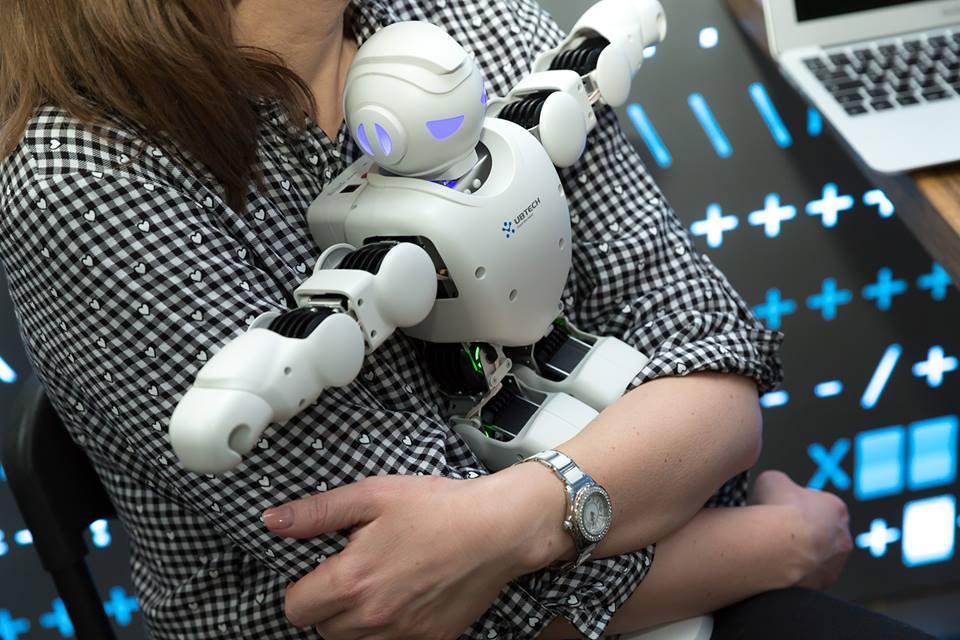
🤖 The development of robotics has reached a new level. Today, robots already replace humans in manufacturing, logistics, warehouses, and other areas that require precision and repeatable actions. But this is just the beginning: experts predict that very soon humanoid devices will become our personal assistants, butlers, and even companions.
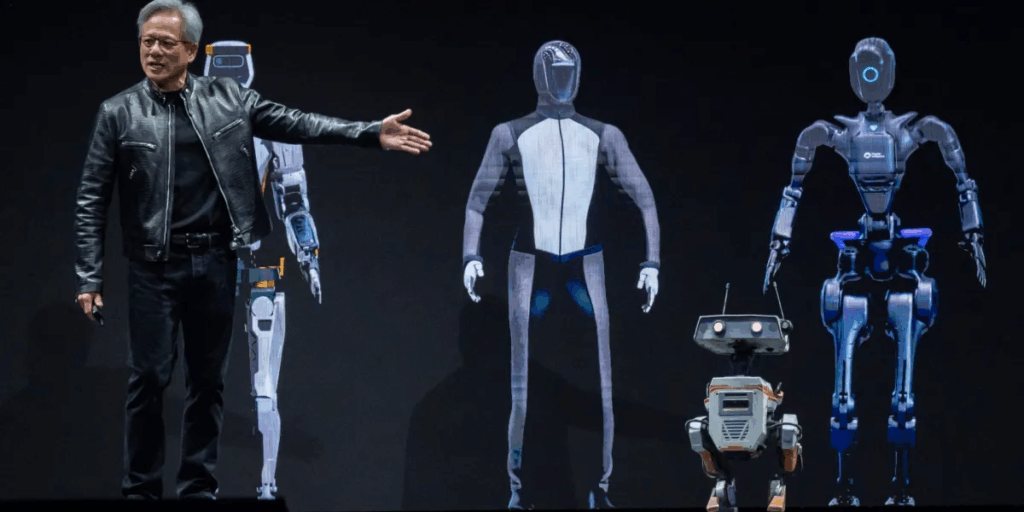
The founder and CEO of Nvidia, Jensen Huang, is confident that the arrival of this era is literally a matter of a few years. In March, at Nvidia’s annual conference in San Jose, he said, “It’s not five years, but a few,” responding to a question about when artificial intelligence (AI) will become widespread. Huang emphasized that humanoid robots will appear in our environment as naturally as smartphones and personal computers.
Why humanoid robots?
Today, robots are created in various forms — from wheeled platforms to multifunctional manipulators. However, humanoid models are becoming the center of attention for several reasons:
- Familiar form factor. A human-like design is more convenient in environments designed for humans. Doors, stairs, desks, and household appliances are built for human height, weight, and proportions. A robot with human anatomy can adapt more easily to existing infrastructure.
- Mass culture. The image of humanoid robots is deeply ingrained in movies, TV shows, and video games. From R2-D2 and C-3PO to modern sci-fi films — marketers consider that people find it easier to relate to robots with human traits, making the product easier to sell.
- Effectiveness in “human tasks.” According to experts, if a robot is to perform work that requires movement in human environments, such as assisting people with disabilities, it must be bipedal, upright, and proportional to a human. Only then can it move and interact with its environment safely and efficiently.
The dawn of general-purpose robots
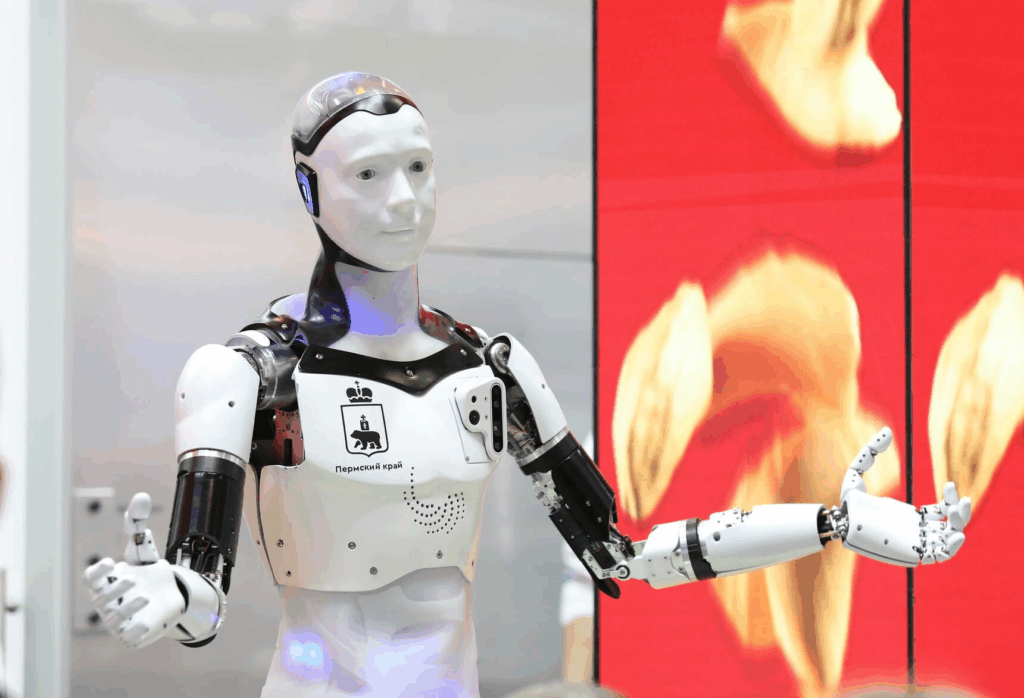
The development of AI and robotics goes hand in hand. Artificial intelligence allows robots to analyze data, adapt to changes in the environment, and perform complex tasks without constant human intervention. This makes robots not just tools but full-fledged assistants capable of decision-making and interacting with people.
Experts predict that the coming years will be a period of active deployment of humanoid robots for commercial purposes. They will be used not only in manufacturing and logistics but also in homes, offices, hospitals, and other places where human assistance is required.
Five humanoid robots that could become personal assistants
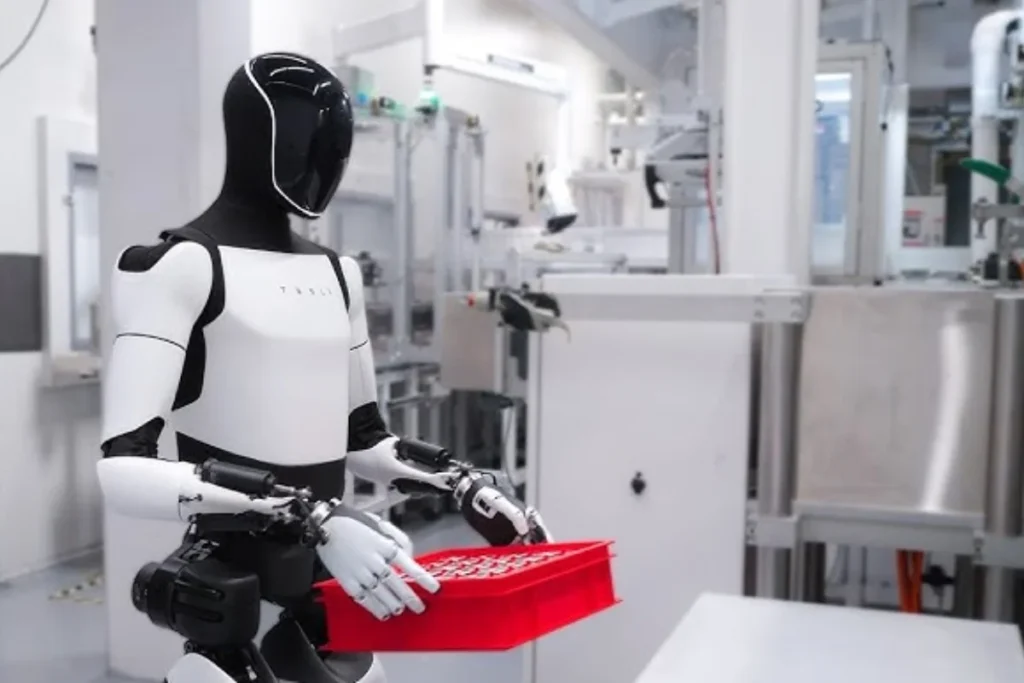
Optimus (Tesla) — a robot from Elon Musk’s company. Developed for household and industrial tasks. Its main goal is to assist humans in everyday life and labor-intensive operations.
The first Tesla Bot model was introduced in August 2021, and in September 2022 its working prototype, Tesla Optimus, was revealed.
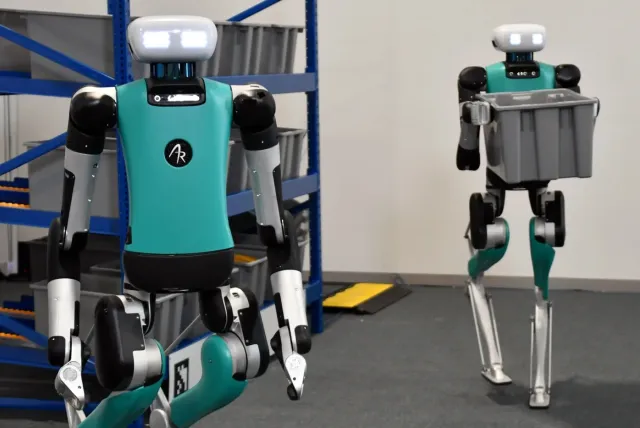
Digit (Agility Robotics) — a bipedal robot with high mobility, capable of moving cargo, working in warehouses, and performing routine tasks where speed and precision are essential.
The company is already testing them at Amazon warehouses and GXO Logistics, and building a factory in Oregon to produce 10,000 androids per year.
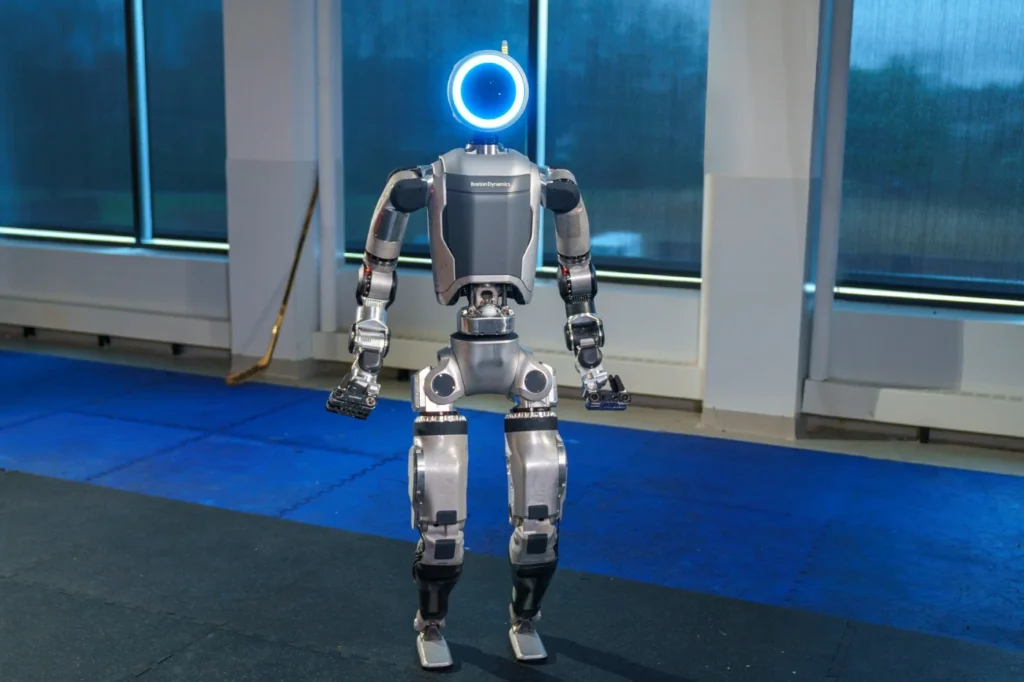
Atlas (Boston Dynamics) — famous for its unique balance and acrobatic abilities. Can navigate difficult terrain, jump, and perform precise movements, making it versatile for industrial and research tasks.
A video went viral showing Atlas doing a backflip. The robot’s head, torso, and limbs rotate 360°. Boston Dynamics created a set of very flexible actuators for most joints. Although Atlas doesn’t move exactly like a human, it is noticeably more graceful and fluid than other humanoid robots introduced in the past few years.
This year, Boston Dynamics is testing Atlas at Hyundai factories.
Apollo (Apptronik) — a robot focused on AI integration to perform intelligent tasks and assist people in home and office environments.
Texas-based Apptronik released its first commercial humanoid robot with a friendly face, Apollo, in August 2023.
Apollo will work in warehouses and manufacturing soon. Later, it is planned to be used in construction, electronics manufacturing, retail, home delivery, elder care, and more.
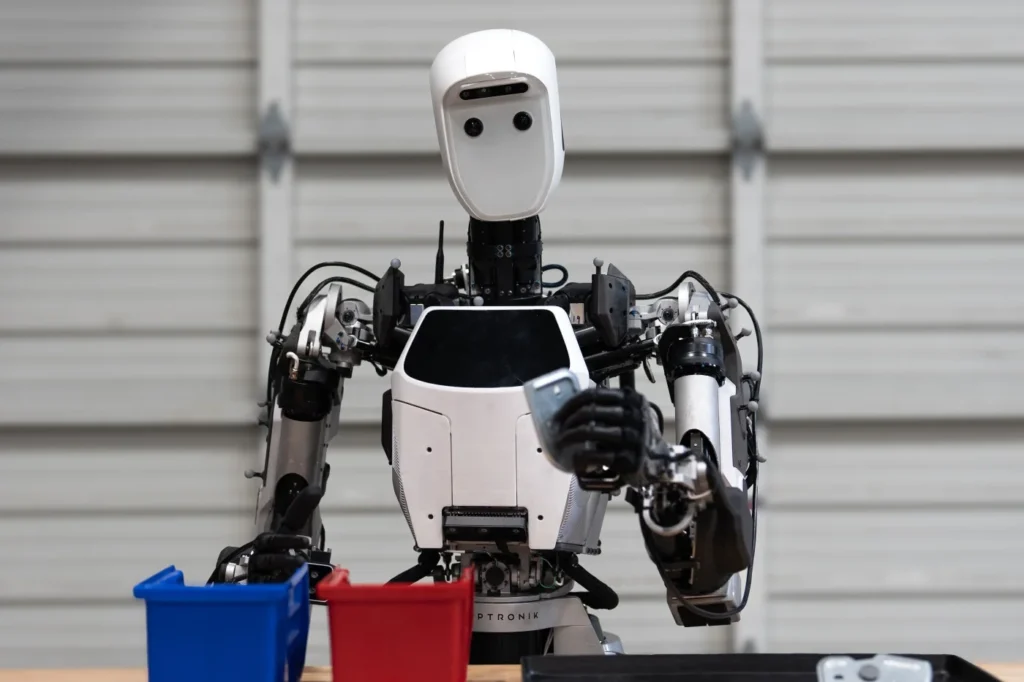
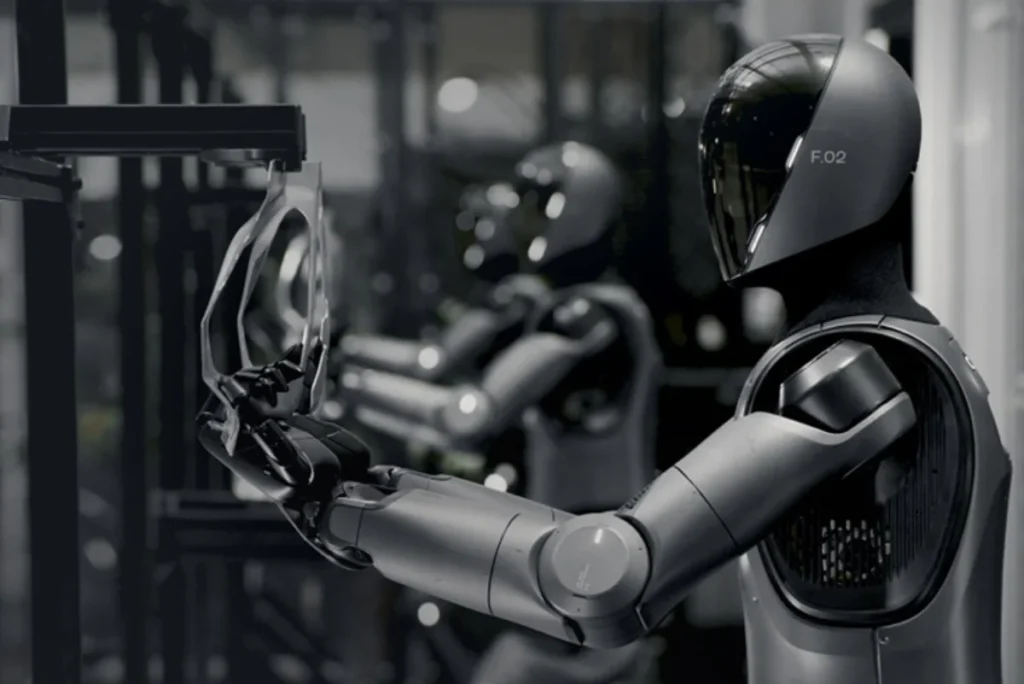
Figure 02 (Figure) — designed for human interaction. California startup Figure presented its second-generation humanoid robot Figure 02 in August 2024.
Can become a personal assistant and support staff in medical institutions, providing assistance and safety for patients.
Figure robots are already actively working on production lines, including the BMW plant in Spartanburg, USA. In November 2024, Figure released a video showing their robot inserting a metal sheet into a pin slot less than 1 cm wide, demonstrating millimeter-level precision.
What this means for us
The emergence of humanoid robots will fundamentally change human work and daily life:
- Production processes will become more automated and safer.
- People will be able to focus on creative and intellectual tasks, leaving routine operations to robots.
- In the future, a robot butler or assistant could become a common feature in homes or offices.
🚀 At the same time, questions of ethics, safety, and regulation arise. How will humans and robots interact in everyday life? Who is responsible for machine errors? These topics are already actively discussed in professional circles.
Video clips of the robots in action can be viewed on our Telegram channel.
All content provided on this website (https://wildinwest.com/) -including attachments, links, or referenced materials — is for informative and entertainment purposes only and should not be considered as financial advice. Third-party materials remain the property of their respective owners.