


⚠️ Maybe we are standing on the brink of a financial apocalypse, and the reason is not bubbles, not interest rates, and not market nerves. The reason could be purely technical — and that makes it even more alarming.
Recently, Google announced a major breakthrough in quantum computing (link in comments). This is what the industry has been waiting for decades — the ability to scale quantum computing and improve the resilience of quantum systems to errors. This was precisely the weak spot that held back the technology for years: quantum machines existed in theory, but using them in the real world was practically impossible. Too fragile, too unstable, too unpredictable.

Now the situation is beginning to change — and it’s changing frighteningly fast.
Buterin said what people have whispered about for years
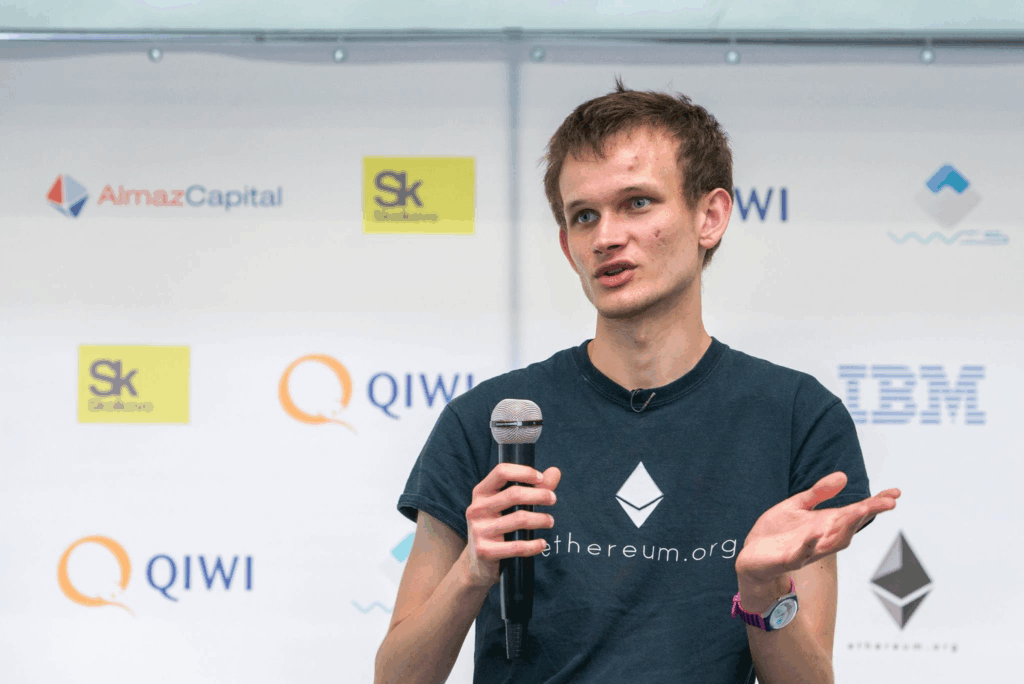
Vitalik Buterin, the founder of Ethereum, at a recent conference stated that quantum computers could become powerful enough to break classical cryptographic algorithms even before the end of President Trump’s term, i.e., by 2028.
Note: this is not a Twitter panicker or another “all is lost” prediction. This is someone whose protocols underpin a huge part of the crypto market. And he has already significantly revised his forecast. Last summer, he gave a roughly 20% chance by 2030. After Google’s breakthrough, the estimates became far more alarming.
And 2028 is not somewhere far away. In terms of internet infrastructure, it is practically tomorrow.
The theoretical threat has been discussed for years — now it sounds like a real deadline
The quantum threat to cryptography has been debated for years. But only now is it not academic speculation, but a conversation with dates, experts, and speed of progress. Adding 2+2 shows we have very little time.
What is the problem
All classical blockchains — Bitcoin, Ethereum, and other L1s — work on a fundamental principle: each transaction is signed by a private key, and its validity is verified through the public key.

The public key becomes visible to everyone after the transaction and is recorded on the blockchain.
With classical computers, reversing a public key to find a private key is practically impossible. It would take billions of years.
But quantum computers, if powerful enough, could solve this much faster — theoretically in hours or even minutes.
This means a hypothetical “quantum hacker” could: obtain the owner’s private key, sign a transaction in their name, and simply steal the assets.
And this affects more than cryptocurrencies
Classical cryptography secures:
- banking security,
- exchanges,
- property registries,
- digital signatures,
- encrypted communication,
- government archives,
- access control systems.

In other words — almost the entire civilized digital world.
Is there a solution? Theoretically — yes
The US standards institute NIST ran a multi-year “crypto competition” to select algorithms resistant to quantum attacks.
Winners were determined, and some companies are already starting deployment.
But this is still theory: truly powerful quantum computers do not yet exist, some promising algorithms were cracked by classical computers during selection, and the new encryption schemes have not yet stood the test of time.
Classical cryptography has proven its reliability over decades. Post-quantum cryptography has not yet.
And here comes the big problem for blockchains
Banks, exchanges, and large corporations are centralized. One executive decision: “Switch to new algorithms,” and the process starts.
Bitcoin or Ethereum don’t work that way.
To implement a new cryptographic core, you need:
- global agreement of most participants,
- massive deployment work,
- testing,
- hard forks,
- key migration,
- adaptation of wallets, exchanges, and services.
And time — only a couple of years.
But there is another subtle point, no longer technical —
there is behavioral economics. And it can destroy systems faster than any hack.
If even one wallet is hacked by a quantum computer, the market could collapse within a day.
The effect is psychological: “Keys are unsafe. System compromised. Crypto is dead.”
The attacker would get “hacked tokens” that are worthless. So there is no incentive to do this publicly.
Reminder of the scene from “The Imitation Game”
Turing’s team breaks Enigma. The first message warns of an attack on a ship where a team member’s brother serves.
He cries, begs to warn them. Turing says the cold, terrifying “no.”
If the Germans learn the code is broken, they will change encryption, and all work is wasted. Therefore, information is used very selectively, almost randomly, to avoid detection.
The same applies here. There will be no public quantum attack demonstrations.
Instead, everyone will be reassured, told post-quantum cryptography is perfect, pretty reports will be made.
But somewhere in a data center, a machine will exist capable of breaking any protection system, reading any message, slightly modifying data where needed.
And this already resembles the “global backstage” conspiracists talk about.
It looks not like secret orders, but as a quiet, powerful, incredibly intelligent machine that simply knows too much.
💥 What do you think, are we really on the verge of a new cryptographic era, or are we just dramatizing things?
All content provided on this website (https://wildinwest.com/) -including attachments, links, or referenced materials — is for informative and entertainment purposes only and should not be considered as financial advice. Third-party materials remain the property of their respective owners.