


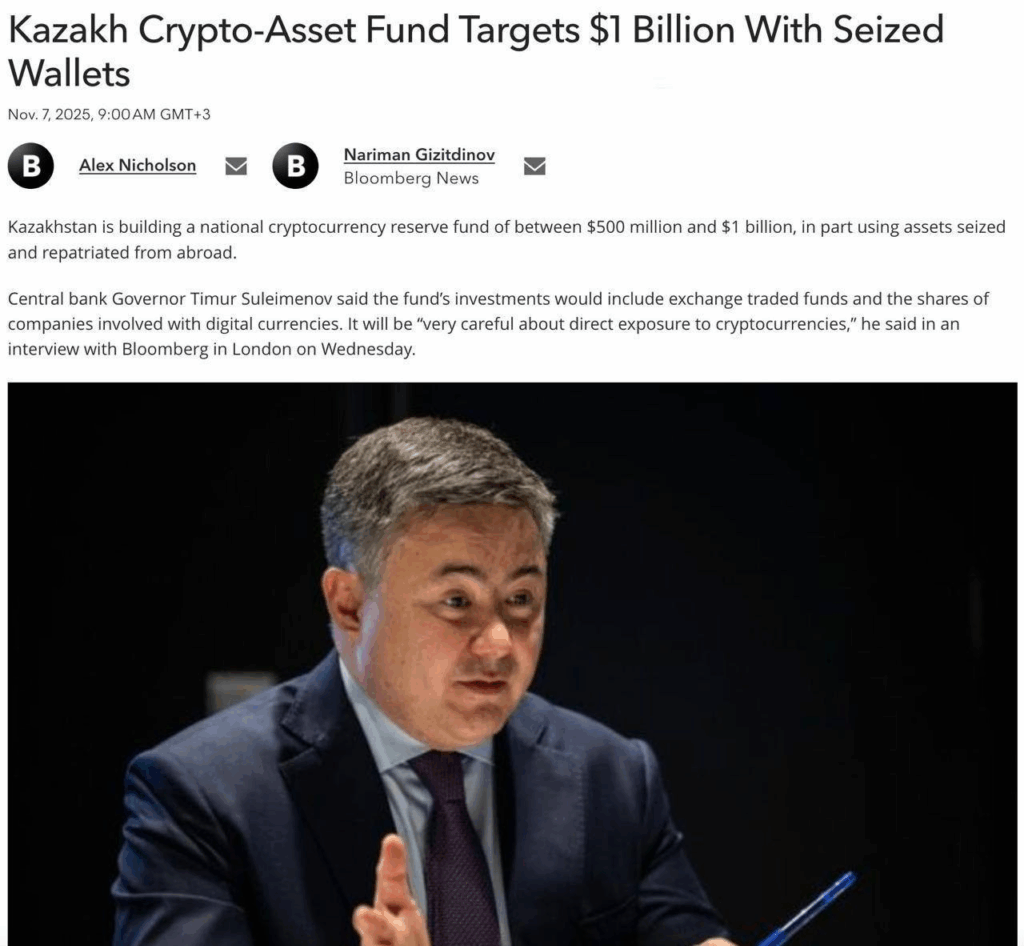
 Kazakhstan is betting on digital assets and creating a national crypto reserve fund. Its volume will range from $500 million to $1 billion, with a launch planned for early 2026. This was announced in an interview with Bloomberg by Timur Suleimenov, Chairman of the National Bank of Kazakhstan.
According to the head of the National Bank, the fund will be created using funds allocated for alternative investments, as well as partially from confiscated and returned assets. In this way, the state plans not just to “freeze” seized capital, but to direct it toward innovative and potentially profitable areas.
Investments in ETFs and crypto companies
Suleimenov emphasized that the fund will not directly buy Bitcoin or other cryptocurrencies to avoid volatility risks. Instead, it plans to invest in crypto-ETFs (exchange-traded funds tied to digital assets) and in shares of companies operating in blockchain, mining, and crypto payments.
“We will be very cautious regarding direct investments in cryptocurrencies. The main focus is on infrastructure and related companies,” the head of the National Bank noted.
Thus, Kazakhstan is focusing on a balanced approach: participation in crypto market growth without excessive risk.
Legal framework and regulation
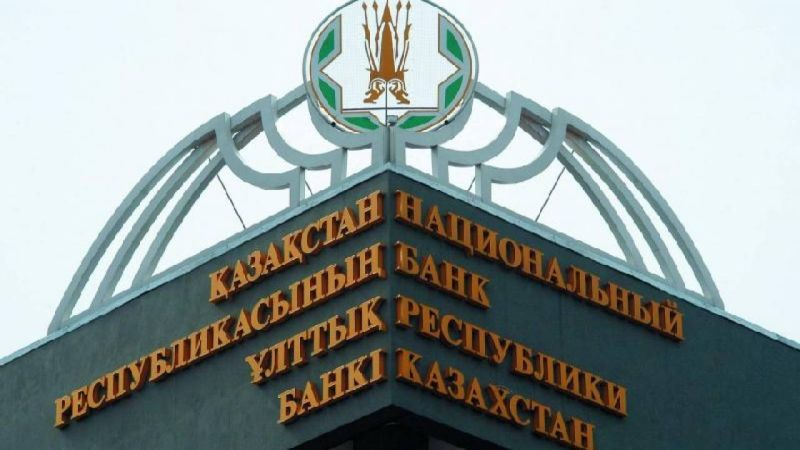
Preparations for the fund’s launch are taking place amid large-scale reforms in the country’s crypto sector.
In May 2025, the National Bank introduced amendments that:
establish the legal status of crypto exchanges and other market participants;
introduce mandatory licensing of crypto exchange platforms;
- set transparent rules for interaction between banks and crypto firms.
By June, the regulator approved the issuance of payment cards linked to crypto wallets on licensed platforms of the Astana International Financial Centre (AIFC). These cards allow users to conduct transactions in fiat and digital assets, effectively bridging the traditional banking system and the crypto industry.
State and digital money
Kazakhstan is steadily building a national crypto ecosystem in which the state plays an active role.
In September 2025, the Astana Financial Services Authority allowed regulatory fees to be paid in stablecoins — an unprecedented step for the region.
At the same time, the National Bank announced a pilot project for a national “stablecoin” pegged to the tenge. This is essentially a digital version of the currency that can be used for internal payments and public services.
Why it matters
Creating a crypto reserve fund is a strategic move that can:
- strengthen Kazakhstan’s position as a regional digital finance hub;
- attract foreign investment and tech companies;
- diversify state assets through participation in the rapidly growing crypto economy.
The fund can also serve as a financial buffer in times of global instability and declining trust in traditional currencies.

When to expect the launch
“I think by the end of this year — January next year — we will be ready to launch the project. Everything is ready to go,” Suleimenov said.
If the schedule is maintained, Kazakhstan could become the first Central Asian country to create a national crypto reserve fund comparable in scale to state investment funds in Singapore or Norway — only in digital format.
💡 In short:
Kazakhstan is turning cryptocurrencies from a “grey zone” into a component of state financial policy. If the fund indeed starts operating by 2026, the country has a chance to become a pioneer of a new generation of government investments in the digital economy.
All content provided on this website (https://wildinwest.com/) -including attachments, links, or referenced materials — is for informative and entertainment purposes only and should not be considered as financial advice. Third-party materials remain the property of their respective owners.