

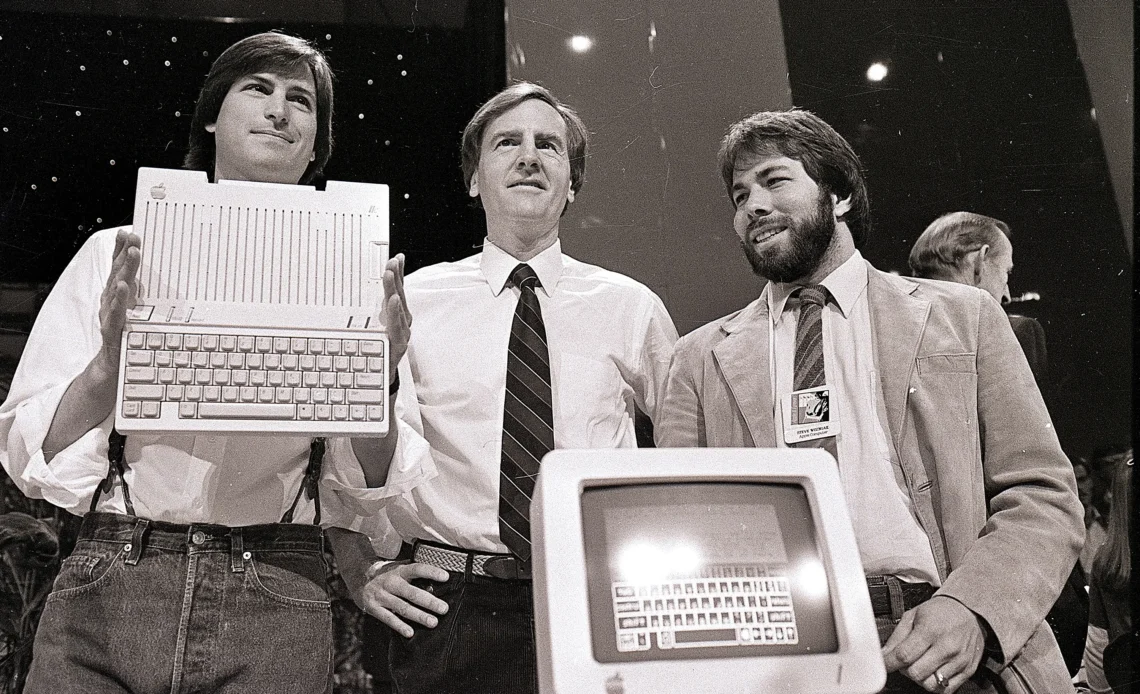
Apple is celebrating the 50th anniversary since its founding, and this юбilee already sounds like a success story stretched over half a century. But behind the number lies much more — it is a story of how one small idea in a garage changed not only the technology market but also the everyday life of billions of people.
Founded on April 1, 1976 by Steve Jobs and Steve Wozniak, the company began with a simple, almost naive but extremely ambitious idea — to make computers accessible and understandable to everyone.
Since then, Apple has gone from enthusiasts to one of the most valuable companies in the world with a market capitalization exceeding $3.6 trillion. It is not just a business — it is a whole ecosystem that shapes user habits, industry standards, and even the language of communication in the digital world.
The company’s key products have become symbols of entire eras. Mac закрепил the idea of a personal computer as a convenient tool for work and creativity. The iPhone changed the very model of mobile communication, turning the phone into a universal device without which everyday life is now hard to imagine. iPad opened a new niche between a laptop and a smartphone, while the Apple Watch made wearable devices not just an accessory but part of a digital ecosystem of health and communication.
The story of the iPhone holds a special place. Since its launch in 2007, more than 3.1 billion devices have been sold, generating about $2.3 trillion in revenue. This is one of those rare products that not only became popular but literally defined the standards of an entire industry. Today, a smartphone is not just a communication tool but the center of digital life, and to a large extent Apple set that benchmark.
The company also had a major impact on the music industry. With the launch of iPod and the iTunes platform, Apple effectively changed the way music is consumed, shifting the industry from physical media to digital. This became one of the first steps toward the streaming world that is now considered the norm.
At the same time, Apple managed to secure strong positions in the wearable segment. Apple Watch quickly became a market leader, especially in health and fitness, where the company’s devices effectively began to act as personal assistants for monitoring the body’s condition.
CEO Tim Cook emphasizes that the company’s philosophy has always been built around the idea of personal technology — devices that adapt to the person, not the other way around. And this is the key reason for its success: Apple has always tried not just to sell devices, but to create an experience.
However, today, against the backdrop of the anniversary, the company faces a new stage of competition — no longer in hardware, but in the technologies of the future. The main challenge is the development of artificial intelligence. Companies such as Google, Microsoft, and OpenAI are actively setting the pace in generative AI, while Apple is perceived as a more cautious player.

Delays in updating the Siri voice assistant reinforce the impression that the company is not rushing into this race, preferring a measured approach.
Another key factor is China, which remains both a manufacturing hub and one of Apple’s largest markets. At the same time, growing competition from local brands such as Huawei, along with geopolitical risks, is forcing the company to rethink supply chains and diversify production. This is no longer just a business decision, but part of a global survival strategy in a changing world.
Despite the challenges, Apple still has several strong advantages: a deeply integrated ecosystem, high user trust, a powerful brand, and a focus on data privacy. In an era where data is becoming a new currency, this approach can become a key competitive edge.
Experts agree that Apple’s future will largely depend on how the company integrates artificial intelligence into its ecosystem. If earlier Apple created devices, now the task is more complex — to create an intelligent environment where devices are not just tools but active assistants.
And as history shows, Apple knows how to make unexpected moves precisely when the market least expects them. Perhaps the company’s next big breakthrough will not be in a device, but in how we interact with technology as a whole.
All content provided on this website (https://wildinwest.com/) -including attachments, links, or referenced materials — is for informative and entertainment purposes only and should not be considered as financial advice. Third-party materials remain the property of their respective owners.