

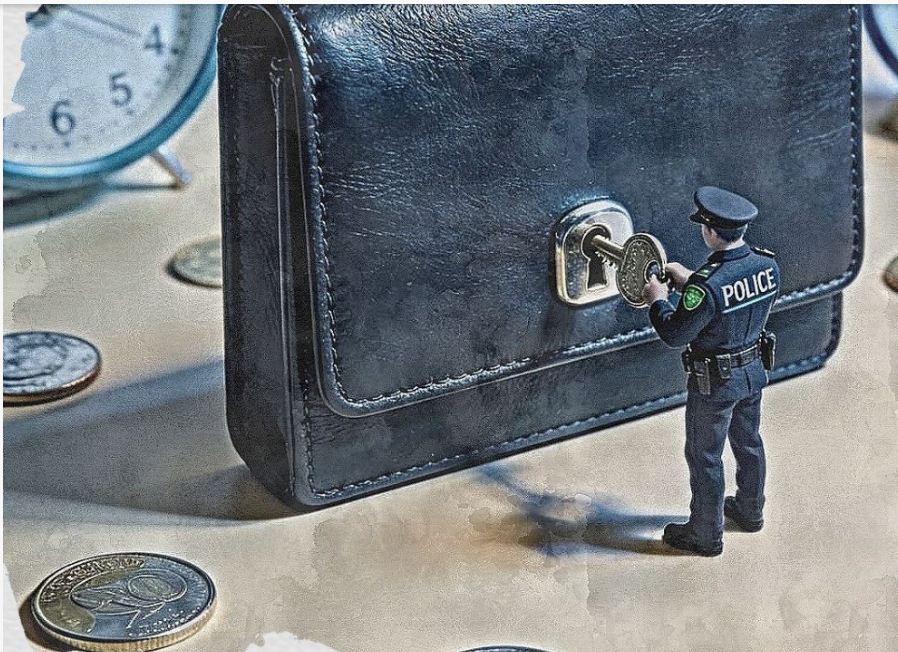
A story that initially looked like a classic crypto comeback in the style of “found an old flash drive – became a millionaire” turned out to be far less romantic and far more telling for the industry.
At the center of the events is Clifton Collins, the owner of wallets holding 6000 BTC, which for many years were considered lost. The amount is estimated at around 423 million dollars at current valuations. These funds were linked to a drug trafficking case, and access to them, according to the official version, disappeared after the keys were stored on paper and lost during a house cleanup.

For almost ten years, the wallets remained completely inactive. In the crypto world, such cases have long become part of the legend: forgotten fortunes, lost seed phrases, millions that are forever “stuck” in the blockchain. That is why, when 500 BTC – about 35 million dollars – was suddenly sent from one of the addresses, the market immediately came alive.
The first reaction was predictable. The community assumed a miracle had happened. In the spirit of the best stories in the industry: a person supposedly regained access years later, remembered the seed phrase, or found the long-lost piece of paper. The crypto world loves such narratives – they reinforce the belief that “nothing is ever truly lost.”
But reality turned out to be far more prosaic and, frankly, more logical. As it turned out, this was not about a lucky recovery of access, but about the work of law enforcement. A key role was played by the Irish Criminal Assets Bureau and Europol. They were able to gain access to at least one of the wallets linked to Collins. In other words, this is not a story about “finding a seed phrase” but about confiscation.
The transfer of 500 BTC to Coinbase is not a personal cash-out, but a technical step within an asset seizure process. Such operations are often conducted through regulated exchanges, where it is easier to track fund movements and ensure further legal procedures.
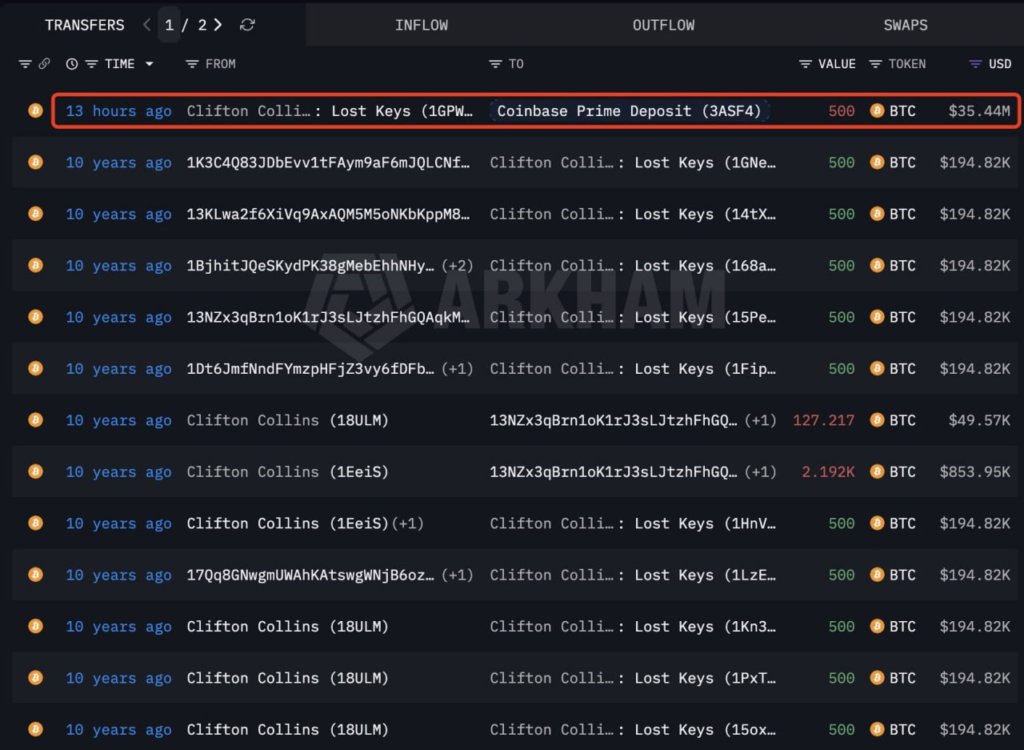
An interesting aspect of this story is the scale. It involves not just one wallet, but a system of approximately 12 addresses. And so far, access to only part of the funds has been confirmed. This means that the majority of the bitcoin may still remain inaccessible – at least for now. The situation clearly illustrates several important aspects of the crypto market.
First, “lost” funds do not always remain lost forever. Even years later, they can re-enter circulation – but not necessarily into the hands of the original owner.
Second, government agencies are gradually strengthening their capabilities in dealing with crypto assets. While it was once believed that access to a wallet without a seed phrase was impossible in principle, real-world cases now show that the issue can be resolved not through hacking, but through a combination of investigations, legal pressure, and possibly the exploitation of mistakes in key storage.
Third, this story challenges one of the industry’s popular myths – the absolute inaccessibility of cryptocurrencies. Formally, access to funds is indeed determined by the key. But in reality, there is context around that key: the person, their actions, their mistakes, and their environment. And this context becomes the entry point for law enforcement.
The market reaction is also worth noting. Initial reports triggered a wave of enthusiasm – a classic “old money returns” scenario. But sentiment quickly shifted to a more restrained tone. Because this is not new money entering the system, but a redistribution of existing assets.
In the end, we have a very telling story. On one hand, the romance of crypto, where lost millions can “come back to life” years later. On the other hand, the reality where such “miracles” are more often driven not by the owner’s memory, but by the work of those who know how to wait and calculate. And the main takeaway is simple. In cryptocurrencies, you can indeed lose access to your money. But that does not mean the money disappears for everyone. Sometimes it just changes hands – and not always voluntarily.
All content provided on this website (https://wildinwest.com/) -including attachments, links, or referenced materials — is for informative and entertainment purposes only and should not be considered as financial advice. Third-party materials remain the property of their respective owners.